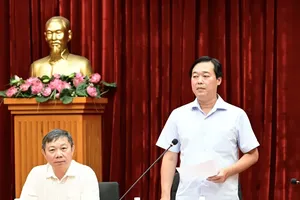
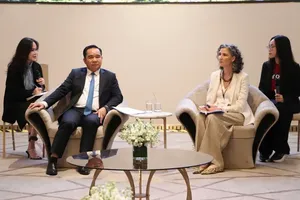
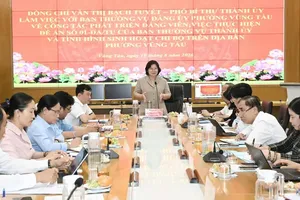
On the morning of June 25, the Ho Chi Minh City People's Committee held a scientific conference titled "Fifty Years of the City Named After President Ho Chi Minh: Historical Legacy, Development Aspirations and Institutional Breakthroughs."
The conference was co-chaired by Director Truong Minh Huy Vu of the Ho Chi Minh City Institute for Development Studies, and Associate Professor Nguyen Tan Vinh, Director of the Regional Academy of Politics II.
The event formed part of a series of activities marking the 50th anniversary of Saigon-Gia Dinh officially being named after President Ho Chi Minh.
HCMC maintains its role as the nation's growth engine
In his opening remarks, Director Truong Minh Huy Vu said the conference reviewed the city's historical journey while reaffirming Ho Chi Minh City's achievements, strengths and development lessons. It also sought to identify the distinctive qualities that define the city's identity, including its culture, people, generosity, solidarity, dynamism, creativity and pioneering spirit across many fields.
At the conference, Associate Professor Ha Minh Hong, former Head of the History Faculty at the University of Social Sciences and Humanities under Vietnam National University Ho Chi Minh City, said the decision to name the city after Ho Chi Minh in 1976 fulfilled a historic aspiration that had first emerged in 1946.
Citing documents published in the Cuu Quoc newspaper, he noted that 57 delegates from Southern Vietnam had proposed that the National Assembly and the Government rename Saigon as Ho Chi Minh City to symbolize the fighting spirit, sacrifice and determination for national reunification demonstrated by the people of Southern Vietnam, while honoring President Ho Chi Minh's contributions.
According to Associate Professor Ha Minh Hong, the National Assembly resolution adopted on July 2, 1976 was not a "renaming" but rather the "naming" of the city, recognizing an aspiration preserved by the people of Saigon-Gia Dinh for three decades. He said the city bearing President Ho Chi Minh's name was rooted in the area's unique historical significance as the place where Ho Chi Minh departed in search of a path to national salvation, where Southern Vietnam displayed resilience throughout the resistance wars and where its people always held deep affection for him.
Speaking about the connection between history and the future, Pham Chanh Truc, former Deputy Head of the Party Central Committee's Economic Commission, former Standing Deputy Secretary of the Ho Chi Minh City Party Committee and former Chairman of the Ho Chi Minh City People's Council, said the city's strength stemmed from its people, the Party's leadership and a tradition of dynamism, creativity and determination to overcome adversity in both wartime and peacetime.
He proposed that the city further expand people's democratic rights and self-governance at the grassroots level while continuing research into shaping a socialist mode of production beyond 2045.
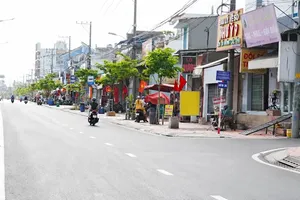
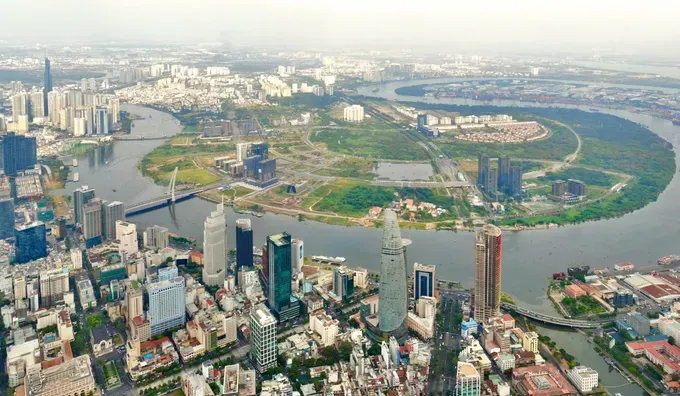
Lecturer Nguyen Van Giap from Ho Chi Minh City Cadre Academy said the city had undergone a remarkable transformation. From a war-affected urban center, it had gradually expanded its urban space and upgraded both technical and social infrastructure. In 1975, when the war ended, the city had suffered extensive damage, with severely deteriorated infrastructure and most major roads consisting of dirt, gravel or basic asphalt surfaces. During the reform era, numerous large-scale infrastructure projects, from ring roads to metro lines, were launched, helping shape a modern urban landscape supported by increasingly systematic planning.
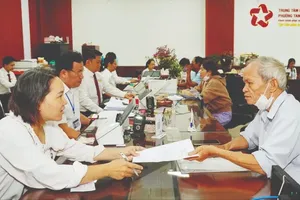
Discussing the relationship between practical experience and institutional reform, Tran Du Lich, former Director of the Ho Chi Minh City Institute of Economics, said the central government had gradually expanded decentralization and delegated greater authority to Ho Chi Minh City through major policy decisions, most recently Politburo Resolution No. 09-NQ/TW. He said this demonstrated that encouraging local dynamism and innovation was essential to improving the institutional framework.
Advanced institutions for new development phase
Mr. Tran Du Lich said that in the new stage of development, achieving double-digit gross regional domestic product growth would require Ho Chi Minh City to shift toward a growth model driven by science and technology, innovation, the digital economy and green transformation.
He said institutional reform should be the foundation of that transition and expressed hope that the proposed Special Urban Law would provide a comprehensive legal framework allowing the city greater autonomy and enabling pilot "policy sandbox" models in finance, artificial intelligence, the platform economy and the International Financial Center.
To achieve these goals, he proposed several priorities, including building an administrative system capable of effectively implementing the Special Urban Law, concentrating resources on strategic infrastructure such as transport, logistics, digital infrastructure and green energy, and restructuring both urban space and the economy toward high technology, with a focus on semiconductors, artificial intelligence, biotechnology, smart logistics and financial services.
Addressing human resource development, Nguyen Thi Hoa Phuong of the Academy of Politics Regional II said Ho Chi Minh City should continue comprehensive reforms in education and training, build a lifelong learning ecosystem and develop digital talent, science and technology professionals and internationally qualified experts to maintain its pioneering role. In the knowledge economy, she said, high-quality human resources represented a special resource and a decisive factor in ensuring the country's strategic autonomy.
In his closing remarks, Associate Professor Nguyen Tan Vinh said the conference presentations had helped clarify Ho Chi Minh City's historical values, achievements and development lessons. He described the conference as particularly meaningful as it marked the 50th anniversary of Saigon-Gia Dinh officially being named after President Ho Chi Minh.
He emphasized that Ho Chi Minh City continues to serve as the country's special urban center, economic engine and a major national hub in multiple sectors. Developing the Special Urban Law, he said, is of great importance in creating a legal framework suited to the scale, status and governance requirements of a modern metropolis.