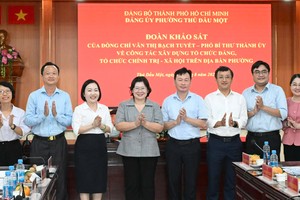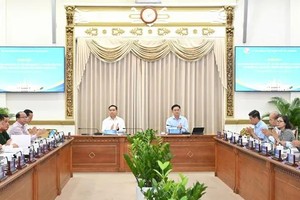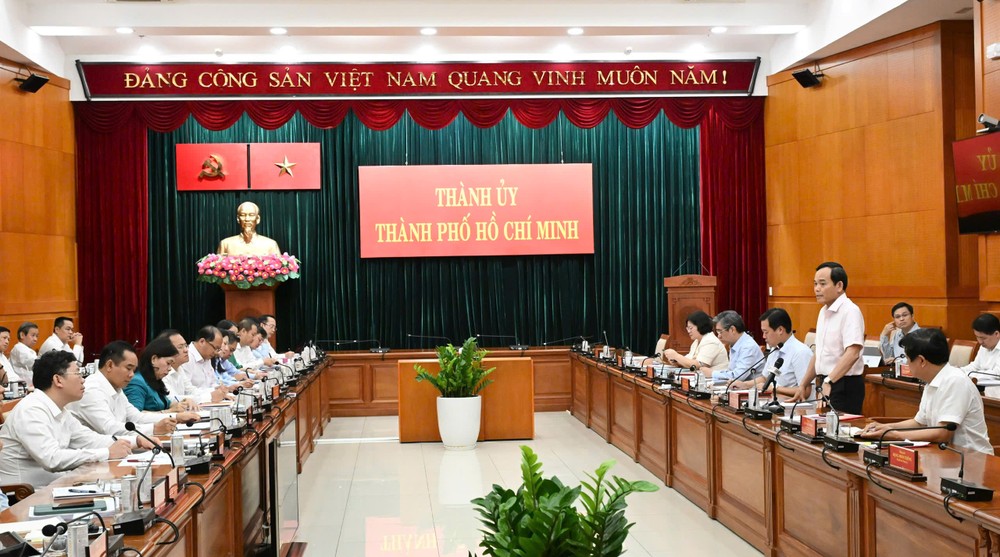
The meeting was attended by Mr. Tran Luu Quang, Politburo Member and Secretary of the HCMC Party Committee; Mr. Le Quoc Phong, Member of the Party Central Committee and Permanent Deputy Secretary of the HCMC Party Committee; Mr. Nguyen Van Duoc, Member of the Party Central Committee, Deputy Secretary of the HCMC Party Committee, and Chairman of the HCMC People’s Committee; Mr. Vo Van Minh, Member of the Party Central Committee, Deputy Secretary of the HCMC Party Committee, and Chairman of the HCMC People’s Council; Mr. Nguyen Phuoc Loc, Member of the Party Central Committee, Deputy Secretary of the HCMC Party Committee, and Chairman of the Vietnam Fatherland Front Committee of HCMC; Mr. Dang Minh Thong, Deputy Secretary of the HCMC Party Committee; and Ms. Van Thi Bach Tuyet, Deputy Secretary of the HCMC Party Committee.
The session focused on a range of critical issues directly affecting HCMC’s development in 2026 and the years ahead.
Determined efforts to remove bottlenecks
Reporting at the meeting, Vice Chairman of the HCMC People’s Committee Nguyen Cong Vinh said that in the first six months of 2026, the Party Committee of the HCMC People’s Committee had concurrently directed a wide range of major tasks. These included restructuring the organizational apparatus, operating the two-tier local government model, accelerating public investment disbursement, resolving long-standing stalled projects, and refining new institutional and policy frameworks.
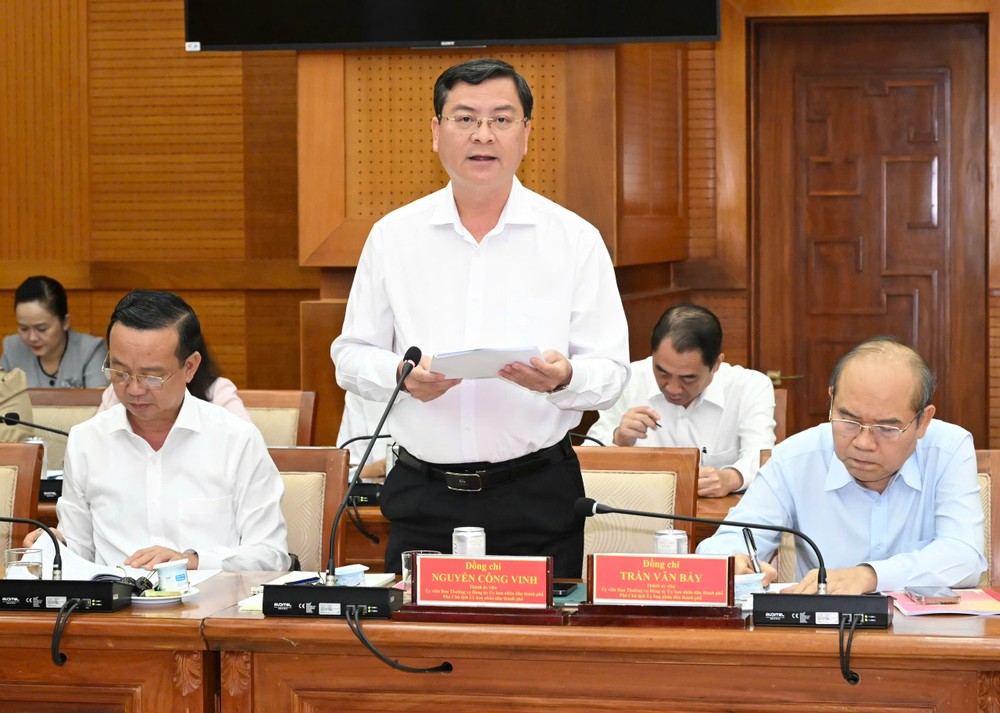
Alongside positive outcomes, he acknowledged that several limitations and shortcomings remained, requiring more focused leadership and stronger coordination in the coming period. The Party Committee of the municipal People's Committee has therefore identified a set of key tasks and solutions to be prioritized to ensure more effective implementation.
Following the presentation, delegates engaged in extensive discussion, focusing on mechanisms to resolve long-delayed projects and strengthen development efficiency.
Vice Chairman of the HCMC People’s Committee Tran Van Bay provided further clarification on the handling of stagnant projects and unresolved works. He said the city had conducted a comprehensive review and classification of projects based on their implementation status, the severity of bottlenecks, and the feasibility of continued execution.
On that basis, the city is concentrating on removing legal and procedural obstacles, establishing a regular monitoring and supervision mechanism for stalled projects, and accelerating the utilization of land and other idle resources. Projects that meet all legal requirements will be pushed forward, while measures will be taken to prevent new backlogs, thereby unlocking resources for socio-economic development.
Addressing the issue of social housing development, Vice Chairman of the HCMC People’s Committee Hoang Nguyen Dinh said the city is aiming to commence construction of projects totaling approximately 100,000 units by the end of 2026. By the second quarter of 2027, additional projects will be launched to ensure completion of the target of around 199,400 units by 2030.
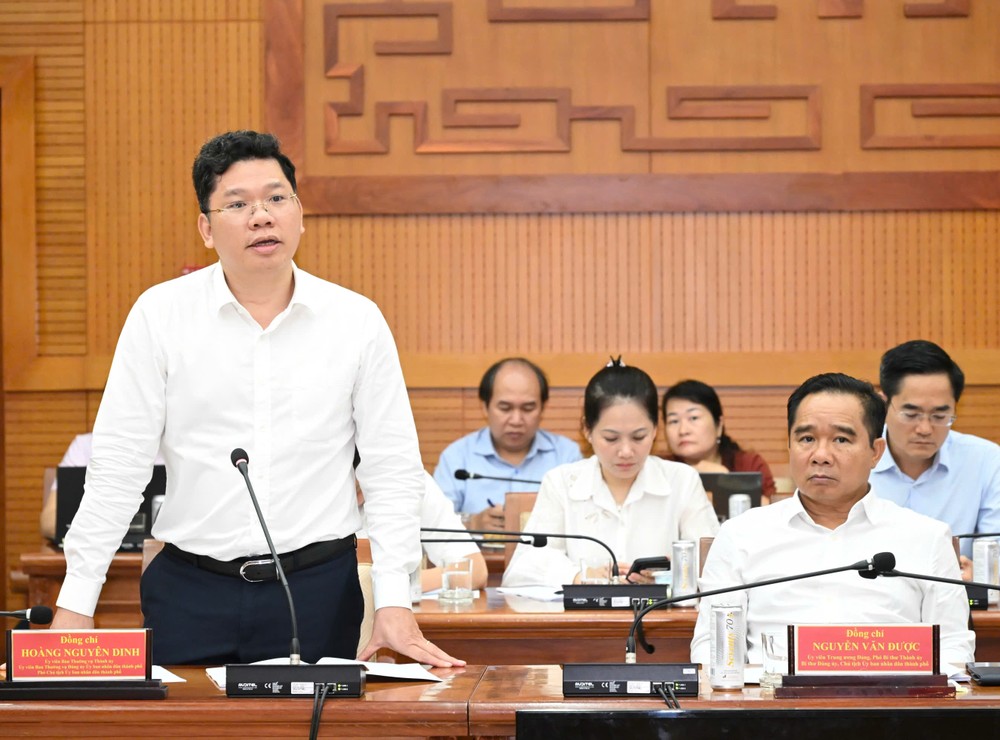
He identified a major bottleneck in the current regulatory framework governing investor selection for social housing projects, particularly the bidding and auction procedures, which he described as inefficient and restrictive.
He proposed that the Standing Committee of the HCMC Party Committee consider recommending to central authorities a pilot mechanism allowing the municipal government to directly assign investors for state-managed land funds, public land, or land parcels consistent with planning for social housing, rental housing, and worker accommodation projects. Under this proposal, the city would not be required to conduct auctions or competitive bidding for such projects.
In his remarks, Mr. Le Quoc Phong emphasized the need for the Party Committee of the HCMC People’s Committee to significantly enhance its leadership, direction, inspection, and supervision roles in implementing conclusions and directives issued by the Standing Committee of the HCMC Party Committee and its own Party Committee.
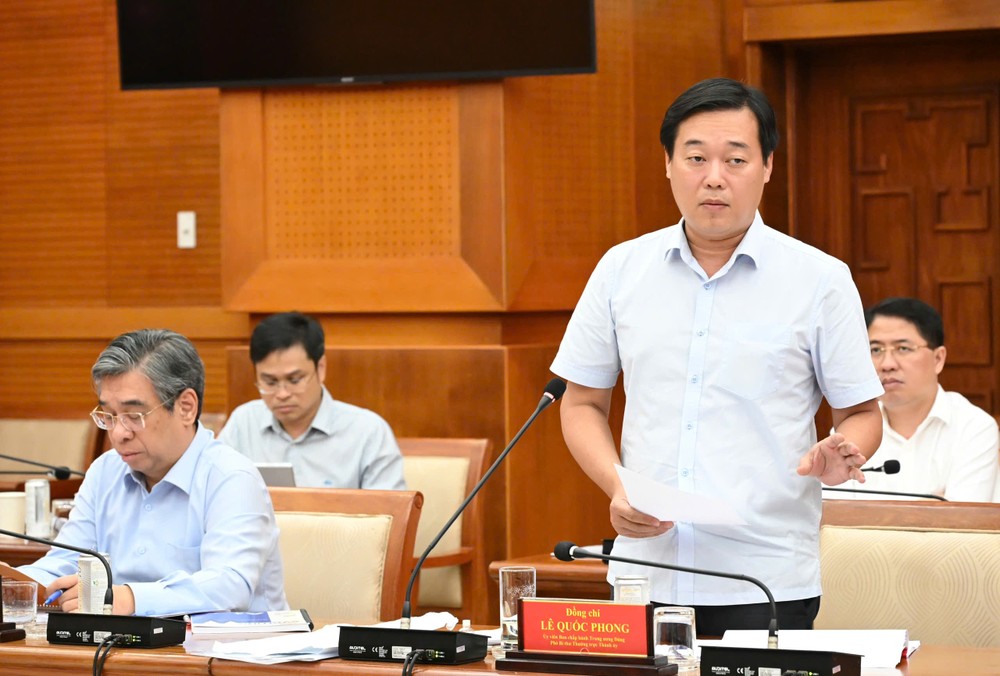
He stressed the need for a structured reporting system for each task, enabling quarterly, quantifiable performance assessments based on concrete outcomes such as reduced flood-prone areas, improved traffic congestion, environmental pollution control, and progress toward a drug-free city initiative.
Such a system, he noted, would provide a clear basis for performance monitoring, accountability assessment, and substantive improvements in implementation. It would ensure the principles of “clear responsibilities, clear tasks, clear accountability, clear timelines, and clear outcomes.”
Efficient management and utilization of public land and facilities
Focusing on education, healthcare, and housing for residents, Chairman of the Vietnam Fatherland Front Committee of HCMC Nguyen Phuoc Loc called for the swift development of a pilot scheme to relocate universities and hospitals out of the city center.
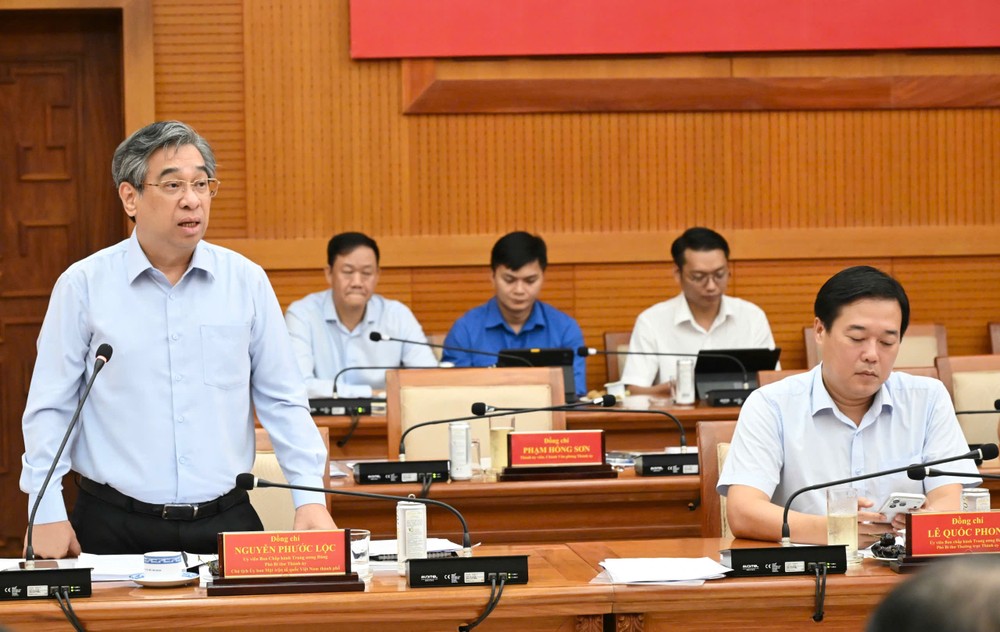
In addition to new construction, he emphasized the importance of renovating, upgrading, or exchanging land positions to improve the efficiency of schools, medical stations, and hospitals. He also urged the continued review and inventory of surplus public land and facilities to prioritize their use for education, healthcare, public infrastructure, and community services.
He further urged the health sector to accelerate citywide health screening programs, linking general medical examinations with early disease detection. He also called for the rapid approval of a plan to provide healthcare services for the elderly population in HCMC.
Regarding housing policy, he proposed that, alongside social housing and rental housing development, the city should establish and standardize criteria for boarding houses and rental accommodation. This would support the development of affordable housing for workers, low-income residents, and vulnerable groups through appropriate investment and support policies.
Chairman Vo Van Minh of the HCMC People's Council added that the city should encourage enterprises to use existing land resources to develop social housing projects, with the city providing maximum support in administrative procedures and planning approvals.
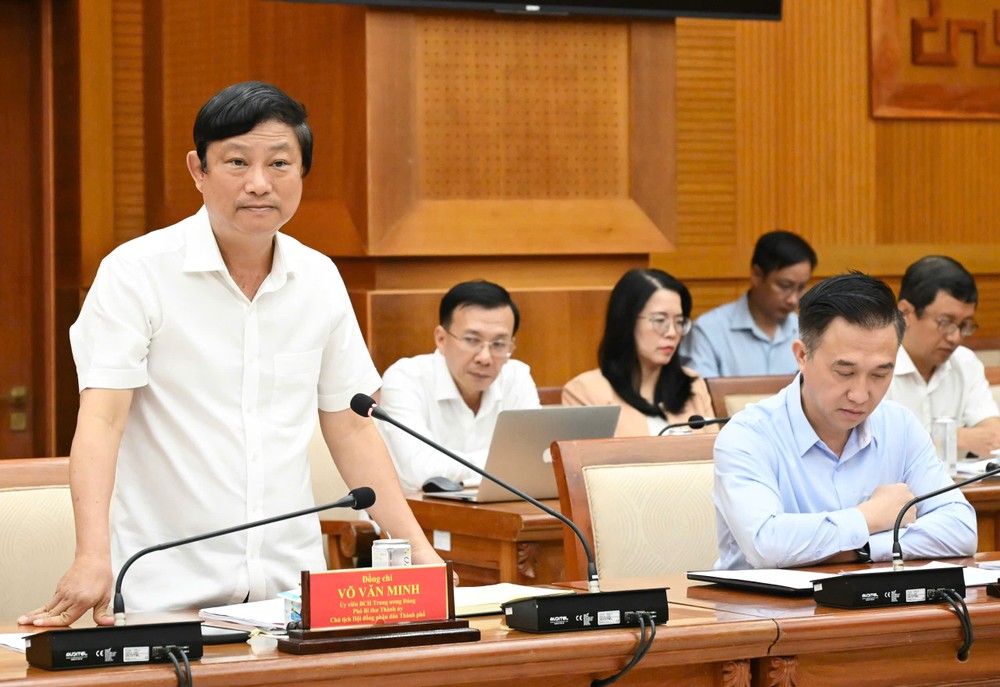
He also suggested utilizing public land for conversion into social housing or strategic development projects and studying mechanisms to acquire low-cost housing projects developed by private investors for use in resettlement programs and public housing needs.
On pressing urban challenges such as traffic congestion, flooding, environmental pollution, and canal restoration, Mr. Vo Van Minh stressed the need for a clearly defined list of investment priorities and corresponding budget allocations.
He also highlighted the importance of diversifying investment resources through public-private partnerships (PPP), with particular emphasis on effective exploitation of land resources. In addition, he proposed studying the development of land along transport corridors under the Transit-Oriented Development (TOD) model to generate revenue for reinvestment in transport infrastructure, urban renewal, and sustainable urban development.
Deputy Secretary of the HCMC Party Committee Dang Minh Thong emphasized the implementation of Resolution 57-NQ/TW on science, technology, innovation, and digital transformation, describing it as a critically important strategic task. He called for coordinated and comprehensive implementation across all sectors, levels, and localities.
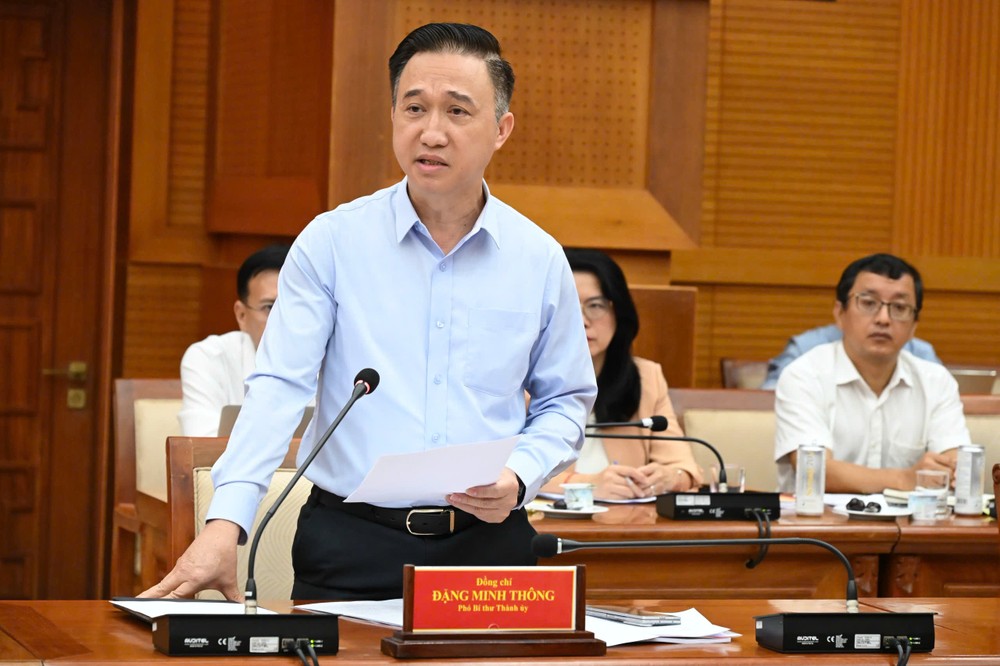
Regarding the draft Law on Special Urban Areas, he proposed that HCMC proactively prepare related legal documents and regulatory frameworks in parallel with the drafting process, ensuring immediate implementation once the law is enacted.
He also called for a comprehensive review of existing legal documents under the city’s authority to ensure timely issuance and execution, particularly those related to decentralization and delegation of powers to wards, communes, and special administrative units, accompanied by adequate resource allocation.
Deputy Secretary of the HCMC Party Committee Van Thi Bach Tuyet emphasized the importance of strengthening support for grassroots-level administrations. She urged the Party Committee of the HCMC People’s Committee to address outstanding proposals and recommendations submitted by ward, commune, and special zone Party committees and authorities, noting that many requests remain unanswered or lack clear guidance.
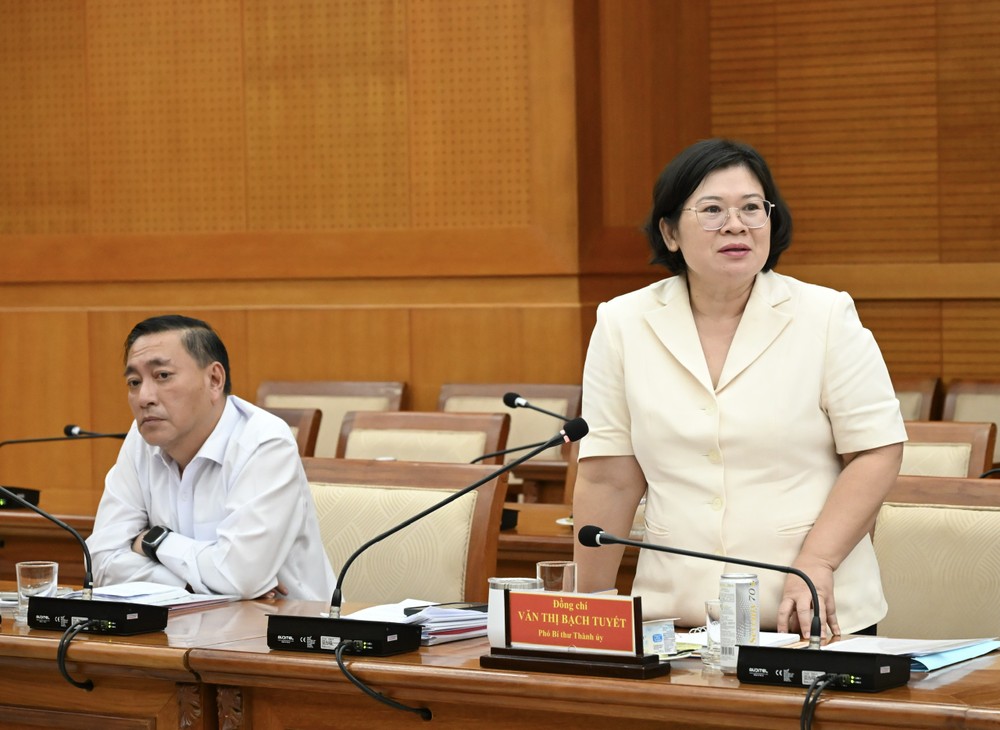
She also called for a review of all responsibilities delegated to the commune level and an assessment of the effectiveness of the two-tier local government model after one year of operation. Based on the findings, the city should continue hands-on training and capacity-building for grassroots officials or adjust policies where necessary to ensure effective implementation.
The meeting also reviewed HCMC’s socio-economic performance, which recorded positive results and laid a solid foundation for achieving the 2026 growth targets.
Notably, gross regional domestic product (GRDP) in the first six months of 2026 was estimated to increase by 8.47 percent, with the second quarter alone reaching 8.7 percent - the highest quarterly growth rate in the past decade. Many other socio-economic indicators also recorded strong improvements.
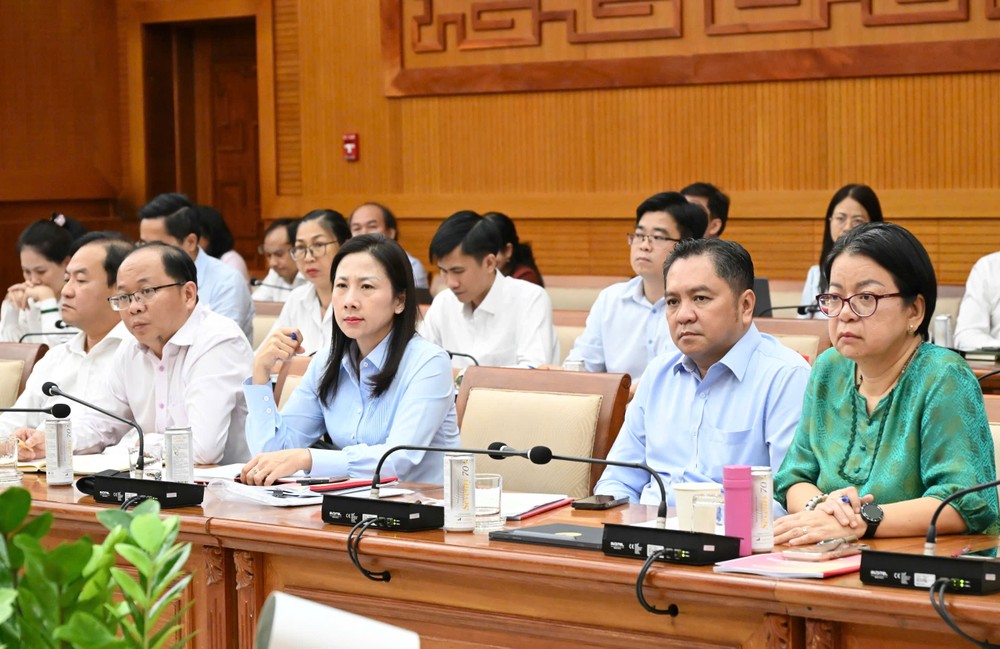
The city has intensified efforts to review and resolve bottlenecks in stalled infrastructure and investment projects, demonstrating stronger administrative resolve and coordination across departments and agencies.
At the same time, HCMC is actively preparing and implementing major strategic programs and projects. These include the completion of the Law on Special Urban Areas dossier, the HCMC Master Plan, the development of an International Financial Center, the establishment of a Free Trade Zone, and acceleration of key infrastructure projects such as Ring Road 4, the HCMC–Moc Bai Expressway, Metro Line 2, and the Can Gio International Transshipment Port.
)