This situation underscores the urgent need for the city to prepare resources in advance to proactively prevent, respond to, and mitigate the consequences of natural disasters.
As a locality with an extensive network of rivers, canals, waterways, and a coastal area, Ho Chi Minh City is highly vulnerable to the impacts of climate change. Therefore, the city consistently places great emphasis on the timely implementation of disaster prevention, response, and recovery measures, helping minimize losses of life and property. In this regard, the Natural Disaster Prevention and Control Fund serves as an important financial resource.
As part of the 2025 Natural Disaster Prevention and Control Fund collection program, Binh Tay Ward has actively promoted public awareness and mobilization efforts. By the end of the first quarter of 2026, the ward had collected nearly VND1.7 billion (US$64,567), equivalent to 73.68 percent of its target. The ward has transferred funds to the city fund in two installments, totaling nearly VND1.2 billion (US$45,569).
Mr. Tran Duc Tho, Vice Chairman of the People's Committee of Binh Tay Ward, said the ward did not wait until the deadline to collect contributions, nor did it leave the task solely to a specialized department. Immediately after receiving guidance from the Ho Chi Minh City Department of Agriculture and Environment, the ward People's Committee proactively directed its Division of Economy, Infrastructure, and Urban Development to formulate and issue an implementation plan. Key personnel, particularly heads of residential quarters, went door-to-door to explain the purpose and significance of the Natural Disaster Prevention and Control Fund. As a result, residents came to understand that contributing to the fund is not merely a mandatory levy but also a shared responsibility and a means of safeguarding the community against natural disasters.
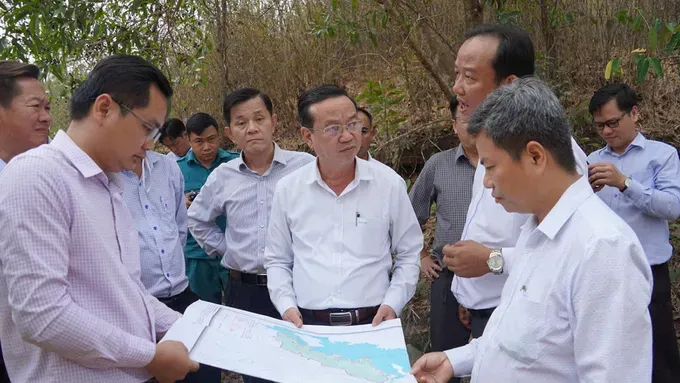
According to Mr. Nguyen Duc Vu, head of the Irrigation and Flood Prevention Division under the city's Department of Agriculture and Environment, the agriculture and environment sector is advising the city on the implementation of several urgent tasks in 2026, with a total estimated budget of more than VND284 billion (US$10.8 million). These include plans to repair, construct, and undertake emergency treatment works for 89 disaster prevention and control projects across 21 wards and communes, with a total investment of nearly VND228 billion (US$8.7 million).
The projects are focused on addressing areas at high risk of landslides, flooding, and tidal inundation, thereby helping safeguard residential communities, infrastructure facilities, and agricultural production zones.
Many localities have recognized the practical value of prioritizing resources from the Natural Disaster Prevention and Control Fund for projects aimed at mitigating landslides, reinforcing embankments, preventing flooding, and responding to high tides. These works play an important role in reducing disaster risks, protecting people's lives and livelihoods, and creating stable conditions for production and business activities, Mr. Nguyen Duc Vu noted.
Enhancing transparency in the management, collection, and utilization of the fund
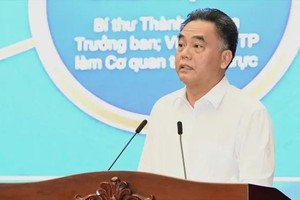
Deputy Director of the Ho Chi Minh City Department of Agriculture and Environment and Deputy Director of the city's Natural Disaster Prevention and Control Fund, Nguyen Minh Chanh, said that the management, collection, and utilization of the fund need to be further improved to meet practical requirements in the new phase.
Following the reorganization of administrative units and the implementation of the two-tier local government model, local authorities are continuing to review and update data on individuals and organizations subject to fund contributions while also refining management, monitoring, and implementation procedures to ensure greater efficiency and effectiveness.
The Department of Agriculture and Environment has identified public communication and awareness-raising as a key task to help organizations, businesses, and residents better understand the role of the Natural Disaster Prevention and Control Fund, as well as their responsibility to fulfill contribution obligations in accordance with the law.
This contribution is mandated by law. The department will continue reviewing and addressing difficulties and bottlenecks arising during implementation in order to develop appropriate solutions, ensuring that collections are carried out accurately and fully in compliance with regulations, Mr. Nguyen Minh Chanh emphasized.
According to the department's leadership, Ho Chi Minh City will continue to accelerate the application of information technology and digital transformation in the management of the Natural Disaster Prevention and Control Fund. The city plans to gradually digitize data on contributors, thereby improving the efficiency of monitoring, reporting, and revenue management.
The development of a comprehensive database, synchronization of information across sectors, and expanded use of digital technologies will help reduce administrative burdens on grassroots authorities while enhancing transparency and efficiency in fund management.
According to the Department of Agriculture and Environment, Ho Chi Minh City is expected to mobilize more than VND1.172 trillion (US$44.5 million) for the Natural Disaster Prevention and Control Fund in 2026. Of this amount, contributions from the business sector are estimated at approximately VND776.94 billion (US$29.5 million), while contributions from employees and other entities subject to mandatory contributions under current regulations are projected at around VND 395.65 billion (US$15 million).
In addition, the city has developed a plan to utilize the fund, allocating nearly VND664 billion (US$25.2 million) for disaster response, relief, recovery, and prevention activities. The funding will be prioritized for a range of practical tasks, including providing emergency assistance when natural disasters occur; supplying food, drinking water, and medicines to affected residents; supporting the repair of homes, schools, healthcare facilities, and other essential infrastructure; restoring agricultural production; and helping stabilize the livelihoods of people in disaster-affected areas.







)