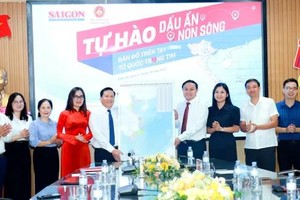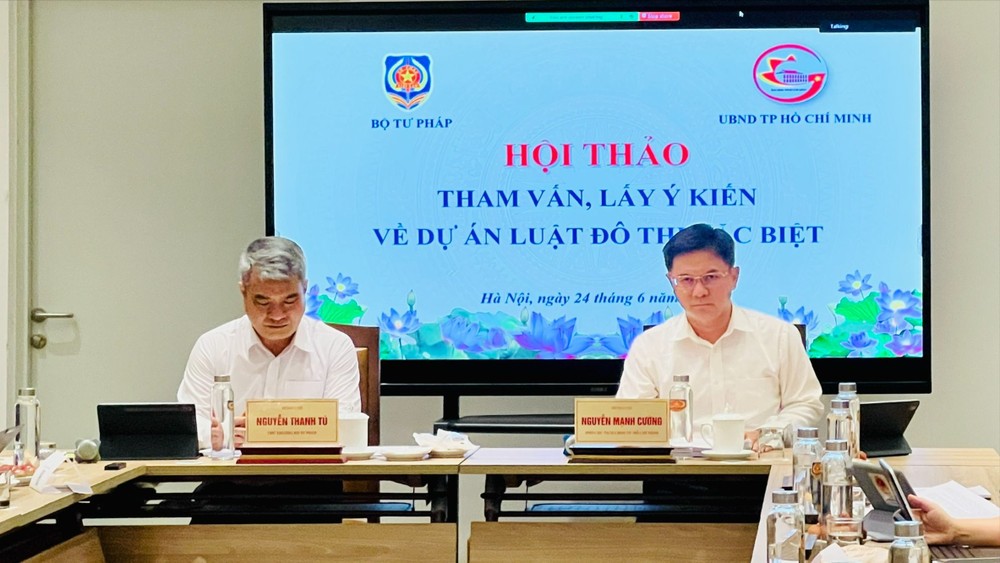
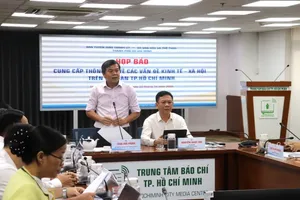
The Ministry of Justice, in coordination with the HCMC People's Committee, held a consultation workshop with central government agencies on the draft legislation on June 24.
The event was co-chaired by Deputy Minister of Justice Nguyen Thanh Tu and HCMC Vice Chairman Nguyen Manh Cuong, with the participation of National Assembly Economic and Financial Affairs Committee Chairman Phan Van Mai, representatives of ministries and central agencies, and leaders of several major cities.
Opening the workshop, Deputy Minister Nguyen Thanh Tu said the draft law had been designed under a "plus-minus" approach in relation to the Capital Law governing Hanoi.
"As Hanoi is also a special urban area, this draft inherits the broadest policy frameworks from the Capital Law, adds more advanced and distinctive mechanisms reflecting HCMC's dynamic socio-economic realities, and removes provisions tied specifically to Hanoi's role as the nation's political and administrative center," he explained.
He noted that although the law was initially intended for HCMC alone, its scope has since been expanded to form a broader legal framework for all special urban areas. The law is intended not only to address immediate challenges but also to create long-term development opportunities.
A strong consensus emerged at the workshop in favor of deeper decentralization, including granting greater authority to the city's leadership.
Mr. Phan Trung Tuan, Director General of the Local Government Department under the Ministry of Home Affairs, argued that the Chairman of the HCMC People's Committee should be empowered to make direct decisions on urgent socio-economic matters rather than requiring collective approval from the entire committee in every case. Such an approach, he said, would enhance decisiveness and accountability in managing a special urban area with an exceptionally large workload.
Fiscal and budgetary mechanisms attracted particular attention. Representatives of the Ministry of Finance agreed that HCMC's development should be viewed not merely as a local objective but as a means of strengthening the city's role as the country's economic engine.
However, the ministry expressed concerns over proposals allowing the city to retain all increases in central government revenue collected locally, as well as 100 percent of land-use revenues for infrastructure investment. According to ministry representatives, such measures could affect the central budget's leading role in national fiscal management. They also cautioned that generous investment incentives should be carefully evaluated in relation to their potential impact on neighboring provinces' ability to attract investment.
Representatives of the Ministry of Agriculture and Environment stressed that management of rice-growing land must continue to comply with strict principles governing land-use conversion, ensuring effective oversight of any changes in land designation.
Offering a broader perspective, Mr. Phan Van Mai argued that the essence of the Law on Special Urban Areas is not to seek additional transfers from the central budget but to create mechanisms that enable HCMC to unlock its existing potential.
He said local budget resources should act as “seed capital” to mobilize much larger flows of social and private investment, thereby creating new growth drivers for the country’s economic powerhouse.
According to Mr. Phan Van Mai, a stronger private sector would generate higher revenues, leading to a larger and more sustainable tax base. He called for a comprehensive review of existing laws, including the Law on Support for Small and Medium-Sized Enterprises, to identify opportunities for stronger policies to accelerate private-sector development in HCMC.
"HCMC must be able to demonstrate that the powers granted by the National Assembly will help create a larger economic pie, resulting in greater contributions from the city to the central budget. If that can be achieved, I am confident the Ministry of Finance will be more open to granting additional fiscal autonomy," he said.
Regarding land resources, Mr. Phan Van Mai urged policymakers to confront current realities and remove barriers preventing land from being used more effectively for urban development. He argued that policymakers should not be constrained by outdated statistical targets, particularly when HCMC now has very limited land genuinely devoted to rice cultivation.
HCMC Vice Chairman Nguyen Manh Cuong emphasized that the establishment of a Law on Special Urban Areas has long been a shared aspiration of city residents and successive generations of municipal leaders.
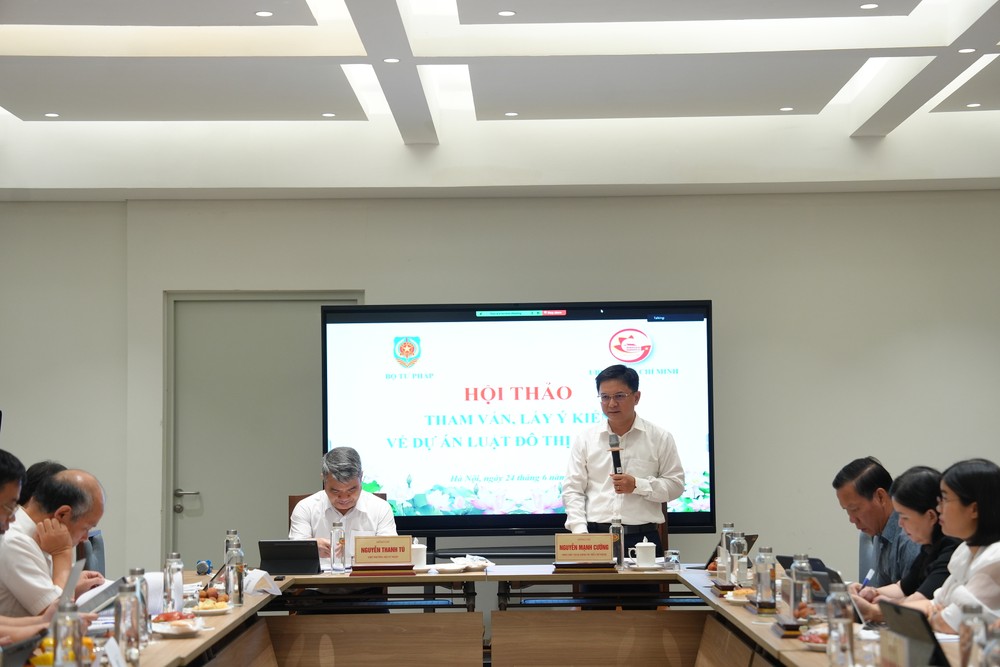
He said the city is approaching the legislation, intending to expand its development space and strengthen self-governance, in line with the principle that “HCMC develops for the country, and the country supports HCMC.”
According to Mr. Nguyen Manh Cuong, the city is especially interested in what he described as "expansion mechanisms" - policies that would enable HCMC to proactively create and nurture new revenue streams, thereby generating additional resources for infrastructure development and social welfare programs.
"If the city is provided with stronger mechanisms to fully realize its potential, its contributions to the central government will certainly increase," he said.
Concluding the workshop, Deputy Minister Nguyen Thanh Tu said the Ministry of Justice and HCMC authorities would continue refining the draft law on June 24 and 25. The revised draft will then be circulated for formal comments from ministries, agencies, organizations, and other stakeholders before being submitted to the National Assembly Standing Committee for review and feedback at its regular July session.



)