It aims to obtain additional indicators for a comprehensive evaluation of productivity, work efficiency, and the suitability of each position.
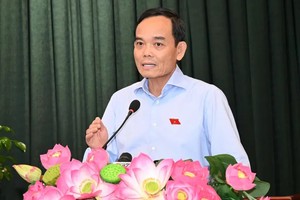
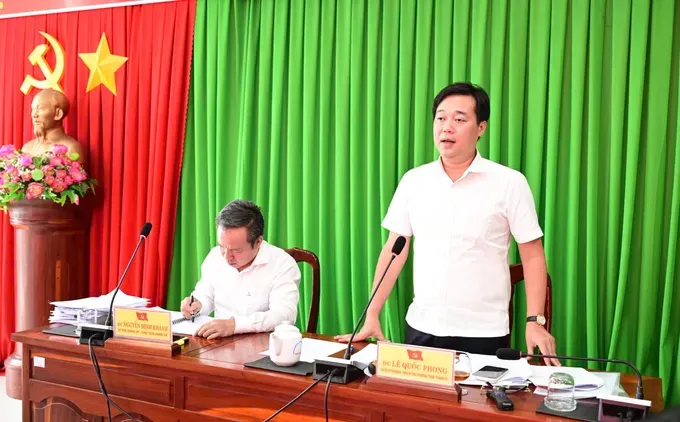
Speaking at the working session with the Standing Board of the Party Committee of Dau Tieng Commune on June 23, Standing Deputy Secretary of the Ho Chi Minh City Party Committee, Le Quoc Phong, also noted that Dau Tieng Commune should continue to accelerate administrative procedure reform and digital transformation within Party agencies; innovate and improve the quality of Party cell meetings; focus on Party membership development; and strengthen inspection and supervision activities.
Regarding propaganda works, Deputy Head of the Ho Chi Minh City Party Committee's Propaganda and Mass Mobilization Commission Nguyen Tho Truyen requested that the locality regularly monitor the ideological sentiments of officials and Party members as well as public opinion and promote the role of officials, Party members, and residents in communication efforts and in combating and refuting false information in cyberspace.
The locality should also step up the application of technology and innovate propaganda methods on digital platforms while building the Ho Chi Minh Cultural Space within Party organizations, agencies, units, businesses, and religious establishments, thereby contributing to spreading Ho Chi Minh’s ideology, morality, and style.
Dau Tieng Commune was established through the merger of Dau Tieng Town, Dinh Thanh Commune, Dinh An Commune, and part of Dinh Hiep Commune. Following the merger, the commune covers an area of more than 182 square kilometers and has a population of over 40,000, making it the third-largest locality in Ho Chi Minh City in terms of land area.
At the meeting, local leaders reported on the results of Party building and political system development during the first six months of the year, key tasks for the remaining six months of 2026, and outcomes after one year of operating under the two-tier local government model.
Given its large geographical area, sizeable population, and heavy workload, the commune proposed that the city consider increasing staffing levels. It also called for enhanced professional training and capacity-building programs for officials, civil servants, and public employees.
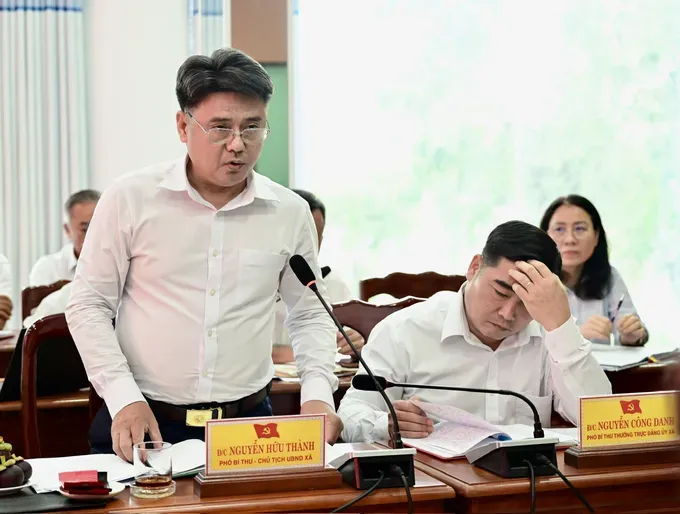
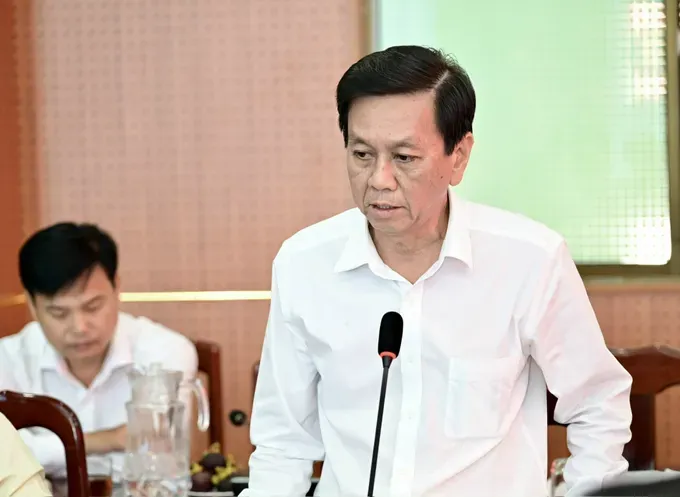
Chairman of the Dau Tieng Commune People’s Committee Nguyen Huu Thanh also proposed that the delegation of authority and decentralization of powers must be accompanied by the synchronized allocation of resources. Currently, the commune manages 754 roads and more than 3,000 street lighting units, and therefore needs to be allocated funding to proactively maintain and repair the public lighting system and urban greenery.
Regarding education, Vice Chairman of the Dau Tieng Commune People’s Committee Nguyen Thanh Du said that the locality is currently short of 15 classrooms, while some schools and classrooms have deteriorated. The commune proposed that the city support investment in and repairs to educational facilities to ensure conditions for organizing two-session-per-day teaching.
Standing Deputy Secretary of the Ho Chi Minh City Party Committee Le Quoc Phong acknowledged the efforts of the Standing Board of the Dau Tieng Commune Party Committee in leading and directing the implementation of tasks, thereby achieving positive results in the first six months of the year.
He requested that in the coming time, Dau Tieng Commune focus on accelerating the disbursement of public investment capital to ensure the completion of set targets; improve its capacity to absorb capital as well as its capacity in project management and administration, thereby creating a foundation and prerequisites for implementing this task in the following years.
The Standing Deputy Secretary of the Ho Chi Minh City Party Committee also acknowledged the proposal and requested the municipal People’s Committee to review the delegation of authority and decentralization of powers in association with the allocation of resources, enabling localities to implement assigned tasks in a manner that is both practical and supported by sufficient resources.
Regarding Dau Tieng Commune’s proposal to increase its staffing allocation Standing Deputy Secretary of the Ho Chi Minh City Party Committee Le Quoc Phong said that the city is working with communes, wards, and special administrative zones to conduct a comprehensive review and assessment, ensuring that any increase or reduction in staffing is based on scientific grounds and aligned with job positions, workload, and task requirements of each locality.
The Standing Board of the Ho Chi Minh City Party Committee has requested the completion of a multi-dimensional and transparent system for evaluating and classifying commune-level officials. It also called for the development and promulgation of a set of criteria for assessing Key Performance Indicators (KPIs) applicable to cadres, civil servants and public employees.
Starting in early July 2026, Ho Chi Minh City will pilot the KPI framework in several agencies and units before officially applying it citywide from 2027.