Ho Chi Minh City currently manages over 39,500 electric cars and nearly 87,000 electric motorbikes. In many apartment buildings with high population density, arranging designated parking areas and designing charging stations remains a significant challenge.
Concerns over fire risks
At Thanh Da Apartment Block in Binh Quoi Ward, parking areas are set up on narrow pavements and open spaces around old buildings. When asked if they accept electric vehicles, a parking attendant replied that due to limited space and fire risk concerns, electric vehicles are not allowed. The building does not ban residents from owning electric vehicles, but they must park elsewhere or bring their vehicles upstairs to charge.
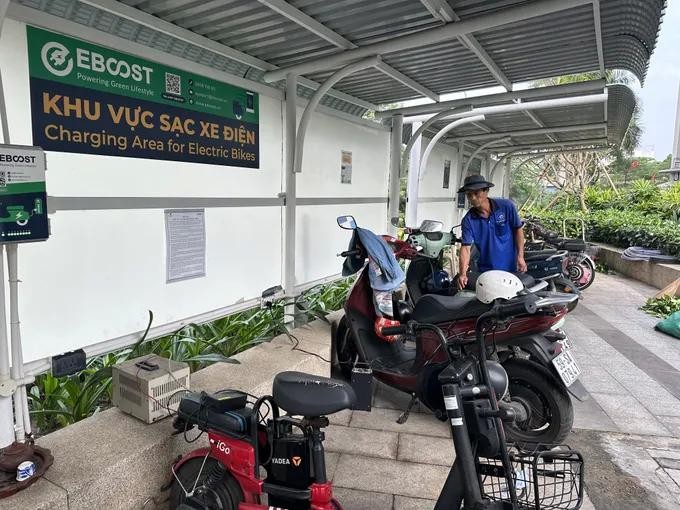
At K26 Duong Quang Ham Apartment Block in Hanh Thong Ward, some parking areas accept electric vehicles, while others refuse due to a lack of separate zones. In contrast, Tin Phong Apartment Building in Dong Hung Thuan Ward has designated a specific area for electric vehicles in front of the building and requires users to register charging times in advance.
Nguyen Tien Duc, Head of the Tin Phong Apartment Building Management Board, said the board had consulted residents before issuing safety regulations. After agreement, the building arranged a parking and charging area at the front, allowing residents to charge before 10 p.m.
At Him Lam Nam Saigon Apartment Building on Street No. 14 in Binh Hung Commune, the management board has set up a shared charging point in front of the community hall since early 2025. All vehicles share one electricity meter, with a monthly fee of VND120,000 per vehicle for both parking and power, subject to adjustment based on consumption.
Under this rule, from January 1, 2026, electric vehicles are prohibited from being brought into apartments, elevators, or regular parking areas. Unregistered vehicles must be parked in temporary zones, and the building will not take responsibility for any fire or explosion incidents caused by residents’ electric vehicles.
In smaller boarding houses and rental rooms across several wards, fire safety risks are even more evident. In one row of makeshift rooms on Nguyen Thi Can Street in Tan Thoi Hiep Ward, electric and gasoline-powered motorbikes are parked side by side, with loose electrical sockets and tangled wires. Near the old Mien Dong Bus Station in Binh Thanh Ward, a tenant named B.M.T. shared that his landlord charges a flat fee of VND200,000 per month for charging but provides no safety instructions. “The bikes are packed close together, and the wiring is temporary. I want to switch to an electric bike to save money, but I’m worried about the risks,” he said.
A need for clear regulations
Ensuring safety in the use of electric vehicles has become a pressing issue. To address this, the Ministry of Construction is seeking public input on a proposed revision to national technical regulation QCVN 04:2021 on apartment buildings, which would include specific rules for electric vehicle parking and charging areas in residential projects. The Ho Chi Minh City Department of Construction has also reported current challenges.
The department noted the lack of definitions and technical criteria related to charging stations such as space requirements in basements or parking lots, smoke ventilation, safe distances from fuel-powered vehicles, wiring standards, leakage protection, and grounding. There are also no dedicated fire safety standards for charging stations and electric vehicles in enclosed spaces, complicating approval and retrofitting efforts.
The Department of Construction recommends referencing and updating certified international standards, developing specific safety codes for charging stations in buildings and outdoor areas, and issuing regulations on renovating or redesigning apartment layouts to prevent disputes between developers, management boards, and residents.
As the city’s electricity operator, Ho Chi Minh City Power Corporation (EVNHCMC) said it is working with relevant departments to promote the roll out of charging stations. However, major gaps remain in legal frameworks and technical standards for private homes and apartments, underscoring the urgent need for tailored fire safety rules and financial mechanisms to ensure safe installation and operation.
Recently, the Ho Chi Minh City People’s Committee approved the installation of 20,000 battery-swapping cabinets for electric motorbikes on sidewalks and in public areas. The Department of Construction will soon announce selection criteria for participating companies, determine eligible street locations, and organize pilot implementation.






)