HCMC Deputy Director of Construction Bui Hoa An first informed that the proposal to convert gasoline motorbikes into electric ones stems from the city’s broader policy to cut emissions, protect the environment, and develop green transportation.
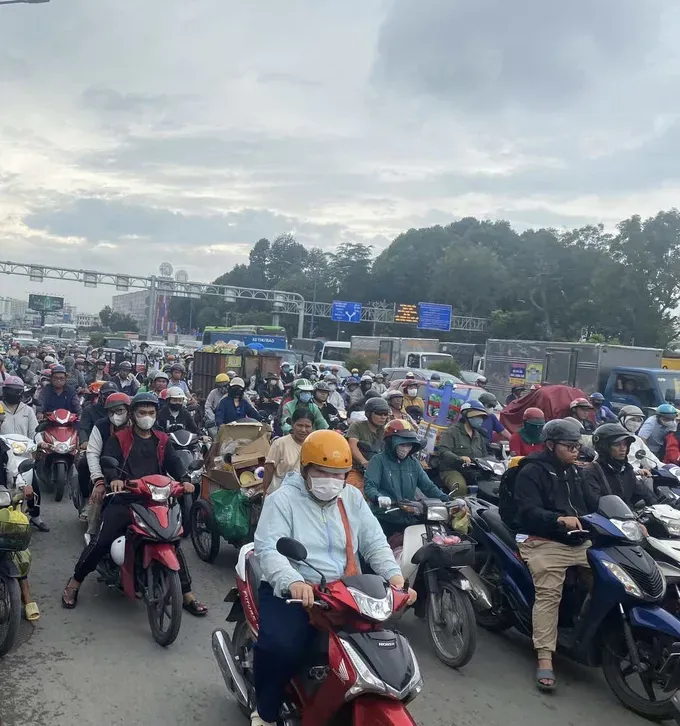
HCMC currently has over 10 million motorbikes. It’s reported that many of them are old, consume a lot of fuel, and emit CO, CO2, as well as fine particulate matter, which is causing severe air pollution. Therefore, researching improvements and the use of clean energy is a direction that aligns perfectly with global trends and the city’s own sustainable development goals for 2030.
However, this kind of retrofitting hasn’t really been deployed in Vietnam; it’s only in the technical research and testing phase. A few small mechanic shops in Hanoi and Da Nang City have, in the past, tried to convert old bikes to electric, but they weren’t permitted on the roads.
This was mainly due to the lack of a national technical regulation for post-conversion vehicles. Here in HCMC, the Department of Construction is currently assessing the feasibility of this, precisely because it’s an issue that directly involves technical safety, the legal framework, and the inspection process.
Globally, several countries like India, Thailand, and China already have established “retrofit programs,” allowing licensed businesses to convert old vehicles, but they’re accompanied by strict safety certification and quality control regulations. Vietnam is currently looking at these models to see if they’re applicable here.
As to the safety matter, the Deputy Director shared that in principle, the technical basis for this swap is quite clear. The vehicle’s original frame, suspension, and brakes are retained, but the engine block and drivetrain are replaced with an electric motor, a controller, and a rechargeable battery pack. However, guaranteeing safety is the hard part. It demands a lot of strict requirements.
For example, the battery must have a battery management system (BMS) to prevent overheating, short circuits, and potential fires. The electrical system has to meet standards for water, vibration, and leakage resistance. And, importantly, the frame and brakes have to be completely recalculated for the new load, because a battery is heavy and its weight is distributed differently than a gasoline engine.
Any retrofitted vehicle would have to undergo a full technical inspection before it could be legally used. The bottom line is, Vietnam doesn’t have specific technical regulations for this type of conversion yet, which is why it can’t be implemented.
Answering the question whether a retrofitted one operates as well or safely as an original, factory-built electric motorbike, Deputy Director Bui Hoa An stated that an original EV is a fully integrated, optimized system, achieving 90-95 percent efficiency and meeting safety standards. A retrofitted bike is a partial replacement, with quality dependent on the technician, resulting in lower efficiency.
In terms of safety, the original is inspected; the retrofitted bike “isn’t even legally recognized yet and poses potential risks.” Legally, there are no regulations for registering or insuring converted bikes, making accident liability incredibly difficult to determine. Therefore, retrofitting should only be a temporary solution. The ideal path should be encouraging people to switch to factory-built EVs.
There are suggestions that it is wiser to just support people with subsidies or low-interest loans to switch from gas to electric vehicles, instead of focusing on retrofitting.
This approach, it’s argued, helps people get vehicles that are safe and meet technical standards. It also allows the State to manage quality and reduce emissions more effectively, all while stimulating domestic EV production and building a sustainable value chain. This model has been used in China, Thailand, India, and Europe, with subsidies ranging from 10 to 30 percent.
However, Vietnam can’t roll this policy out widely for three main reasons: a limited state budget; the lack of a coordination mechanism between the State, businesses, and banks to share the costs; and finally, public trust and the charging infrastructure are still limited.
In the initial phase, a selective support program could perhaps be piloted, prioritizing low-income individuals, dilapidated vehicles, or high-pollution areas. But this must be paired with investment in public charging infrastructure and a strong public awareness campaign about the safety and efficiency of EVs.
Regarding the HCMC Construction Department’s proposal on sanctions for non-compliant vehicles, and for binding the responsibilities of manufacturers in terms of user manuals, charging safety, and warranty policies during the retrofitting process, Deputy Director Bui Hoa An recommended the “urgent issuance of national technical regulations” for both factory-built EVs and retrofitted bikes.
He stressed these must detail specifications for motors, batteries, electrical safety, fire prevention, and inspection. He also called for strengthening inspections and the power to recall non-compliant vehicles. Critically, he said Vietnam must license and monitor the retrofitting shops to avoid illegal modifications, and coordinate with power/firefighting sectors on safe charging.
Manufacturers, he added, must be held responsible for providing clear user guides and safety warnings. They must commit to warranties and be held liable for safety failures. Finally, motorbike users must be protected by safety and warranty policies similar to automobiles, including recall rights, and must be trained in safe charging. He stated that checking battery safety must be a mandatory step during registration.