Ho Chi Minh City is implementing a range of initiatives to develop safe, clean agricultural production zones. The goal is to build an eco-friendly and sustainable urban farming model aligned with the city’s green growth strategy.
From cooperative farms to city kitchens
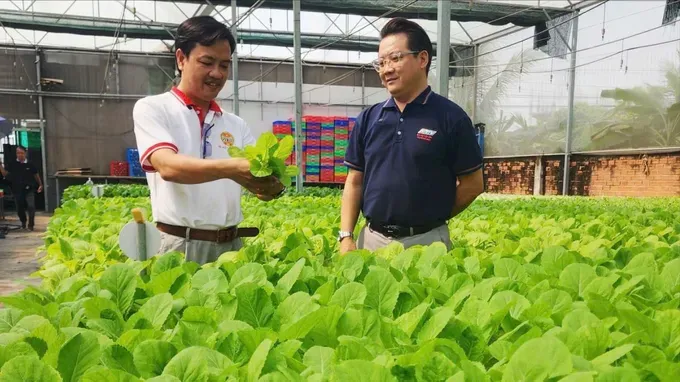
Founded in 2019 by Lam Ngoc Tuan, Tuan Ngoc Hydroponic Vegetable Cooperative in Long Truong Ward specializes in leafy greens such as mustard greens, lettuce, and water spinach, using Internet of Things (IoT) technology. This method saves up to 40 percent of watering time, eliminates the need for cooling water, and maintains plant moisture balance through a precise evapotranspiration system. Every stage, from seed selection and coconut fiber substrate preparation to nutrient use, all follows strict standards to ensure premium quality.
According to Director Tuan, the cooperative has grown from 1,000 square meters in 2019 to 10,000 square meters today, with monthly output increasing from 3 tons to around 30 tons. It has since transferred its technology and helped establish three similar models in other localities. The cooperative has also become a key destination for farmers, researchers, and students to learn about modern urban farming practices.
Vu Ngoc Dang, Head of the Ho Chi Minh City Rural Development Division, said that in 2025, the city launched multiple programs to support mechanization, post-harvest technology, and equipment for rural industries. Twenty-seven linkage projects have been approved, with total funding of about VND70 billion, covering rice, fruit trees, aquaculture, and other agricultural sectors. These initiatives have helped standardize production, stabilize prices, and increase farmers’ incomes by 1.1 to 1.5 times.
At Son Ca 14 Kindergarten Gate in Phu Nhuan Ward, one of two mobile vegetable stalls organized by the city’s Farmers’ Association operates every weekend. Through this program, Chau Pha Agricultural Production and Services Cooperative, led by Director Nguyen Viet Tu, brings fresh produce from Chau Pha Commune directly to Ho Chi Minh City. The cooperative offers a wide range of familiar leafy greens such as mustard greens, bok choy, water spinach, and malabar spinach.
“Our vegetables are grown by cooperative members in Chau Pha Commune,” Director Nguyen Viet Tu shared. “Every weekend, we deliver them to the city to meet residents’ demand for safe produce.” Established in 2022, the cooperative now supplies 4 to 4.5 tons of high-tech clean vegetables daily, with members earning an average monthly income of VND18 million to VND25 million.
Boosting farmers’ income
According to Nguyen Thanh Trung, Chairman of the Ho Chi Minh City Farmers’ Association, growing consumer awareness of food safety has driven the association to launch the “Accompanying Clean Agricultural Products” program for the 2025–2030 term. It aims to bring safe, traceable products closer to city residents. In Phu Nhuan Ward, for instance, the association has partnered with local authorities to operate clean produce outlets, receiving strong public support.
Recognizing that cooperative-based economic models remain a strategic focus, the responsible agency has helped establish five new cooperatives in 2025. To date, the city has 426 registered agricultural cooperatives with more than 7,200 members. These cooperatives increasingly adopt value-chain production, technological innovation, and market linkages to achieve clean and sustainable outcomes.
The city has also funded numerous production–consumption linkage projects worth tens of billions of Vietnamese dong, boosting operational efficiency and farmers’ income.
In parallel, over 1,000 agricultural farms continue to play a key role in restructuring the sector, especially in fruit cultivation and urban agriculture, reinforcing the city’s commitment to a greener and more resilient future.