Commitments to mobilize billions of US dollars

In early February, on the sidelines of the Singapore Airshow 2026, the Vietnam International Financial Center in Ho Chi Minh City (VIFC—HCMC) and Vietjet Air announced the establishment of the Asia–Pacific Aviation Finance Center, operating under VIFC—HCMC. Immediately following its launch, the new center secured investment commitments exceeding US$6.1 billion through a series of agreements between Vietjet and international partners.
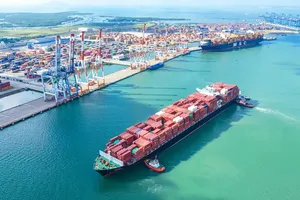
Earlier, VIFC—HCMC had set up a Maritime Finance Center to support trade financing and logistics, backed by commitments from major global shipping groups. In addition, the center mobilized US$2 billion for smart urban data infrastructure and financial programs supporting the development of Ho Chi Minh City through a cooperation agreement involving G42, a leading AI & cloud computing company based in Abu Dhabi, and a consortium of domestic investors.
In addition, the Vietnam International Financial Center in Ho Chi Minh City (VIFC—HCMC) has established an on-chain economy investment fund with a committed capital of US$1 billion, focusing on blockchain, asset tokenization, and next-generation digital finance models. The move stems from a strategic cooperation agreement between VIFC—HCMC and a joint venture between VinaCapital and the Global On-chain Economic Alliance, aimed at researching and operating a digital asset investment fund for the city.
Further positive signals have followed. Rich McClellan, Chief Executive Officer of the VIFC—HCMC Executive Agency, said that in recent weeks, a growing number of foreign investors have expressed interest in channeling capital into Vietnam through the center.
Among them is Vantage Point Management, a multi-billion-dollar asset management firm operating in Singapore and Australia, which has outlined ambitions to mobilize up to US$10 billion from global investors for allocation into sectors such as infrastructure and real assets. Founding and strategic members of VIFC—HCMC have also pledged to work closely together to attract additional international investors, reinforcing the center’s role as a gateway for capital flows into Vietnam.
Building trust, creating mechanisms to attract investors
To attract major global investors and financial institutions to the Vietnam International Financial Center in Ho Chi Minh City (VIFC–HCMC), a transparent and enabling policy framework is seen as a decisive prerequisite.
In that context, Resolution 222 on the establishment of an international financial center in Vietnam, passed by the National Assembly, along with eight government decrees guiding its implementation, has introduced sweeping incentives.
Economic experts note that Vietnam’s policy package offers several advantages compared with other international financial hubs. These include corporate income tax incentives and personal income tax exemptions or reductions for experts, scientists, and highly skilled professionals working at the international financial center. Compared with certain regional financial centers, such measures are viewed as a competitive edge for Vietnam—creating a strong pull to attract major global players to establish a presence in the country.
Associate Professor Dr. Tran Hoang Ngan, a National Assembly deputy and Chairman of the Advisory Council for Breakthrough Development at Saigon University, said Vietnam is entering a new era of accelerated growth, in which the International Financial Center is expected to move in tandem with the country’s key economic drivers.
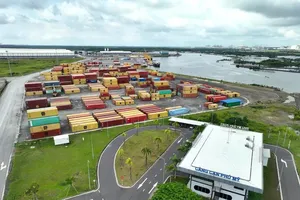
Beyond preferential policies, he noted, Vietnam must build a comprehensive ecosystem around the Vietnam International Financial Center in Ho Chi Minh City (VIFC—HCMC) so that investors can clearly see concrete opportunities and the country’s enabling policy environment. In particular, the early establishment of the Cai Mep Ha Free Trade Zone would serve as a critical complementary step, reinforcing the center’s development momentum.
Economist Nguyen Tri Hieu said foreign investors assess not only how the International Financial Center operates but also the broader investment landscape across Vietnam. Therefore, alongside regulatory and institutional breakthroughs within the financial center itself, areas beyond its boundaries must also undergo reforms aligned more closely with international standards and practices.
Chief Executive Officer of the Executive Agency of the Vietnam International Financial Center in Ho Chi Minh City (VIFC–HCMC), Rich McClellan, said the center will continue to focus on four key priorities in the period ahead.
First, VIFC—HCMC will be run by a professional and transparent executive body under a streamlined one-stop-shop mechanism.
Second, the center will prioritize high-quality pilot initiatives in areas such as trade and supply chain finance, as well as green finance.
Third, it will actively strengthen cooperation with banks, investment funds, and global market institutions to ensure Vietnam’s financial market becomes more deeply connected, compatible, and credible within the international system.
Finally, the center will concentrate on attracting, retaining, and empowering top-tier talent from Vietnam and abroad, recognizing human capital as a decisive factor in building a globally competitive financial hub.