Technology, speed and sustainability
In recent years, labor-intensive advantages alone have proven insufficient. Major brands are shifting toward smaller orders, diversified designs, faster production cycles, and stricter requirements on supply chain transparency and emission reductions. This has pushed businesses to undertake a dual transformation, embracing digital technology and green production, with tangible, measurable results.
Speaking about technology integration, Mr. Nguyen Huu Phuc, CEO of Fadatech Joint Stock Company, noted that the company has fully eliminated mold-making and screen-printing processes. All designs are digitally processed and printed directly onto fabric, removing the need for any intermediary materials.
This transition has significantly reduced water and chemical consumption, with some product lines generating almost no wastewater. At the same time, new technology offers major advantages in speed and flexibility. Previously, manufacturers had to produce thousands of meters per design; now, a few hundred meters, or even a single product, can be produced with ease. Production time has been shortened to just one to two weeks, compared to three to six months in the past. This is particularly important as major brands adopt small-batch, multi-design ordering models to avoid excess inventory.
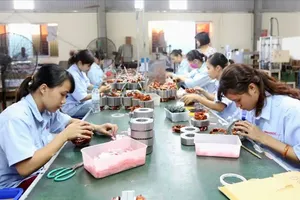
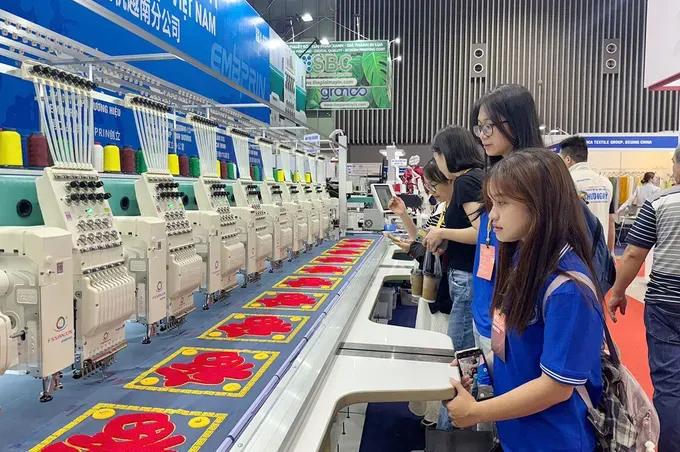
Product quality has also improved markedly. According to many enterprises, digital printing technology can now achieve color fastness ratings of 4–5 under international standards, higher than traditional printing methods. The application of laser cutting, automated sewing, and embroidery systems helps reduce material waste, save labor, and minimize waste generation.
Thanks to technological transformation, the company’s orders in 2025 and the early months of 2026 have remained stable, operating at 70–80 percent of production capacity, said Mr. Nguyen Manh Tuan, representative of Phuoc Hai Leather Bag Manufacturing and Trading Company Limited.
Increasing localization rates
In practice, Vietnam’s textile and garment production structure is undergoing a marked shift. The proportion of orders under FOB (free on board) and ODM (original design manufacturing) models, where firms source materials and create their own designs, has risen compared to the former subcontracting model.
Investment in domestic spinning, weaving and dyeing has enhanced traceability from yarn and fabric, creating advantages in leveraging signed free trade agreements.
Once proactively source fabric domestically, the companies significantly reduce logistics costs and improve competitiveness, said Mr. Pham Xuan Hong, Chairman of the Ho Chi Minh City Textile and Embroidery Association.
This development aligns with the Ministry of Industry and Trade’s Strategy for the Development of the Textile and Footwear Industry to 2030, with a vision to 2035 under Decision No. 1643/QD-TTg, which identifies exports as the main driver, promotes localization, increases added value, and ensures development in tandem with environmental protection and Industry 4.0.
Despite favorable conditions, many economists note that textile products face fierce competition, particularly in meeting sustainability requirements. For instance, the European Union’s sustainable textile strategy to 2030 mandates that products be more durable, recyclable, lower in hazardous chemicals, and transparent regarding their lifecycle information.
Associate Professor Dr. Nguyen Ngoc Ha, Director of the Institute for Research and Sustainable Trade and lecturer at the Faculty of Law, Foreign Trade University, emphasized that enterprises must not only control factory emissions but also develop long-term transition plans aligned with global climate commitments to maintain market share.
According to Dr. Pham Thi Hong Phuong, Senior Advisor at the Innovation Center of Ho Chi Minh City University of Industry, major barriers remain capital and human resources, as investments in green technology, water recycling systems and digital governance require substantial funding. She stressed the need for green credit mechanisms and workforce training support to accelerate transformation and enhance competitiveness in key export markets.
Mr. Pham Xuan Hong noted that Vietnam currently has around 7,000 active textile and garment enterprises. Many have adopted enterprise resource planning systems, real-time production management, computer-aided design and pattern making, 3D design, and digital printing to shorten production times, accept small orders, and deliver quickly. Approximately 25 percent of enterprises have sufficient capacity to invest comprehensively in green technologies. Broad technology adoption has helped reduce costs and strengthen the global competitiveness of Vietnam’s textile and garment industry.