This development has compelled businesses to recalibrate their financial strategies and reassess operational plans for upcoming export orders.
Recalculating prices and delivery schedules

According to Mr. Pham Quang Anh, General Director of Dony Garment Company, the Jordanian market accounts for nearly 20 percent of the company’s total export turnover, with most shipments transiting the Red Sea. At present, the enterprise continues to dispatch containers as scheduled and has not received any notice of order suspensions. However, a delivery delay of 15–20 days could result in missing the peak sales season, while prolonged disruptions lasting several months would directly affect clients’ business cycles.
Similarly, Cat Van Loi Company has completed its first shipment of equipment and accessories for a thermal power plant project in Saudi Arabia and is proceeding with subsequent consignments in line with the agreed timeline. Although orders have been divided into phases, the enterprise anticipates that any sharp increase in freight surcharges and extended delivery times may adversely impact overall project efficiency.
If current orders are able to maintain their planned momentum, the greater risk lies in contracts slated for signing in the second and third quarters.
General Director of Tan Quang Minh Trading Co., Ltd. (Bidrico), Nguyen Dang Hien, stated that the company has recently received notifications of an approximate 3 percent increase in prices for various input materials, driven by rising logistics costs and the risk of prolonged delivery timelines.
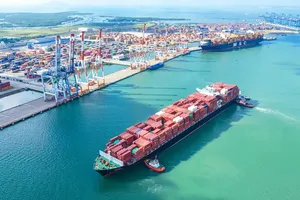
During previous periods of heightened tensions, transit times extended from roughly one month to three or four months, three to four times longer than normal. Freight rates for a 40-foot container surged from around US$1,500 to as high as US$5,000, excluding escalating war risk insurance premiums and restrictions on vessel traffic. Should such a scenario recur, newly signed contracts will inevitably require recalculation in terms of pricing structures and delivery schedules.
According to assessments by various enterprises and production–trade associations, in order to mitigate the risk of shortages or delivery delays, businesses are compelled to increase raw material inventories from this stage. This, in turn, places additional pressure on working capital requirements.
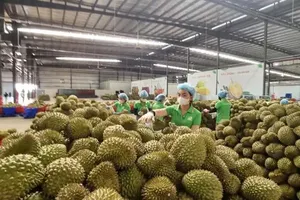
For the fruit and vegetable sector, Dang Phuc Nguyen, General Secretary of the Vietnam Fruit and Vegetable Association, analyzed that when vessels are required to reroute instead of transiting the Red Sea, shipping times are extended by several days, thereby increasing refrigerated container costs as well as insurance expenses.
Associations representing the textile and garment, wood processing, and food industries likewise indicated that they are closely monitoring fluctuations in freight rates and marine insurance premiums. Should transport costs remain elevated, the price competitiveness of Vietnamese goods may be significantly eroded.
Temporary suspension of tours to certain countries
On March 2, several travel enterprises in Ho Chi Minh City announced the temporary suspension of tour operations to certain Middle Eastern destinations, while simultaneously activating emergency response protocols for groups currently in the region, including itineraries transiting through Dubai.
A representative of Vietravel stated that the company presently has three groups comprising 51 travelers staying in Dubai and one group of 24 visitors in Egypt. Due to airspace restrictions in certain areas, these groups have been unable to proceed as scheduled and are temporarily remaining at their hotels pending updates from the respective airlines. Vietravel has arranged standard-compliant accommodations, ensured meals and essential services, and maintained regular communication with clients, while closely monitoring developments to adjust itineraries when conditions permit.
Similarly, BenThanh Tourist, along with several other enterprises, has temporarily suspended bookings to Middle Eastern destinations, pending further stabilization of the situation.
According to travel enterprises, the Middle East remains an attractive destination for Vietnamese travelers, particularly itineraries linking Dubai, Abu Dhabi, and Egypt.
Amid escalating tensions arising from the conflict, an increasing number of clients have requested tour postponements or refunds. This development places travel companies in a dual-positioned challenge: ensuring the absolute safety and well-being of travelers while simultaneously addressing additional incurred costs and fulfilling contractual obligations with partners and service providers.
On March 2, the Import-Export Department under the Ministry of Industry and Trade issued an advisory to Vietnamese enterprises regarding import–export activities related to markets in the Middle East.
The Department recommended that associations and businesses closely monitor developments and proactively adjust their production and trade plans accordingly. Enterprises are urged to diversify supply sources and export markets and pay due attention to logistics and insurance provisions, as well as force majeure clauses in contracts.
In addition, businesses should regularly update information on freight rates and surcharges, formulate risk mitigation strategies, and maintain close coordination with relevant units of the Ministry of Industry and Trade and the network of Vietnam Trade Offices abroad to explore alternative markets and safeguard supply chains.