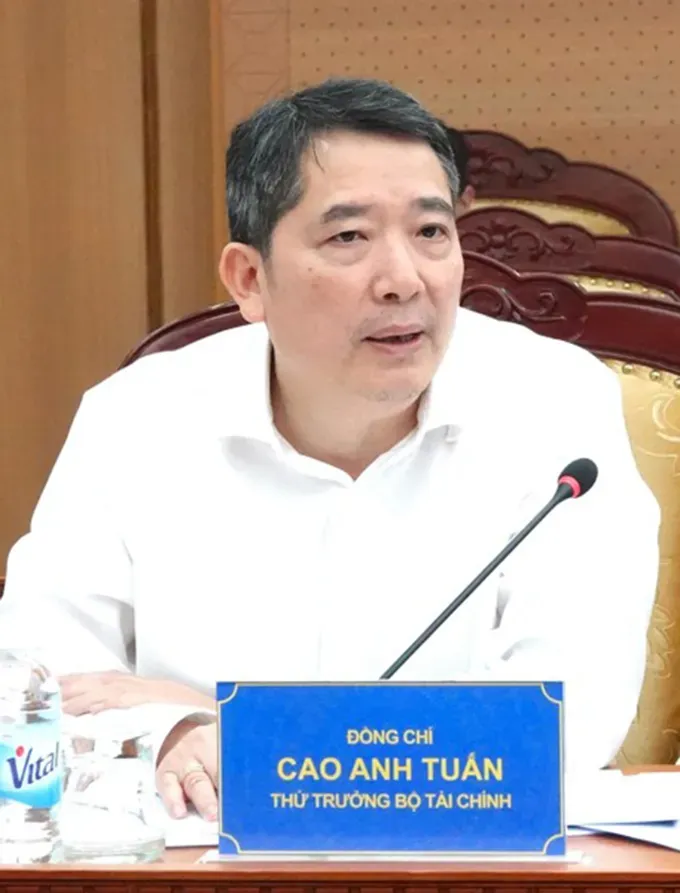
Deputy Minister of Finance Cao Anh Tuan first explained the significance of the reforms and changes in tax policies through the concretization of tax laws and decrees to Vietnam’s economy in the medium and long term.
To align with Party guidelines and the Tax System Reform Strategy to 2030, the Ministry of Finance comprehensively evaluated existing tax regulations to propose necessary amendments. Consequently, the Ministry advised the Government to submit several vital tax laws to the National Assembly for official approval.
These major updates include the Value Added Tax Law, the Corporate Income Tax Law, the Tax Administration Law, the amended Personal Income Tax Law, and the Special Consumption Tax Law for future economic policy frameworks.
The aforementioned tax policy reforms and adjustments have been contributing to removing difficulties, supporting businesses in recovering and developing production; promoting science and technology innovation, digital transformation; creating a favorable business environment; overcoming emerging inadequacies and obstacles; and improving the effectiveness as well as efficiency of state tax management.
These tax policy changes help to promote the role of tax policy as an important macroeconomic regulatory tool to achieve socio-economic development goals; encourage investment and development of the country’s priority industries, fields, and areas; create favorable conditions for business development; ensure macroeconomic stability and promote sustainable development.
The Deputy Minister then addressed the concern of businesses shifting costs to workers or scaling back production when taxes and fees are pushed higher.
Actually, recent tax and fee policy improvements comprehensively cover income sources and regulate previously missed areas rather than merely increasing revenue from tax. Adjustments like reducing tax rates and raising thresholds sustainably expand the budget while minimizing financial burdens on businesses and citizens.
Amid ongoing economic difficulties, the Ministry of Finance promptly advised and issued supportive tax solutions. These timely measures help stabilize the macroeconomy and assist businesses to recover, simultaneously creating room to maintain and expand state budget sources over the medium and long term.
Moving forward, the Ministry will continue advising the Government to perfect tax laws. This strategic approach expands the revenue base, ensures total harmony between direct and indirect taxes, and effectively exploits valuable asset and resource taxes through a highly proactive, comprehensive, and flexible fiscal policy framework.

Deputy Minister Cao Anh Tuan also introduced the highest priorities of the Ministry of Finance to expand the revenue base, nurture sustainable revenue sources, and support business recovery and development in 2026.
This year, the domestic economy still faces many challenges, ranging from inflationary pressures and global geopolitical fluctuations to new trade barriers and policies. However, there are still opportunities from the strong recovery of foreign direct investment (FDI) inflows, the national digital transformation process, and new-generation free trade agreements beginning to take deep effect.
The Ministry of Finance has developed and submitted to the Government for approval the Tax System Reform Strategy to 2030, which identifies expanding the revenue base and nurturing revenue sources associated with unlocking resources and creating favorable conditions for business development.
The Ministry continues to proactively research tax system reform solutions to restructure state budget revenues sustainably, harmoniously adjusting between indirect and direct taxes, and deploying a proactive, flexible, and targeted fiscal policy.
In the immediate future, the Ministry continues to prioritize the effective implementation of tax and fee solutions recently issued by competent authorities to support businesses in expanding production and increasing the aggregate demand of the economy.
Concurrently, it will continue to accelerate the modernization of revenue management and digital transformation in the tax sector. In addition, it will closely monitor regional, international, and domestic economic situations to promptly advise competent authorities on tax methods suitable for actual developments.