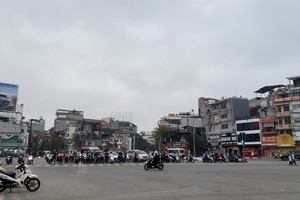
According to the Meteorological and Hydrological Forecasting Division of the Southern Regional Hydro-Meteorological Center, the rain was caused by a subtropical high-pressure system with its axis stretching across the Southern and South-Central regions, creating weak disturbances in the easterly winds. This, combined with the northern fringe of the equatorial low-pressure trough, triggered rainfall.

These weather systems formed a zone of moisture convergence over the Southern region, with high humidity levels. Combined with strong cold air activity, they led to lower air temperatures.
The combination of low temperatures, high humidity, extensive low-level cloud cover, and reduced sunshine resulted in misty conditions and reduced visibility.
The Southern Regional Hydro-Meteorological Center also noted that on late January 6, rain may continue in some areas, mainly in Ca Mau, An Giang and Can Tho. In the Southeastern region, nights and early mornings are expected to be cool.
On January 7, unseasonal rain is expected to be less frequent, with only localized light showers possible in Ca Mau Peninsula, while other areas will see little rain and intermittent sunshine during the day.
Although rainfall across the Southern region is expected to decrease, nighttime temperatures are forecast to trend lower, bringing cooler conditions at night and in the early morning. The northern parts of the Southeastern region may experience cold weather, with temperatures gradually rising again from January 11.