Rising demand for metro and buses
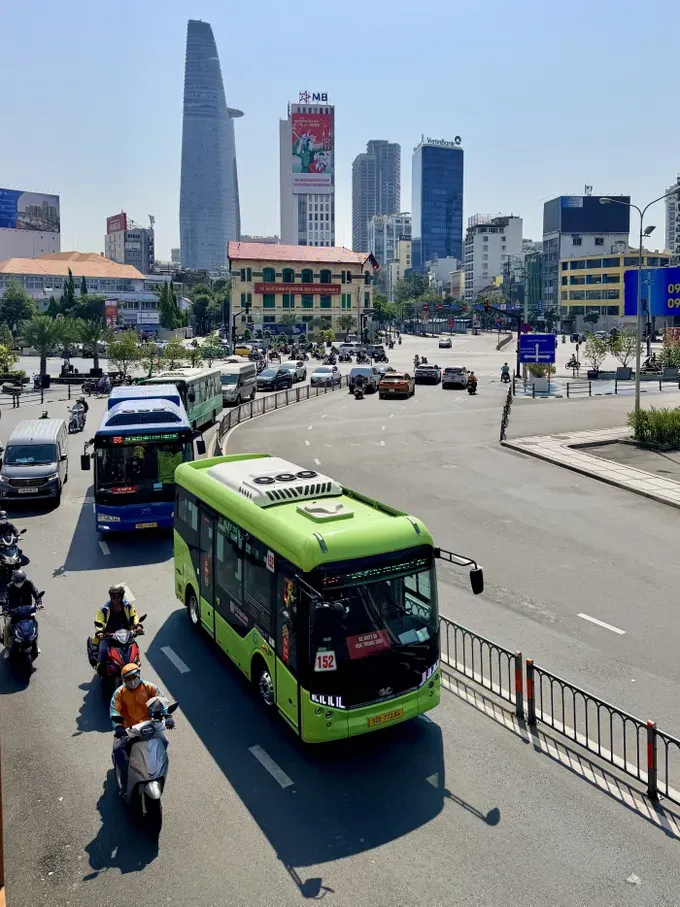
Amid climbing fuel prices, more passengers in Ho Chi Minh City are turning to metro and bus services, especially during peak hours. This shift highlights a clear trend toward public transport and other green mobility options.
Recently, Metro Line 1 (Ben Thanh – Suoi Tien) has seen crowded stations, long queues at ticket gates, and high passenger density inside trains.
Nguyen Ngoc Nguyen, an office worker from Phuoc Long Ward, shared that continuous fuel price increases forced him to change commuting habits. Using the metro and buses not only saves money but is more comfortable in hot weather and traffic congestion. Combining public transport modes has also significantly reduced his travel time and cut gasoline expenses from using his motorbike significantly.
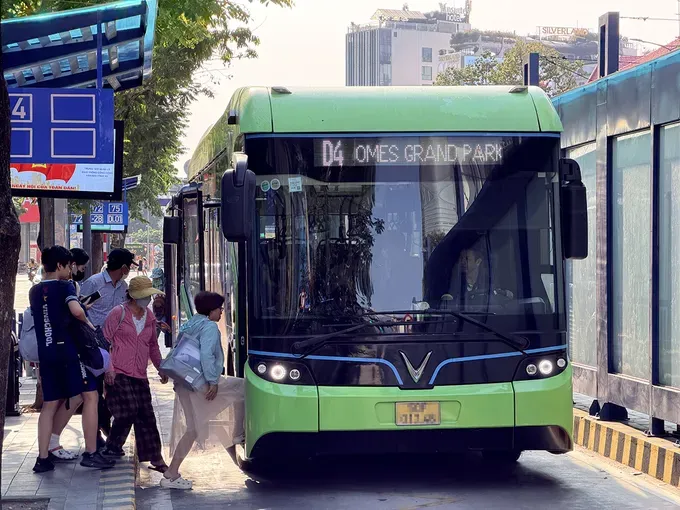
Beyond metro and buses, green transport options such as electric motorbikes, e-bikes and public bicycles are gaining popularity. Usage of public bicycles and monthly bus passes has risen noticeably over the past month.
The Ho Chi Minh City Public Transport Management Center under the municipal Department of Construction reported that metro and bus services in Ho Chi Minh City now carry roughly 340,000 passengers per day, a 35 percent increase over late February and 12 percent higher than the same period last year. Authorities are introducing measures to boost service quality.
According to Mr. Pham Ngoc Dung, Director of the Public Transport Management Center, the network is being reviewed and adjusted to synchronize metro and bus schedules. Route information is updated on digital platforms like MultiGo for easy access and cashless payment options, including QR codes, e-wallets and bank cards, which are being expanded.
Stations, depots, transfer hubs and waiting areas are being modernized. Promotional programs such as “Zero-Fare Fridays”, along with outreach to students, workers and office staff, continue to encourage public transport adoption, he added.
Accelerating infrastructure investment
To meet growing public transport demand, Ho Chi Minh City is fast-tracking infrastructure development. The Ho Chi Minh City Department of Construction is reviewing electricity capacity in various areas to install charging stations for electric vehicles.
Deputy Director of the city’s Construction Department Vo Khanh Hung said that as of March 23, the city has announced 222 battery-swapping stations for electric motorbikes in densely populated areas, expanding coverage.
For electric cars, the city has about 1,000 charging stations, including 900 operated by V-Green with over 9,400 charging poles and nearly 14,800 ports. However, according to Mr. Vo Khanh Hung, the current number still falls short of international standards, and the city plans to add at least 1,500 fast-charging stations.
Additionally, the city is utilizing land at 19 bus depots (about 110,000 square meters) to develop charging stations, including more than 25,000 m² for auctioned leases. These stations use the CCS2 standard with open software, prioritizing night-time charging for electric buses and shared use for multiple vehicles.
This year, the city aims to install approximately 20,000 battery-swapping units for electric motorbikes, with participation from multiple companies. The systems will be interoperable across brands to maximize efficiency. Previously, there were more than 300 stations and swapping units, with plans to expand to thousands within a short period.
Long-term vision
Ho Chi Minh City aims for a strong shift toward green transportation. Currently, the city has over 39,500 electric cars and nearly 87,000 electric motorbikes.
By 2030, the number of electric motorbikes is projected to reach around 1.2 million, creating demand for more than 25,000 charging stations and battery-swapping points.
The city also plans for 100 percent of buses to use green energy by 2030, gradually converting ride-hailing vehicles to electric starting in 2029.
Alongside this, the city is planning emissions control, including establishing Low Emission Zones (LEZ) from 2027, with the long-term goal of restricting and eventually banning gasoline vehicles in the city center. Supporting policies, such as land rent exemptions and tax reductions, are being proposed to attract investment in green transport infrastructure.
According to Dr. Phan Le Binh, Head of the Japan-based OCG Consulting Office, a global consultancy in construction, feasibility studies and transport project management, Ho Chi Minh City has favorable conditions to develop a green transport model centered on public transport, combined with electric vehicles and bicycles.
This approach not only reduces congestion and environmental pollution but also improves the quality of life and promotes urban tourism. The shift toward electric vehicles is inevitable, especially as the city pilots Low Emission Zones in the central areas. However, sustainable development requires solving infrastructure challenges, particularly the charging network and battery technology.



)