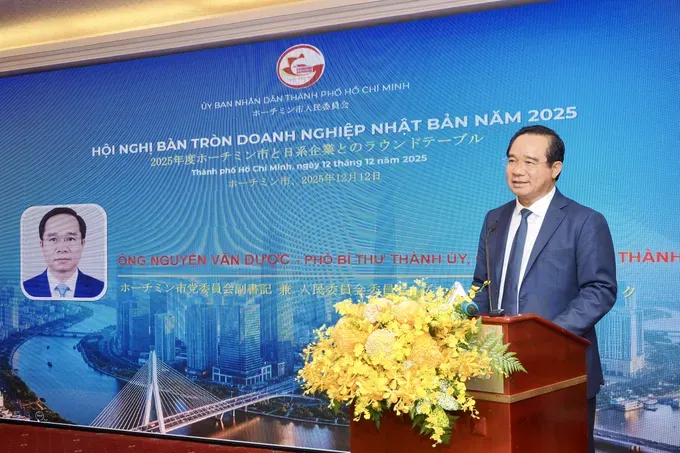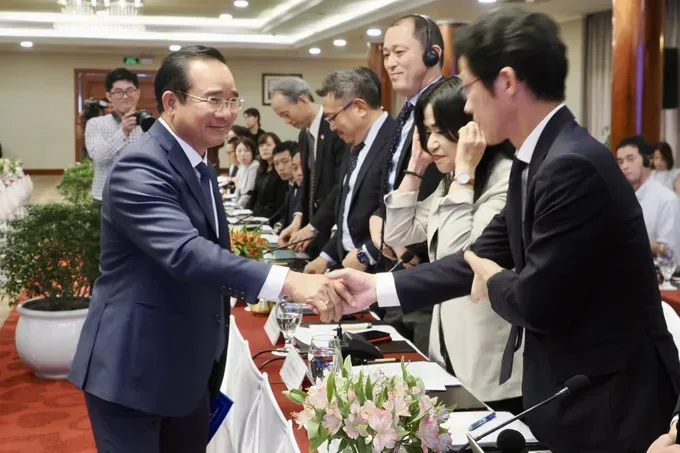
The statement was made by Chairman of the Ho Chi Minh City People’s Committee Nguyen Van Duoc at the 2025 Japan business roundtable held in the city on December 12. The event is an annual dialogue, now in its 24th year, aimed at addressing challenges and supporting the Japanese business community investing and operating in Ho Chi Minh City.
According to Mr. Nakagawa Motohisa, Vice Chairman of the Japan Chamber of Commerce and Industry in Ho Chi Minh City (JCCH), this issue poses significant difficulties for Japanese companies in implementing projects, expanding production, and conducting financial transactions. JCCH has compiled 99 questions and recommendations from member businesses, focusing on four main areas, including taxation, customs, legal and labor issues, and environmental and living conditions.
Mr. Nakagawa noted that some issues still require direct discussion at the roundtable, notably the delays in issuing land-use right certificates in Linh Trung Export Processing Zone (EPZ) 2 and Hiep Phuoc Industrial Park. JCCH reported that many companies have fully paid land rental fees but have yet to receive certificates, affecting project implementation, production expansion, financial transactions, and the stability and transparency of the investment environment.
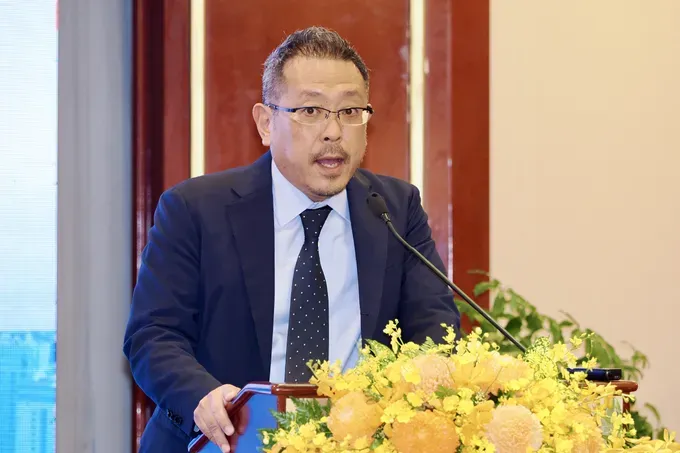
Deputy Director of the Ho Chi Minh City Department of Agriculture and Environment, Nguyen Thai Sinh, stated that the Linh Trung Export Processing Zone 2 has undergone three detailed planning adjustments, reducing green space and infrastructure while increasing the proportion of industrial land. As a result, authorities must recalculate land values and financial obligations.
According to the department, the current approach is to issue land-use right certificates for plots not affected by the planning adjustments. For plots within the adjusted areas, authorities must complete inspection conclusions before issuing certificates. The department will coordinate with the Ho Chi Minh City Export Processing and Industrial Zones Authority (Hepza) and relevant units to review locations and determine land values, with completion expected in the first quarter of 2026.
At the conference, Chairman of the Ho Chi Minh City People’s Committee Nguyen Van Duoc directly questioned the Department of Agriculture and Environment and Hepza and was informed that the planning adjustments have been completed in accordance with general standards. The remaining issue is clearly identifying which parties must pay additional financial obligations to the State.
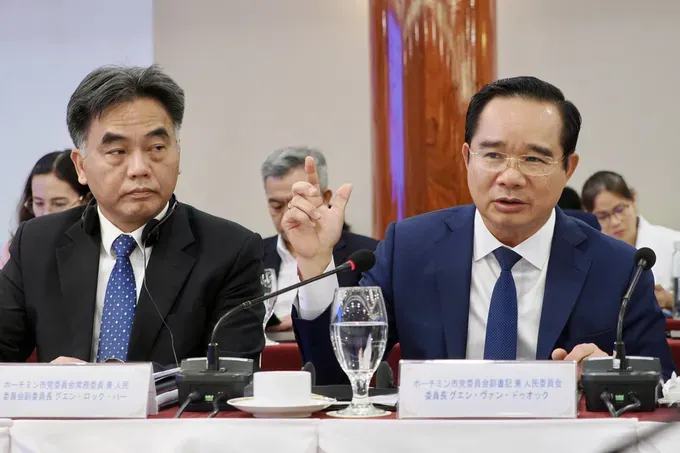
Deputy Head of Hepza, Tran Viet Ha, explained that difficulties arose because Phu Nhuan Company, which was allocated the land by the State, leased it to Linh Trung Company to invest in infrastructure, while Linh Trung Company was responsible for implementing the planning adjustments. This arrangement has complicated and prolonged the process of determining financial obligations.
Drawing on experience from My Phuoc Industrial Park 3, Chairman of the Ho Chi Minh City People’s Committee Nguyen Van Duoc concluded that Phu Nhuan Company is responsible for fulfilling its financial obligations to the State. He instructed the Department of Agriculture and Environment to work directly with the company to settle these obligations by December. Afterwards, Phu Nhuan Company will continue coordinating with its subleasing businesses.
Regarding taxation, Mr. Onose Takahisa, Head of Tax and Customs at JCCH, raised two recommendations concerning procedures for closing representative offices and tax refunds.
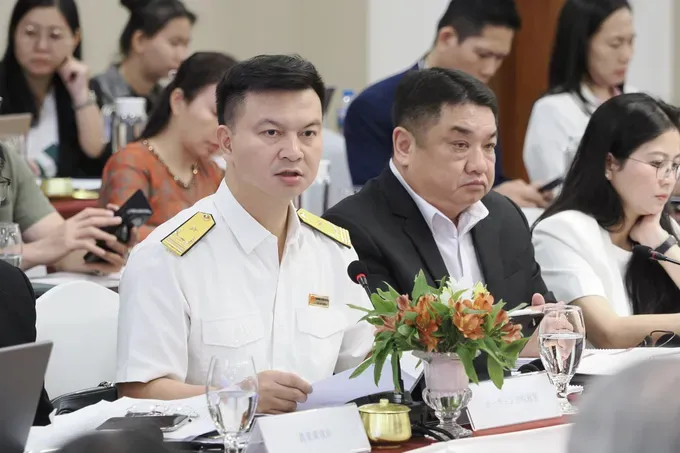
Deputy Director of the Ho Chi Minh City Tax Department Giang Van Hien stated that applications to terminate a representative office’s tax code will be processed within three working days upon receipt of complete documents; if additional information is required, the tax authority will respond immediately in writing.
Chairman of the Ho Chi Minh City People’s Committee Nguyen Van Duoc praised the proactive approach of the city’s Tax Department and urged them to continue this effort to promptly address business recommendations.