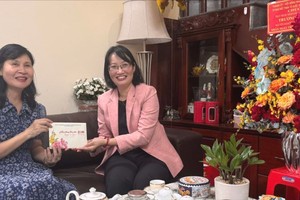
Teacher Tran Thi Phuong of Vo Nguyen Giap Primary School has long worried about health insurance costs for her disadvantaged students, often seeing teachers cover fees personally to help immigrant and orphan families. “Even a small sum of health insurance causes anxiety among these vulnerable families,” she confided.
However, news of city subsidies under Resolution 56/2025/NQ-HDND brought immediate relief. Principal Vu Quang Tuan announced that the school is processing refunds for over VND170 million (US$6,450) already collected from Grade 1 students and has ceased collection for other grades. “We are currently reviewing the list to prepare reimbursement dossiers,” he stated. Along with other HCMC schools, staff are now compiling lists to ensure every student receives a valid card, guaranteeing universal healthcare access starting in 2026.
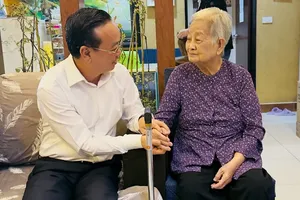
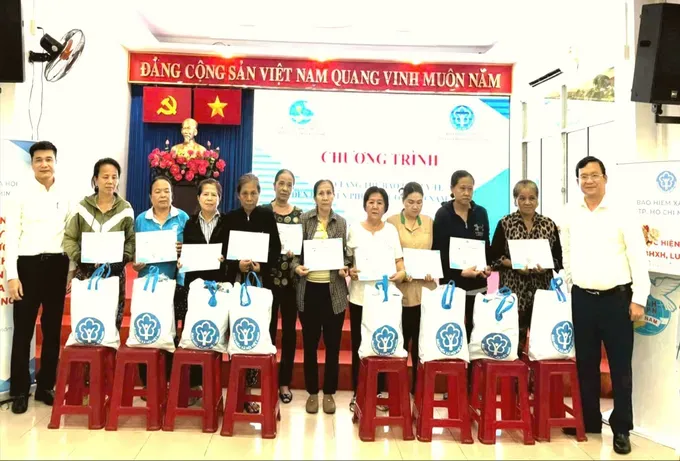
For Ha Minh Que’s family in Vung Tau Ward, receiving free health insurance cards brought profound relief. Nearing 70, he and his wife toil daily to support two grandchildren left in their care. This financial support, therefore, serves as a vital anchor, empowering the elderly guardians to remain steadfast pillars for their vulnerable family.
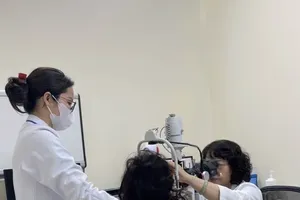
According to MMed Tran Thieu Truong, Deputy Director of Vung Tau General Hospital, the elderly have a very high rate of chronic diseases. For those in financial difficulty, a health insurance card removes the fundamental financial barrier, allowing them peace of mind for regular check-ups rather than waiting until illnesses become severe. This reduces the load on Intensive Care Units (ICU), increases outpatient treatment efficiency, and lowers mortality rates.
Similarly, 100 percent school health coverage eases family burdens and enhances healthcare opportunities for children. This policy also stabilizes hospital finances, minimizing bad debts and unpaid costs. “Free Health Insurance allows hospitals to focus on saving patients without worrying about fees. This is a practical welfare policy contributing to the implementation of Politburo Resolution No. 72-NQ/TW,” emphasized the Deputy Director.
Another topic attracting much attention is free hospital fees for cancer and dialysis patients, as mentioned by some National Assembly delegates when discussing the draft Resolution on breakthrough healthcare policies. They argued that treatment costs for these conditions are exorbitant due to their prolonged nature, complexity, and continuously arising expenses.
Delegate Nguyen Anh Tri from Hanoi stated: “Currently, many families with members suffering from cancer or kidney failure fall into poverty after just 1-2 years of treatment. If we do not expand the policy, we will continue to let hundreds of thousands of households fall into debt due to illness.”
This proposal has garnered special public attention and is the fervent hope of patients. 49-year-old Nguyen Thi Hoa from Bay Hien Ward of HCMC, who underwent 12 chemotherapy sessions for breast cancer costing nearly VND400 million ($15,170) despite health insurance support, expressed: “The family’s finances are draining away; sometimes I feel desperate. Just reducing the cost by half would be a huge relief; a total waiver would be a miracle.”
Statistics from the Ministry of Health reveal that Vietnam records over 180,000 new cancer cases annually, with about 350,000 people living with the disease. Average treatment costs range from VND150-300 million/year ($5,690-11,380), depending on the regimen. For chronic kidney failure requiring dialysis three times a week, costs average VND12-15 million/month ($455-570).
62-year-old Tran Van Phuc, a dialysis patient from Go Vap Ward shared that despite health insurance coverage for the majority, co-payments and non-list drugs still cost him VND3-4 million/month ($114-152), a massive sum for a lifelong condition.
Diep Bao Tuan, PhD MD, Director of HCMC Oncology Hospital, noted that cancer is a leading burden. In 2025, the hospital estimates receiving over 1 million visits with over 42,000 new cases. Most patients arrive at late stages, increasing costs and mortality risks. “Nearly 70 percent of cancer patients fall into financial crisis after just one year of treatment,” he informed.
He believes the proposal to waive fees is practical and humane. However, for sustainability, it requires a specific roadmap linked to financial resources and systemic preparation. “Strengthening grassroots and provincial healthcare is a top priority. There needs to be a strong strategy to direct treatment lines, helping patients trust local care to avoid overloading the final level,” Director Diep Bao Tuan opined.
Le Tuan Anh, PhD MD, Director of the Oncology Center under Cho Ray Hospital shared that cancer and dialysis patients are vulnerable groups facing long-term, high-cost treatment. However, implementing a fee waiver policy requires an appropriate roadmap; an immediate total waiver would put immense pressure on the budget.
There is a need for comprehensive solutions based on the four pillars of cancer care, namely prevention, screening/diagnosis, treatment, and palliative care. Prevention and screening should be prioritized as they enable early detection, more effective treatment, and significant cost reduction.
It is necessary to research the inclusion of screening in the supported or paid list to block disease from the start. For diagnosis and treatment, the State can consider gradual cost reductions before aiming for free care, as these costs are currently very high.