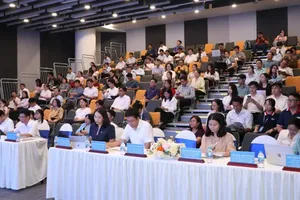
On December 10 morning, at the sixth session of the 10th Ho Chi Minh City People’s Council, the Council presented a report summarizing comments from delegates during the discussion groups held on December 9.

Attending the working session were Mr. Nguyen Van Duoc, Member of the Party Central Committee, Deputy Secretary of the Ho Chi Minh City Party Committee and Chairman of the Ho Chi Minh City People’s Committee; Mr. Dang Minh Thong, Deputy Secretary of the HCMC Party Committee and others.
Presiding over the session were Mr. Vo Van Minh, Deputy Secretary of the Ho Chi Minh City Party Committee and Chairperson of the Ho Chi Minh City People’s Council; Mr. Nguyen Van Tho, Standing Vice Chairman of the Ho Chi Minh City People’s Council; Mr. Tran Van Tuan, Vice Chairman of the HCMC People’s Council; Mr. Huynh Thanh Nhan, Vice Chairperson of the HCMC People’s Council; and Nguyen Truong Nhat Phuong, Vice Chairperson of the Ho Chi Minh City People’s Council.
During the session, participants reached consensus with the contents of the reports and submissions, and praised the city’s achievements in fulfilling its 2025 socio-economic development tasks.
They mostly agreed with the 2025 socio-economic report and the proposed tasks for 2026.
Alongside the achievements, they noted several persistent shortcomings, including economic growth that remains below potential, unresolved issues in social infrastructure and urban development, and shortages of classrooms and hospital beds.
The delegates proposed the Ho Chi Minh City People’s Committee to further analyze and clarify key indicators, especially those related to economic growth, labor productivity, per-capita income, waste treatment, social housing, healthcare, flooding and traffic congestion. This assessment will form the basis for setting performance targets for 2026.
Regarding the implementation of the 2025 theme, National Assembly Resolution 98/2023 and efforts to resolve long-standing issues in the city, the report shows that 168 out of 838 projects still face legal bottlenecks. Progress on social housing projects also remains slow, without detailed timelines. Delegates proposed solutions to definitively address the remaining 20 percent of stalled projects, avoiding prolonged delays.
After the administrative-unit merger, the workload and pressure on commune-level authorities have increased significantly. However, numrous cadres and civil servants have not received adequate professional training and lack experience in their assigned fields. Delegates noted that this is an objective cause and recommended that the city prioritize reorganizing, training and retraining personnel to ensure they are capable of fulfilling their duties.
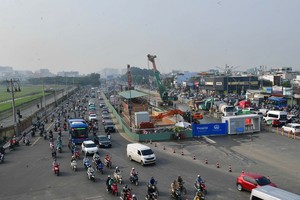
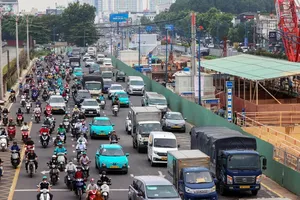
Delegates also noted that one of the fundamental solutions to ease traffic congestion and improve regional connectivity is to develop public transportation, especially the urban railway (metro) system. Therefore, delegates proposed the municipal People’s Committee to clarify the planning, investment roadmap and timelines for upcoming metro and public-transport projects.
They also raised concerns that some BOT transport project investors have collected tolls for many years but failed to adequately maintain or upgrade the infrastructure, calling for stronger oversight and corrective action.
According to target No. 18 on social housing development, Ho Chi Minh City must deliver 25,287 units by the end of 2026. Delegates proposed identifying concrete solutions and funding sources, as well as establishing a mechanism to allocate a portion of the social-housing fund to the Trade Union. This would help workers access homeownership, achieve residential stability and strengthen workforce retention.




)