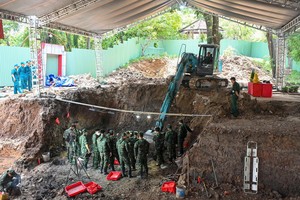
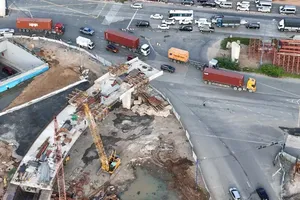
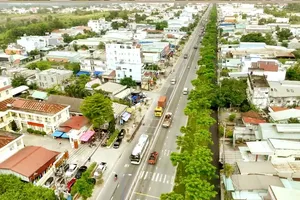
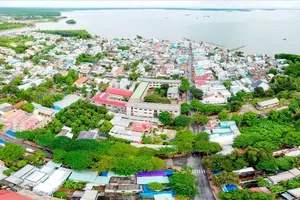
The Ho Chi Minh City Steering Committee for the Search, Recovery and Identification of Fallen Soldiers' Remains has approved a plan to survey former battlefields and other sites believed to contain mass graves as part of recovery efforts in 2026 and the 2026–2030 period.
The plan seeks to clarify the course, scale, participating forces, outcomes, and historical significance of major battles while gathering and supplementing historical documents, military records, martyr files and other relevant materials.
Authorities will also locate and interview historical witnesses, war veterans, families of fallen soldiers and local residents to verify information and identify former battlefields and original burial sites.
The city said all information will be cross-checked and verified from multiple sources to ensure the work is conducted objectively, scientifically and effectively.
The effort is expected to build a stronger scientific foundation for future searches, recovery operations and identification of remains.
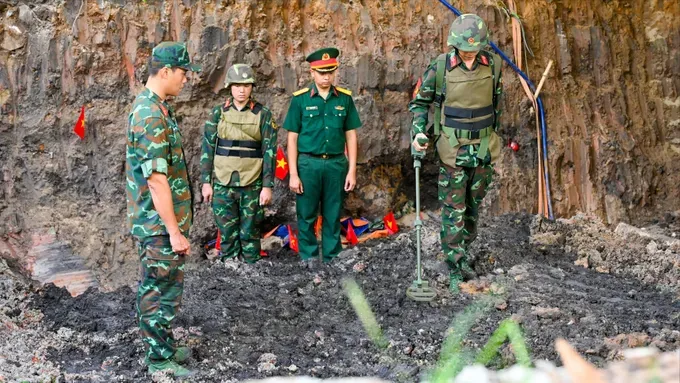
The implementation process includes archival research, witness verification, field surveys, preparation of scientific dossiers, expert workshops where sufficient evidence is available, scientific site investigations and exploratory excavations, followed by the search, recovery, memorial services, and reburial of recovered remains in accordance with regulations.
The city has also established a specialized research team and support group responsible for collecting historical documents, verifying witness accounts, conducting field investigations and cross-checking information.
Authorities will also apply scientific methods and modern technology to field surveys and exploratory excavations, drawing on the expertise of universities and specialized institutions.
Priority search sites
The plan identifies several priority locations for survey, verification and recovery operations, including:
Tan Son Nhat Airport battlefield (January 30–31, 1968), now in Tan Binh Ward, where the remains of 181 fallen soldiers were recovered from two mass graves in 1995;
Bau Bang I battlefield, now in Bau Bang Commune;
Bung–Lai Thieu battlefield (February 1968), now in Lai Thieu Ward;
Binh Ba battlefield (June 8, 1969), now in Ngai Giao Commune, where 107 fallen soldiers are believed to have been buried. The remains of 60 have been recovered;
East of Binh Dien railway bridge battlefield (May 13, 1968), now in Tan Nhut Commune;
Ben Tranh battlefield (May 22, 1969), now in Thanh An Commune;
So Hoi battlefield (May 12, 1968), now in Binh Co Ward, where about 200 fallen soldiers are believed to have been buried in three mass graves. Local residents have previously uncovered the remains of seven soldiers;
K76A and K76B military hospitals in the May Tau Mountain area of Hoa Hiep Commune, where about 700 fallen soldiers are believed to have been buried;
Lo Gom Hamlet battlefield (February 17, 1967), now in Long Dien Commune;
Lang Ca Thy battlefield (December 31, 1970), now in Xuyen Moc Commune, believed to contain the remains of 21 soldiers from Battalion 445;
FSB Pike VI battlefield (May 12, 1968), southwest of Go May Intersection, now in Binh Tan Ward, Ho Chi Minh City;
Hang Keo Cemetery on Con Dao Island, where revolutionaries and fallen soldiers who died between 1940 and 1945, particularly during the French colonial "White Terror" period, are buried.