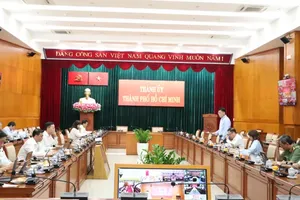
On July 20, the 3rd plenum of the 14th Party Central Committee opened to discuss crucial national matters. General Secretary and State President To Lam emphasized transforming strategic orientations into firm policy decisions to eliminate bottlenecks and forge novel developmental capacities.
Specifically, the nation must establish a developmental model heavily reliant on productivity, advanced knowledge, and modern technology. Notably, the General Secretary demanded that every policy decision clearly identify eliminated bottlenecks, created capacities, and necessary execution conditions.
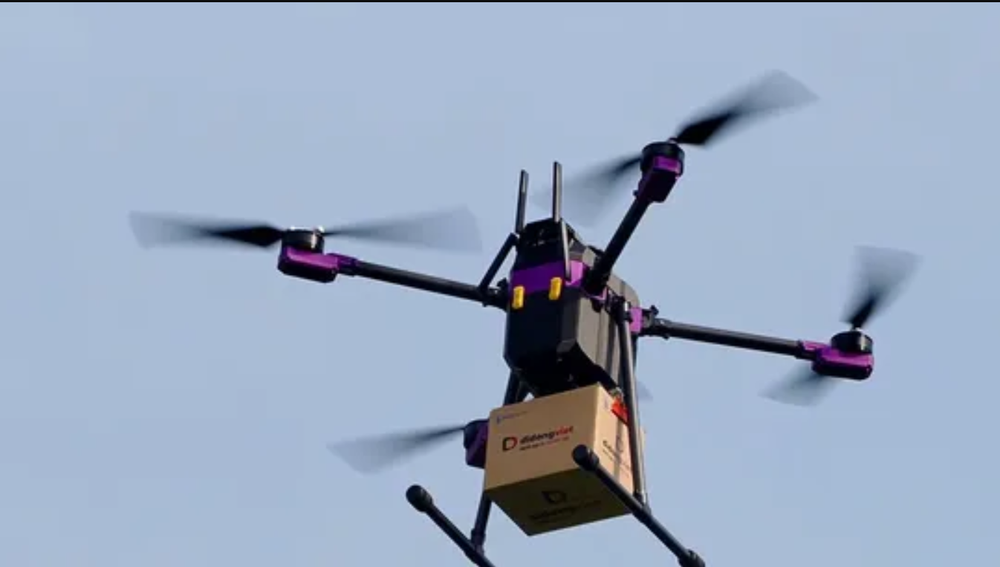
Within HCMC’s low-altitude economic development targets, the highly promising field of researching and manufacturing unmanned aerial vehicles (UAVs) is currently showcasing abundant potential.
The three critical questions posed by General Secretary and State President To Lam serve as the exact “assignment” for the bustling city. In this scenario, the State actively contributes through strict regulatory instruments and highly preferential policies. In return, it’s expected that enterprises will be able to deliver turnkey products spanning from initial design to massive production and seamless operation.
Crucially, this must go hand-in-hand with an unwavering commitment to guarantee sufficient quality to successfully penetrate highly demanding markets like the G7.
This cooperative approach is also the very spirit the Central Committee determinedly set forth, essentially utilizing the quality of policy decisions and their practical implementation as the ultimate measuring stick, rather than merely stopping at theoretical guidelines.
Specifically, HCMC should flexibly apply its localized mechanisms to facilitate large-scale public procurement from the state budget. Although there isn’t yet a centralized large-scale ordering procedure, a unified set of technical standards, or a specific price reference tailored strictly for UAV products, authorities can apply the highly specific mechanisms derived from Resolution No.09-NQ/TW regarding HCMC’s construction and development in the new era.
They can also take advantage of the 2023 Bidding Law, which regulates the specific mechanisms for ordering, assigning vital tasks, and deploying public procurement programs. This is undeniably the most direct solution to the pressing question of removing bottlenecks, specifically tackling the agonizing market output congestion severely plaguing domestic technological products.
Based on the practical demands and real-world tasks across various localities and specific sectors, officials can actively determine the precise quantity and diverse types of required UAV products. These can range from critical search and rescue operations and highly effective fire prevention to streamlined cadastral services and accurate digital twin modeling.
Alternatively, regarding educational products, it’s imperative to place concentrated orders integrated through comprehensive educational programs to expand the accessibility of modern technology and advanced science across all academic levels.
This strategic move also perfectly aligns with the Central Committee’s main orientation to proactively prevent disasters and enhance the nation’s robust resilience against catastrophic natural disasters and unpredictable climate change, which is a critical sector where specialized search and rescue or environmental monitoring UAVs can effectively contribute.
In tandem with that, the city is considering formally placing the highly lucrative UAV and robotics sector right into the prioritized investment portfolio. This mirrors the strategic orientation to heavily invest in 50 to 150 highly innovative startups and specialized science-technology enterprises during the 2026-2035 period within the city’s venture capital strategy.
Finally, establishing an “administrative green lane” and a highly flexible regulatory sandbox is absolutely vital to process complex procedures for the strategic cluster of UAV enterprises. This includes shortening the arduous customs clearance time for high-tech components serving research and development purposes.
It also involves supporting frequency licensing and swiftly granting test flight permits within the designated Sandbox area located right inside Saigon Hi-tech Park or neighboring zones carefully managed by the city, strictly adhering to the regulations stipulated in Decree No.288/2025/ND-CP.
Ultimately, this serves as the definitive answer to the third critical clause in the Central Committee’s assignment regarding the necessary conditions for flawless execution, which demands an incredibly open institutional framework, streamlined administrative procedures, and a safe experimental testing space.
The 3rd plenum of the 14th Party Central Committee is currently deliberating crucial policy decisions to fiercely empower the nation to rapidly generate massive wealth and robust competitiveness over the long term. With an unyielding governance spirit unifying the expansive developmental space and unblocking vital resources, HCMC desperately needs to maintain its position leading the entire country in lucrative high-tech exports.
This is particularly true for advanced UAV products bound for highly demanding international markets. Through this expansion, the city can successfully affirm the prestigious brand of innovative hardware and software science-technology enterprises proudly carrying the “Make in Vietnam, Made in HCMC” label.
)