Several wards and communes across Ho Chi Minh City are adopting new approaches to delivering public services, from opening administrative service centers after regular office hours to setting up mobile support stations in apartment complexes and community cafés.
The initiatives are designed to better accommodate residents who cannot complete administrative procedures during standard working hours while making government services more accessible.
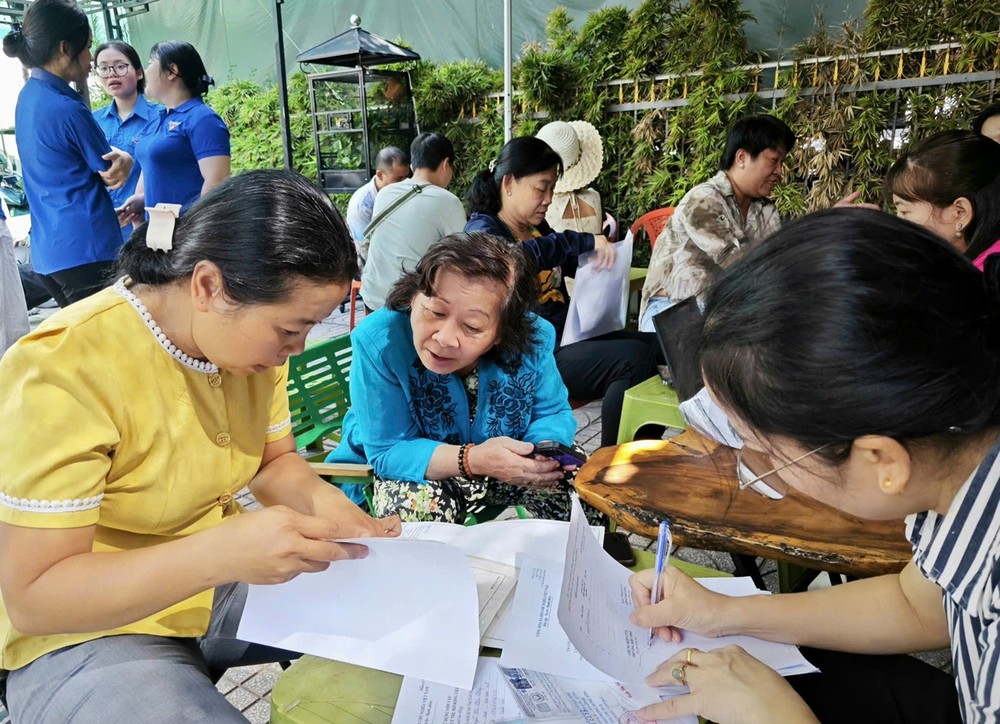
Administrative centers stay open after hours
Shortly after 6 p.m. on Tuesday, when most government offices had already closed for the day, the Hoc Mon Commune Public Administrative Service Center remained fully operational.
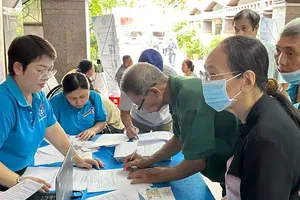
Many residents took advantage of the extended hours to complete administrative procedures after finishing work. Civil servants continued receiving applications, providing guidance and helping residents finalize paperwork.
Dang Van Kiem, a resident of Hamlet 10 in Hoc Mon Commune, said the new service had made it much easier to handle personal paperwork.
Previously, he often had to take leave from work or rearrange his schedule to complete administrative procedures during office hours.
This is a very practical initiative because people no longer have to take time off work to complete personal administrative matters. Small changes like this bring significant benefits to residents, he said.
Pham Thi Minh Tuyen, also from Hamlet 10, visited the center to update her business registration following a change of address. While submitting her application, she forgot the password to her VNeID digital identity account, but civil servants helped her recover it and complete the required procedures.
She said the after-hours service not only provides greater convenience for residents but also helps reduce congestion during peak daytime hours.
Nguyen Thi Thuy Van, Deputy Director of the Hoc Mon Commune Public Administrative Service Center, said the center remains open every Tuesday from 5 p.m. to 7 p.m. to receive and process applications.
The commune is also preparing to provide home-based administrative services for vulnerable groups, including elderly residents, people with disabilities and those with mobility difficulties.
Residents can register through their hamlet heads, after which officials will visit their homes to provide guidance, receive applications and deliver completed documents.
Public services delivered to residential communities
On Saturday afternoon, the community hall of Tin Phong Apartment Building in Dong Hung Thuan Ward was busier than usual.
Instead of a residents' meeting, the venue hosted the ward's first mobile administrative service program, bringing civil servants directly into the apartment complex.
Officials from the Dong Hung Thuan Ward Public Administrative Service Center provided assistance with procedures related to civil status, legal affairs, land administration, social welfare, household business registration and online public services.
Nguyen Tuong Ngon, a 63-year-old resident of the apartment complex, described the model as particularly helpful for older adults and people who work during regular office hours.
Previously, residents had to visit the ward office and sometimes take half a day off work to complete paperwork. Now, they can receive assistance close to home during weekends, including step-by-step guidance on creating online accounts, submitting digital applications and tracking application status.
Meanwhile, in An Phu Dong Ward, another initiative known as the "Public Service Café" is bringing administrative support to neighborhood coffee shops.
Held every Sunday at cafés in different neighborhoods, the program assists residents with procedures such as permanent and temporary residence registration, driver's license renewal, birth and death certificate extracts, marriage registration and health insurance consultation.
Nguyen Ngoc Phuong, Acting Director of the Dong Hung Thuan Ward Public Administrative Service Center, said the ward has a large number of apartment buildings as well as many elderly residents, people with disabilities and workers who find it difficult to visit government offices during working hours.
The ward therefore sends civil servants directly to residential communities to help residents create online accounts, submit digital applications and make online payments, enabling more people to access digital public services.
Before expanding the program to apartment buildings, the ward had already piloted similar administrative support points in several neighborhoods, receiving positive feedback, particularly from elderly residents, people with disabilities and busy workers.
Tran Thi Huyen Thanh, Secretary of the Dong Hung Thuan Ward Party Committee, said bringing public servants directly into residential communities is a practical measure to make public services more accessible while building a more professional, modern and citizen-centered public administration.