Complex terrain, strained personnel
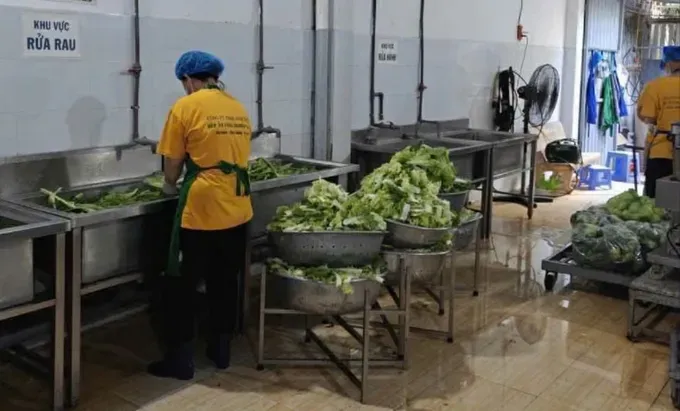
On October 16, shocking images emerged from a kitchen supplying semi-boarding meals for students. The floor of the food preparation area was puddled with water; prepped vegetables sat uncovered near splash-stained walls; standard lidded trays were missing; and cutting boards for raw and cooked food lacked distinguishing marks.
The main cooking area was no cleaner. Oil in pans had turned dark brown yet was still in use; utensils were greasy; and the floor was slippery. Inside the refrigerator, raw and cooked foods were piled haphazardly together.
This was the reality recorded at Industrial Meal Business Household No. 1 (sited in Vung Tau Ward) just one day after a food incident at Le Loi Primary School in Tam Thang Ward. On October 15, during meal delivery, supervising staff detected a sour dish. The Le Loi Primary School Board immediately recalled the dish and recorded the incident.
The inspection team demanded immediate rectification of the kitchen’s numerous shortcomings, emphasizing that the business owner bears responsibility for ensuring food safety and nutritional quality before supplying the school.
It is not just industrial kitchens that are “out of sight, out of mind”; many popular eateries are also indifferent to food safety regulations. In Vung Tau Ward, even with an inspection team present, a chef at a seaside restaurant calmly prepared food without a mask or gloves, while staff used bare hands to arrange food for customers.
Despite serving hundreds of diners daily, the restaurant failed to save food samples as required. In a food poisoning scenario, this negligence would hinder investigation and verification. For these violations, the business owner was fined VND8 million (US$305) in August.
Previously, in July 2025, the Economic Police Division of the HCMC Public Security Department inspected and discovered three facilities in Binh Dong Ward using borax and bleaching agents to process banana flowers for the market. Operating from evening until 3:00 a.m., these facilities used borax and an unknown powder to bleach hundreds of kilograms of banana flowers. One owner admitted to having no business registration or food safety eligibility certificate.
Vice Chairwoman of the Vung Tau Ward People's Committee Tran Thi Bich Van faces a headache managing 1,160 facilities with a severely thin workforce. Under the new two-tier government model, wards often rely on a single health specialist, leaving the vast majority of businesses uninspected.
The situation is equally dire in Rach Dua Ward, a tourist hub. Vice Chairwoman Tran Thi Xuan struggles to monitor hundreds of eateries and mobile street vendors that lack fixed locations. Compounding these operational challenges are administrative barriers.
Meanwhile, residents struggle with complex online procedures, resulting in frequent dossier returns. Additionally, structural misalignments, where ward health stations report to area centers rather than local administration, create significant gaps in coordination and state management execution.
Mechanistic barriers
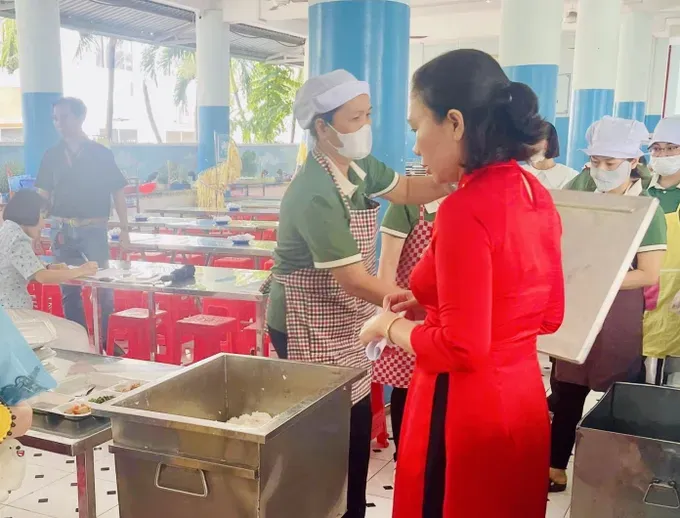
The HCMC Department of Food Safety, the specialized agency in charge, frequently laments personnel issues. At its inception, the Department had 488 staff; now, it has only 356. A 25-percent drop in personnel while HCMC expands its boundaries is a reality without a remedy yet.
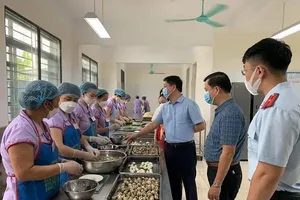
Despite rising supervision needs and limited resources, the Department maintains 15 food safety teams stationed at wards, communes, and wholesale markets to manage local facilities, plan inspections, conduct training, take samples, assess risks, and handle poisoning incidents.
When localities face personnel difficulties, the Department of Food Safety deploys its full force to support wards and communes, sharing the burden. However, if multiple food safety incidents occur simultaneously, investigation and verification become arduous.
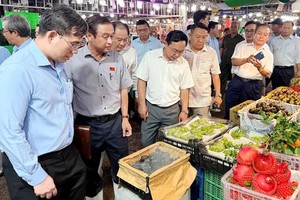
Controlling food quality at wholesale and traditional markets could prevent safety breaches. However, the procurement of rapid tests, the “backbone” of on-site input screening is clogged because the Ministry of Health recently stopped regulations recognizing rapid test kits. Relying solely on laboratory testing takes seven days for results. By then, violating food has already circulated market-wide and cannot be recalled, rendering control passive.
Director Pham Khanh Phong Lan of the HCMC Department of Food Safety noted that current specialized inspection regulations “exempt enterprises, business households, and individuals who comply well with laws from physical inspection.” This rule makes it hard to guarantee local inspection targets and detect violations. Furthermore, planned inspections require advance notice, allowing businesses to prepare a “clean and beautiful” facade, making it difficult to assess actual compliance.
These current obstacles are inevitable during the reorganization of functions following administrative unit consolidation. Previously, the decentralized roles of health divisions, health centers, and specialized units were clear; now, adjustments take time. Meanwhile, health, industry and trade, agriculture, and environmental police forces must continue close coordination for effective inspection and handling.
Amidst these difficulties, the HCMC Department of Food Safety Director hopes for community sharing, urging citizens to raise awareness, proactively choose safe food, and abandon the mindset of seeking cheap, unverified goods. In many other countries, all food is distributed through supermarket systems. Citizens avoid food with unclear origins due to high medical costs in case of poisoning, forcing vendors to adapt to regulated order.
Chairwoman Nguyen Thi Hong Minh of the Association for Transparent Food shared: “We could consider establishing Food Safety Inspection Teams at the ward/commune level to monitor compliance. These teams could recruit part-time collaborators from unions, the Consumer Protection Association, or individuals certified in food safety knowledge and inspection skills.”
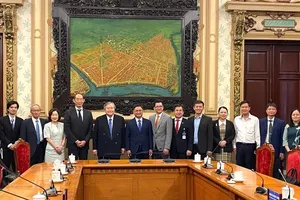
On December 10, at the 6th Session of the 10th HCMC People’s Council, Chairman of the council Vo Van Minh noted that inspection and punishment should not be the focus of food safety management. It is more important to establish a management, guidance, and supervision system for all entities to follow. Only when this foundation operates well can food safety be guaranteed for the city. Regarding overlapping management, coordination between agencies is necessary, but the food safety sector must play the primary role.




)