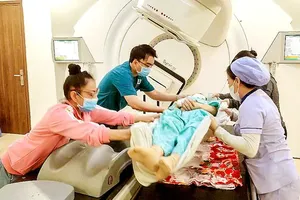
The year 2025 marks a breakthrough period for Vietnamese medicine, with a series of high-tech achievements being realized nationwide. In operating rooms lit through the night and in modern organ transplant centers, Vietnamese doctors are turning long-held aspirations into reality, steadily bringing Vietnam into the group of countries capable of mastering the world’s most demanding medical techniques.
“Vietnam started later and with fewer resources than developed countries, but we have a strong advantage in intelligence, resilience, and especially the dedication of our medical workforce,” said Deputy Minister of Health Tran Van Thuan. “The achievements we see today prove that Vietnamese medicine is fully capable of standing among the world’s leading nations in high-tech healthcare. Even more proudly, Vietnamese patients can now access techniques admired globally, right here in their own homeland.”
Unprecedented milestones in organ transplantation
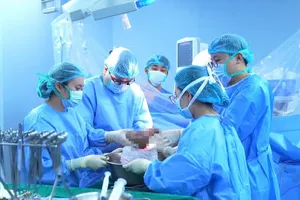
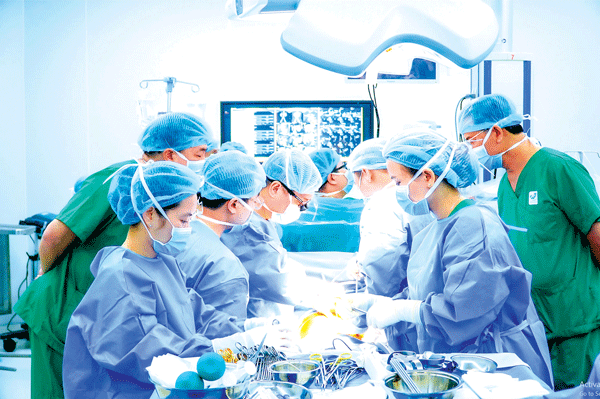
On September 10, 2025, Viet Duc Friendship Hospital in Hanoi announced the successful completion of Vietnam’s first simultaneous heart–lung transplant, igniting hope for patients on the brink of death. This procedure is among the most complex in thoracic and cardiovascular surgery, requiring the replacement of both the heart and lungs from a donor.
The recipient, a 38-year-old woman suffering from Eisenmenger syndrome with irreversible right heart failure and severe tricuspid valve regurgitation, saw her condition deteriorate daily before surgery. After more than seven hours in the operating room and nearly 50 days of intensive care, she recovered and returned home. “I feel as though I have been born again,” she said upon discharge, expressing gratitude to the medical team and the organ donor who gave her a second chance at life. Beyond saving a patient, the operation marked a major breakthrough in multi-organ transplantation, elevating Vietnam’s position on the global medical map.
Just two months later, Vietnamese medicine continued to demonstrate its growing capabilities when the National Lung Hospital successfully performed two lung transplants within 24 hours. Both procedures met the highest technical standards of the UCSF Lung Transplant Center in the United States, one of the world’s most prestigious institutions in the field.
According to Dr. Dinh Van Luong, Director of the National Lung Hospital, what was once considered a distant dream is now becoming reality, placing Vietnam among reputable lung transplant centers worldwide.
Also in 2025, Military Central Hospital 108 recorded another historic achievement by performing Vietnam’s first autologous kidney transplant. In this rare and complex procedure, a patient’s kidney was removed, its severely damaged vascular system reconstructed, and then transplanted back into her body. The patient, a 37-year-old woman with a nearly five-centimeter renal artery aneurysm, faced a life-threatening condition. After nearly four hours of surgery, blood flow returned to the kidney, signaling its successful revival.
Dr. Ha Anh Duc, Director of the Medical Service Administration under the Ministry of Health, noted that even globally, cases involving such complex vascular procedures are extremely rare. In Vietnam, this is the first recorded case. This medical achievement demonstrates the innovation and technical mastery of Vietnamese doctors, offering hope to many patients with complex kidney damage.
Successful treatment of blood cancer
Alongside advances in organ transplantation, Vietnam also achieved significant progress in hematology and oncology in 2025. Mid-year, Ho Chi Minh City Blood Transfusion and Hematology Hospital successfully treated a 12-year-old girl with acute lymphoblastic leukemia using CAR-T immunotherapy, with support from experts from Taiwan (China).
After relapsing following chemotherapy and a half-matched bone marrow transplant from her brother, the patient faced limited treatment options. Doctors decided to apply CAR-T therapy, an advanced immunotherapy that uses genetically modified T cells to recognize and destroy cancer cells.
According to Professor Phu Chi Dung, Director of the hospital, CAR-T is one of the most advanced breakthroughs in modern cancer treatment, harnessing the patient’s own immune system to fight disease. He acknowledged that high costs remain the biggest challenge, as CAR-T cell production requires complex technology and modern equipment. However, the hospital is actively preparing facilities, training certified personnel, and working with international experts to produce CAR-T cells domestically. If successful, treatment costs could be reduced by up to 20 times, bringing it to below VND500 million per case and opening new hope for many patients in the future.



)