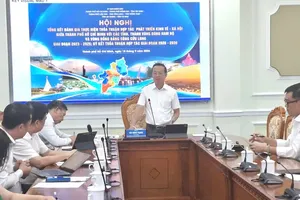
Combating illegal, unreported, and unregulated (IUU) fishing is a strategic goal of Vietnam, with Ho Chi Minh City playing a crucial role in preparing for assessments by the European Commission (EC).
Hoang Nguyen Dinh, Standing Committee Member of the City Party Committee and Vice Chairman of the People's Committee of Ho Chi Minh City, answered an interview with Sai Gon Giai Phong newspaper on this issue.
He emphasized that as a major urban center, Ho Chi Minh City recognizes its vital role and responsibility in combating illegal, unreported, and unregulated (IUU) fishing. The city, he said, has made a firm and comprehensive commitment to eliminating IUU fishing, promoting a sustainable fisheries sector, safeguarding maritime sovereignty, and strengthening Vietnam’s international reputation. This, he added, is a long-term mission closely tied to national prestige and the country’s joint efforts to have the European Commission’s yellow card lifted.
Accordingly, the city focuses on clarifying the responsibilities of each government level and agency, especially the responsibility of the leaders. From the city level to departments, agencies, and local authorities, specific tasks are assigned, with regular inspections, monitoring, and evaluation of results. The consistent viewpoint is that wherever management is lax, responsibility must be examined; there is no avoidance or shirking of responsibility.
Ho Chi Minh City clearly defines that doing a good job in combating IUU fishing is not only to fulfill local tasks but also to contribute to strengthening the trust of the central government and the international community, thereby affirming its leading role through concrete, effective, and sustainable actions.
He revealed that as of December 2025, the total number of fishing vessels in Ho Chi Minh City is 4,455, of which 95.6 percent have been licensed, while 4.4 percent (196 vessels) that do not meet the conditions for license issuance or renewal have been controlled by communes, wards, and special zones, with specific mooring locations identified. The entire number of registered fishing vessels has been 100 percent updated to the national database.
In 2026, Ho Chi Minh City identifies the fight against IUU fishing as a key task maintaining strict management as Vietnam prepares to welcome the European Commission’s inspection team early in the year. The city has completed a comprehensive cleanup of its fishing fleet data, ensuring timely progress in reconnecting vessel monitoring systems (VMS), issuing licenses, and updating management information enhancing data accuracy and transparency in line with EC requirements.
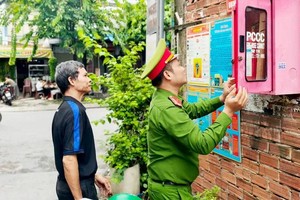
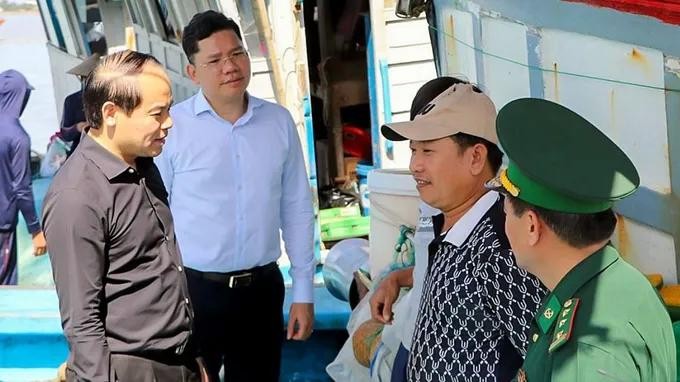
Ho Chi Minh City has intensified awareness campaigns to combat illegal, unreported, and unregulated (IUU) fishing, with officials conducting door-to-door outreach to inform and persuade fishermen about compliance. Information has been widely disseminated at all community levels particularly in coastal areas to highlight the seriousness of IUU violations, their legal consequences, and the importance of sustainable fishing practices. Communication efforts aimed at ship owners and captains, coupled with increased media coverage, have contributed to a marked decline in the number of fishing vessels seized for violating foreign waters in recent years.
Since the beginning of 2025, no fishing vessels have been seized by foreign countries (including those under EC monitoring and supervision to have their "yellow card" lifted). These are crucial signals demonstrating that Ho Chi Minh City has implemented a more systematic and sustainable approach, based on accurate data and individualized accountability from leaders in combating IUU fishing.
Federation management is the core, central, and decisive factor in combating IUU fishing. Ho Chi Minh City currently has offshore fishing vessels accounting for over 50 percent of the city's total fishing fleet. This group of offshore fishing vessels requires strict management and supervision: all must be fully registered, properly licensed, equipped with VMS, have controlled port entry and exit, and have accurate data updated on the national platform. The city has directed local authorities in communes, wards, special zone to review and record coordinates, images, and mooring addresses for each vessel that does not meet operating requirements; and to cordon off and lock down vessels that have been docked for a long time, are damaged, or are no longer operational.
At the same time, the city is monitoring changes in mooring locations for the list of unqualified vessels, coordinating with functional forces outside the city to strictly control the list of deregistered fishing vessels, ensuring there are no more "ghost vessels," reviewing and deleting registrations, and cleaning up data to avoid "fictitious data," ensuring transparency for EC verification and validation. Ho Chi Minh City has also directed the strengthening of the IUU Steering Committee at all communes to mobilize the entire political system; organizing rapid response teams to immediately handle situations when vessels lose VMS signals, verify the cause, prepare dossiers for processing according to procedures, and clearly define responsibilities for handling.
Sustainable solutions must be closely linked to legal compliance, technical management, and the development of livelihoods for fishing communities. The city has been actively promoting policies for modern, responsible fisheries development that adhere to international regulations, aiming to meet IUU standards while protecting marine resources. This includes enhancing the transition of fishing vessels that impact fishery resources (such as trawling), providing solutions for vessels that do not meet the criteria to continue fishing, and promoting coastal aquaculture and marine service activities to diversify livelihoods and ensure sustainable development.
Recently, the People's Committee of Ho Chi Minh City approved the project for transitioning fishing practices in the area, as per Decision No. 2949/QD-UBND dated November 28, 2025. Accordingly, the People's Committee continues to urgently direct the development of policies focused on supporting the transition of coastal and offshore fishing vessels to activities such as aquaculture, fishery services, and other legal professions or the decommissioning of fishing boats. For vessels operating in offshore waters that significantly impact fishery resources, they will be transitioned to less environmentally damaging fishing practices.
Additionally, Ho Chi Minh City emphasizes the development of a modern fishing port system, implementing an electronic catch documentation and traceability system (eCDT) to ensure transparent traceability of fishery products. The eCDT system is applied 100 percent at fishing ports in the region, recording all incoming vessels, cargo data, and product origins according to standards.