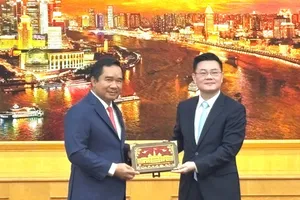
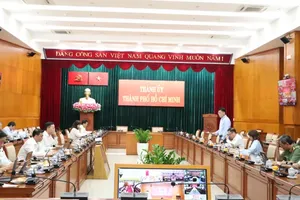
This afternoon, Tran Luu Quang, Secretary of the Ho Chi Minh City Party Committee, chaired a working session with leaders of the City People’s Committee and relevant departments to review the current status of construction material supply and discuss measures to ensure stability for ongoing and upcoming projects.
According to a report by Tran Quang Lam, Director of the Department of Construction, the city is currently facing the most severe shortage in construction stone, followed by sand. The main causes are the simultaneous implementation of numerous infrastructure and urban development projects and limited mining and transport capacity.

This has led to a widening supply-demand gap, rising prices, and slowed project progress. Transportation costs alone now account for about 25–30 percent of total expenses, further affecting disbursement efficiency.
The Department forecasts that by 2026, Ho Chi Minh City could face a 30 percent shortfall in construction stone. However, if mining licenses are extended, output increased, and new mines opened, most of the demand could be met. The situation for construction and leveling sand, however, is more critical.

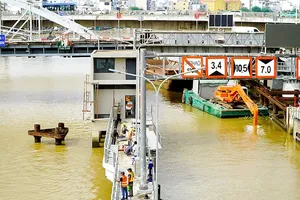
Currently, about 36 percent of construction sand is sourced from dredging the Dong Nai and Saigon rivers, with the remainder coming from the Mekong Delta and Cambodia. For leveling sand, the city can only self-supply around 4 percent, relying heavily on external sources, mainly Cambodia where prices fluctuate and control remains difficult.
Using sea sand remains challenging due to technical constraints, salinity, and high processing costs. The Department recommended further research and standard refinement to make sea sand a viable option in the future. It also proposed monthly publication of updated material prices, aligned with actual quarry and site rates, and introducing a compensation mechanism to adjust contracts for key projects.

Nguyen Toan Thang, Director of the Department of Agriculture and Environment, reported that in 2026, the city’s demand for construction stone will exceed 28 million cubic meters, while supply capacity is only about 23 million cubic meters. To bridge this gap, the city plans to auction five new quarries in early 2026 and fast-track licensing to bring them into operation quickly. For sand, total managed reserves are about 67 million cubic meters, but just over 3 million cubic meters are currently mobilized.
The Department suggested dredging major rivers, lakes, and streams to increase supply, while sourcing the remainder externally. The city’s fill soil demand stands at 23 million cubic meters, with only half currently available.
Vice Chairman of the City People’s Committee, Bui Xuan Cuong, proposed selecting strategic investors to directly manage and exploit mines for key projects, assigning the Department of Construction to publish monthly material prices, and working with the Mineral Industry Association to increase supply and ensure direct sales at the mines.
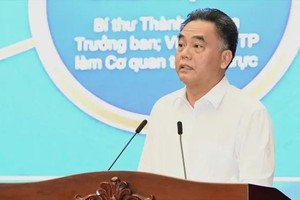
Chairman Nguyen Van Duoc urged comprehensive and coordinated solutions streamlining administrative procedures, identifying mines that can expand output, and researching ways to safely exploit sand dunes and alluvial areas. He also called for strict control of material transport routes and tough penalties for speculation and price manipulation.
Concluding the working session, Party Secretary Tran Luu Quang stressed that a stable construction material supply is essential for accelerating public investment and project progress. He requested tighter management of transportation and pricing, research into mechanisms allowing direct mine assignments to investors and major contractors, and long-term solutions such as using sea sand and recycling construction waste to promote sustainable development.



)