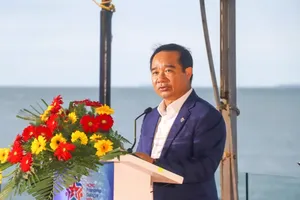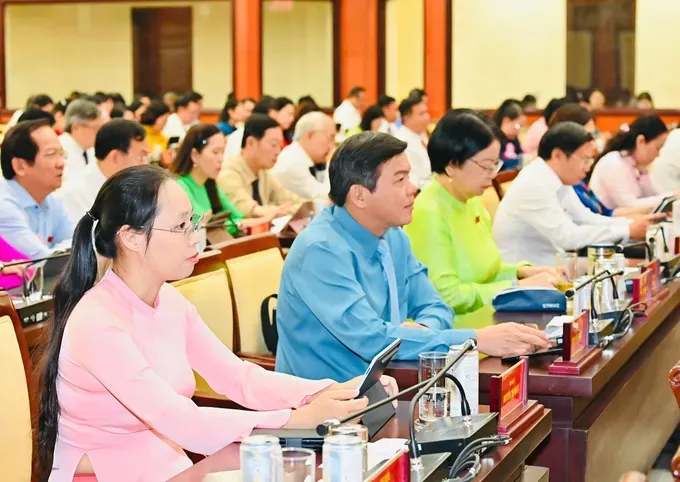
On the morning of December 9, during the 6th session of the 10th Ho Chi Minh City People's Council for the 2021-2026 term, the municipal People’s Committee submitted a proposal seeking approval for a draft resolution that would unify the governing authority responsible for implementing PPP projects spanning Ho Chi Minh City and neighboring Dong Nai Province.
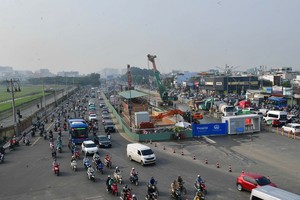
Transport links between Ho Chi Minh City and Dong Nai currently rely on road, rail, and waterways. However, chronic congestion on national highways persists due to the high volume of vehicles traveling on them. Although ring roads and expressways have been accelerated recently, demand for connectivity continues to far exceed existing capacity, a gap expected to widen further once Long Thanh International Airport becomes operational.
The HCMC People’s Committee emphasized that accelerating investment in these projects is essential to completing the transportation network envisioned for the Southeast region, enhancing transport capacity, and ensuring seamless connectivity between Ho Chi Minh City and Dong Nai, all serving the socio-economic development goals of both localities.
In addition to ongoing public investment studies, Ho Chi Minh City and Dong Nai Province have agreed to invite private sector participation in the three proposed bridges through public–private partnership (PPP) arrangements.
The Cat Lai Bridge project carries a total investment of more than VND20.6 trillion (US$782 million) and is planned as an eight-lane structure, with construction scheduled from 2025 to 2028. Dong Nai Province will oversee the bridge’s development under a PPP model, while Ho Chi Minh City will independently implement a separate public-investment project to widen Nguyen Thi Dinh Street—from the My Thuy intersection to the Dong Nai River—at an estimated cost of nearly VND5 trillion (US$190.2 million).
The Long Hung Bridge project is designed with six lanes and a total length of nearly 12 kilometers, including a 2.34-kilometer bridge section, with an overall investment of more than VND11.3 trillion (US$429 million). Under the plan, the Dong Nai People’s Committee will develop the bridge and carry out land clearance along the entire section within the province under a PPP model, with an investment of over VND7.1 trillion (US$269.6 million). Ho Chi Minh City, meanwhile, will implement an independent public-investment project to build the connecting road from the Go Cong interchange to Long Hung Bridge, including site clearance, at a cost of more than VND4.2 trillion (US$159.4 million).
The Phu My 2 Bridge project will feature eight lanes, with construction slated to run from 2025 to 2028. The project spans 6.3 kilometers, including 4.6 kilometers within Ho Chi Minh City. The bridge is expected to strengthen connectivity in the city’s southern corridor and ease pressure on the existing Phu My Bridge.
Developed under a PPP model, the project carries a preliminary investment estimate of more than VND25 trillion (US$952 million). The Dong Nai People’s Committee will determine the investment approach for the connecting road from Nguyen Ai Quoc Street to Phu My 2 Bridge.