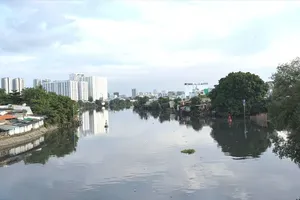
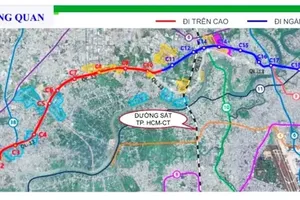
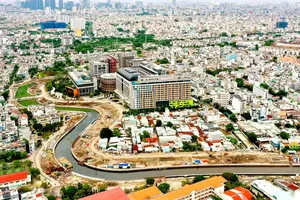
On November 23, trial operations are scheduled for the Muong Chuoi and Phu Dinh tidal sluice gates, as well as the central control facility, ahead of the full-scale official launch of the project.
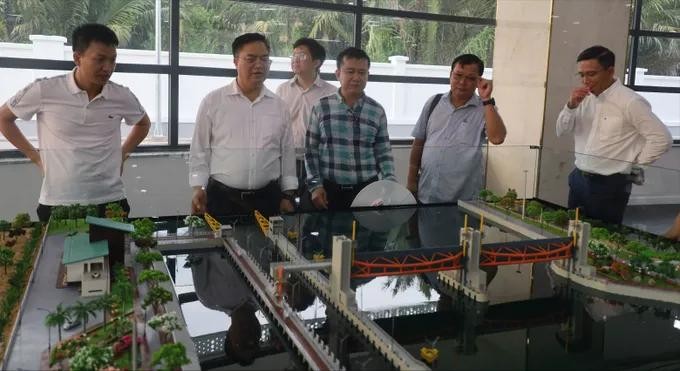
After nearly a decade of development, this tidal control project with a total investment of nearly VND10 trillion is now entering its operational phase. The infrastructure includes six major tidal control sluices at Ben Nghe, Tan Thuan, Phu Xuan, Muong Chuoi, Cay Kho, and Phu Dinh, two smaller sluices at Cau Kinh and Ba Buom, along with a network of embankments, protective revetments, and various minor tidal control structures.

Trial operations for two major sluice gates and a central control facility under Ho Chi Minh City’s US$400-million tidal flood-control project are scheduled to begin on November 23, the project's developer announced Wednesday morning.
Chairman Nguyen Tam Thinh of Trung Nam Group said the upcoming tests at the Muong Chuoi and Phu Dinh sluice gates, alongside the central command center, represent a critical milestone in verifying synchronized operations across the system.
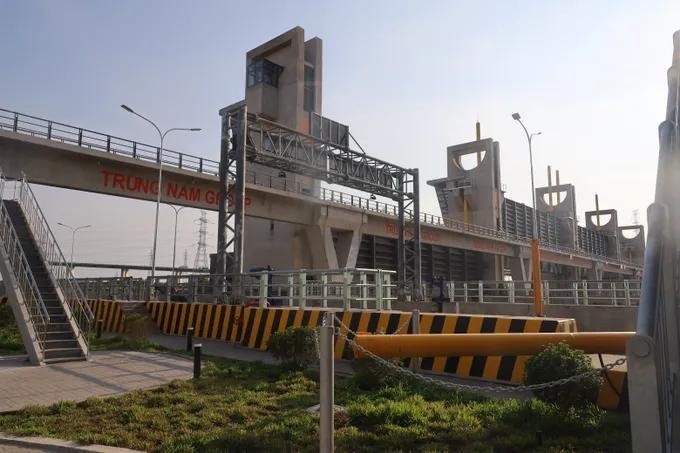
The infrastructure is part of Phase 1 of a flagship municipal initiative designed to combat severe tidal flooding and mitigate the impacts of climate change across the city.
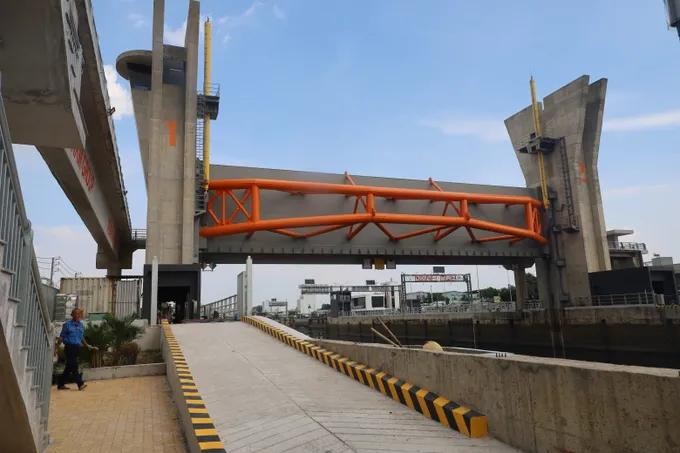
According to the Chairman of Trung Nam Group, the entire sluice network is linked to a central control facility, utilizing SCADA technology to monitor and manage operations at each individual gate. The system integrates data from 19 monitoring stations, providing continuous tracking of water levels, hydrological trends, and operational parameters. This enables management teams to determine the appropriate timing for opening or closing the sluice gates.
Under the established operational protocol, the sluice gates remain open when external water levels are within an appropriate range, ensuring the continuity of water flow and facilitating inland waterway navigation. When the tide rises, the operations center uses data from monitoring systems to direct the closure of sluice gates, preventing water from major rivers from surging into the city’s network of canals and waterways.
When the tide ebbs, and the water level outside falls below the level inside under suitable conditions, the gates are opened so that the water held within can flow naturally back into the rivers. All sluice gates must operate in coordination; operating them inconsistently, with some open and others closed, could undermine water-level management throughout the area.
In particular, during heavy rainfall that coincides with high tide, the system simultaneously blocks incoming tidal water and facilitates the pumping of water from the interior outward. At locations equipped with pumping stations such as Ben Nghe, Tan Thuan, and Phu Dinh pumps are activated to move water from the inner canals into the major rivers, lowering internal water levels and improving the drainage capacity of the sewer system.
Regarding waterway traffic, vessels navigate through ship locks located at Tan Thuan, Muong Chuoi, Cay Kho, and Phu Dinh. When the main sluice gates are closed to block the tide, vessels are directed into the lock chamber. The water level inside the chamber is then adjusted to match the level on the opposite side before the gates are opened to allow the vessels to continue their journey. In practice, this means opening the outer gate to admit a vessel into the lock, closing that outer gate, and then opening the inner gate to allow the vessel to proceed.
The project developer states that, once fully operational, the system will manage tidal flooding across approximately 570 square kilometers, covering 20 wards and communes and serving about 6.5 million people. Nevertheless, controlling tidal waters will not fully resolve urban flooding. When sluice gates are shut to keep the tide out, accumulated rainfall inside the protected area must still be collected and discharged through sewers, canals, and pumping stations.
If the drainage infrastructure is insufficient, flooding remains a risk. In addition, low-lying sections of embankments and any gaps in the flood-defense system must be addressed through coordinated measures to prevent tidal water from entering.