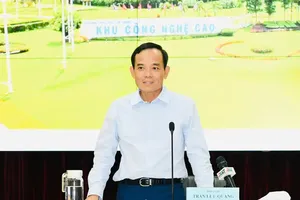
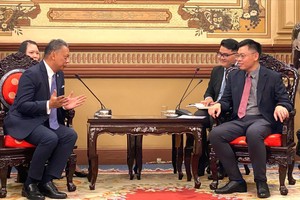
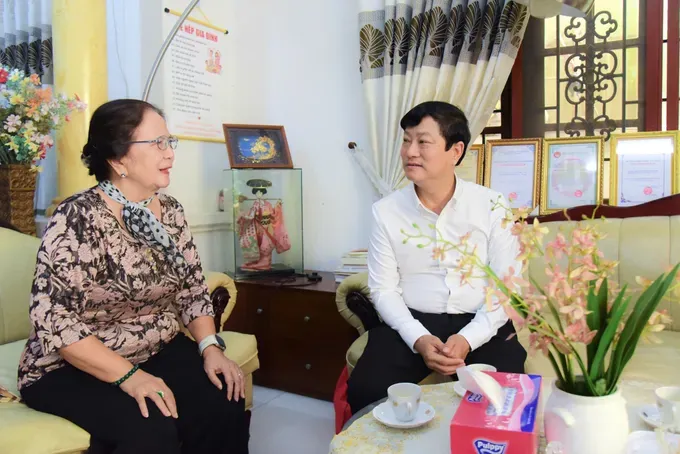
In commemoration of the 44th Vietnamese Teachers' Day (November 20), on the morning of November 16, a delegation of HCMC leadership, led by Deputy Secretary of the Ho Chi Minh City Party Committee cum Chairman of the City People's Council Vo Van Minh visited the family of the late Professor Tran Hong Quan.
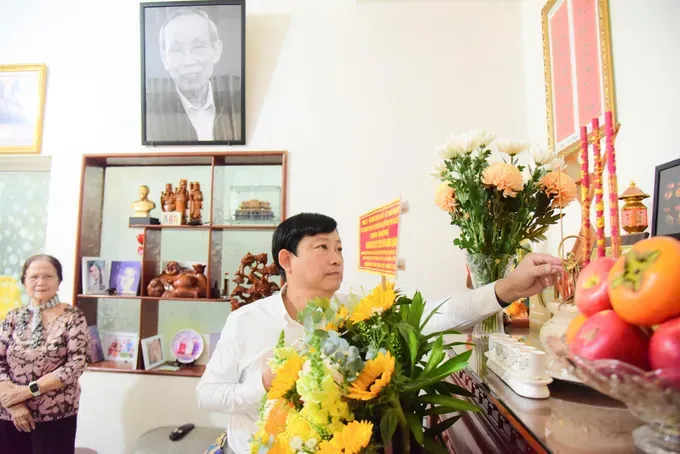
Mr. Vo Van Minh pays his respects by offering incense. Photo: SGGP
They offered incense in memory of the Professor’s significant contributions to the country’s education and training sector, both nationwide and in Ho Chi Minh City.
Professor Tran Hong Quan was a former member of the Party Central Committee, former Minister of Education and Training, former Deputy Head of the Central Central Mass Mobilization Commission, and former President of the Vietnam Association of Universities and Colleges.
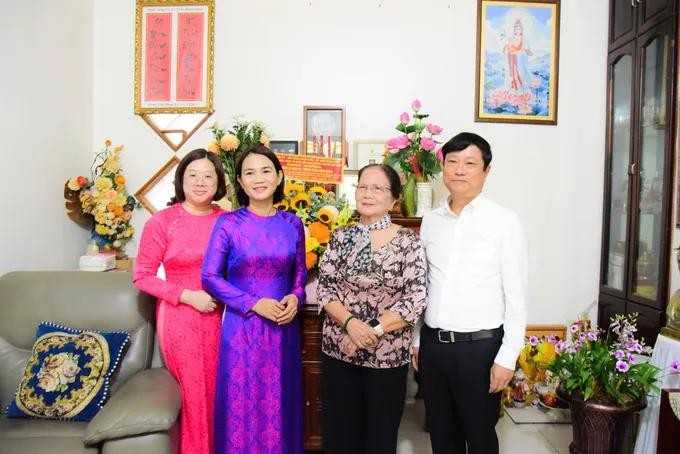
Representing the Party Committee, the People's Council, the People's Committee, and the Vietnam Fatherland Front Committee of Ho Chi Minh City, Deputy Secretary Vo Van Minh kindly inquired after the family members and wished them good health.
The late Professor Tran Hong Quan (1937–2023), a native of Soc Trang, was an educator, scientist, and leader who exerted a profound influence on Vietnamese education during the Doi Moi (Renewal) time.
Professor Tran Hong Quan made lifelong contributions to the education and training sector through a series of key leadership appointments. His distinguished service included roles as a member of the Party Central Committee (terms VI–VIII), Minister of Education and Training (1990–1997), Deputy Head of the Central Mass Mobilization Commission, and President of the Vietnam Association of Universities and Colleges (2015–2021).
The most prominent hallmark of his career was his pioneering role in laying the foundations for the non-public education sector and strongly advocating for the concept of university autonomy in Vietnam.
Beyond his theoretical contributions, Professor Tran Hong Quan also proposed and implemented various concrete policies to develop the education and training system. These included the National Target Program for scientific research, initiatives to link schools with society and productive labor, the development of ethnic minority boarding schools and teacher training institutions, the establishment of standard schools for lower secondary education in disadvantaged areas, the creation of schools for flood-prone regions, the construction of student dormitories, the piloting of direct elections for university rectors and the expansion of the non-public school system.