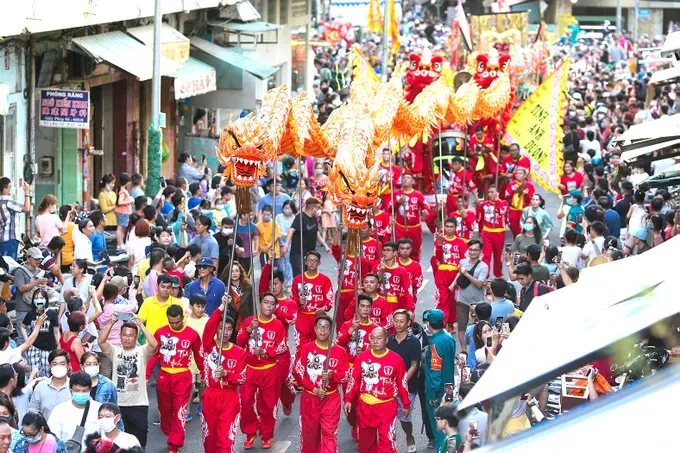
Ho Chi Minh City is a convergence point for many ethnic groups with diverse cultural nuances preserved across generations. Urbanization, changing residential spaces, and the modern pace of life are posing numerous challenges to maintaining the practice and transmission of traditional culture.
Maintaining community cultural practices
According to information from the Ho Chi Minh City Department of Culture and Sports, the city is currently home to 53 ethnic minorities, of which 43 have permanent residents totaling approximately 590,700 people, accounting for 4.35 percent of the population.
Each community brings its own customs, languages, performing arts, traditional crafts, and religious practices, contributing to the diverse cultural landscape of the metropolis.
However, preserving culture within an urban space requires not only safeguarding recognized values, but also maintaining an environment for communities to continue practicing their culture. When young people have fewer opportunities to learn their spoken and written languages and folk arts, elderly knowledge holders gradually pass away, and livelihoods and places of residence change, the transmission process faces the risk of interruption.
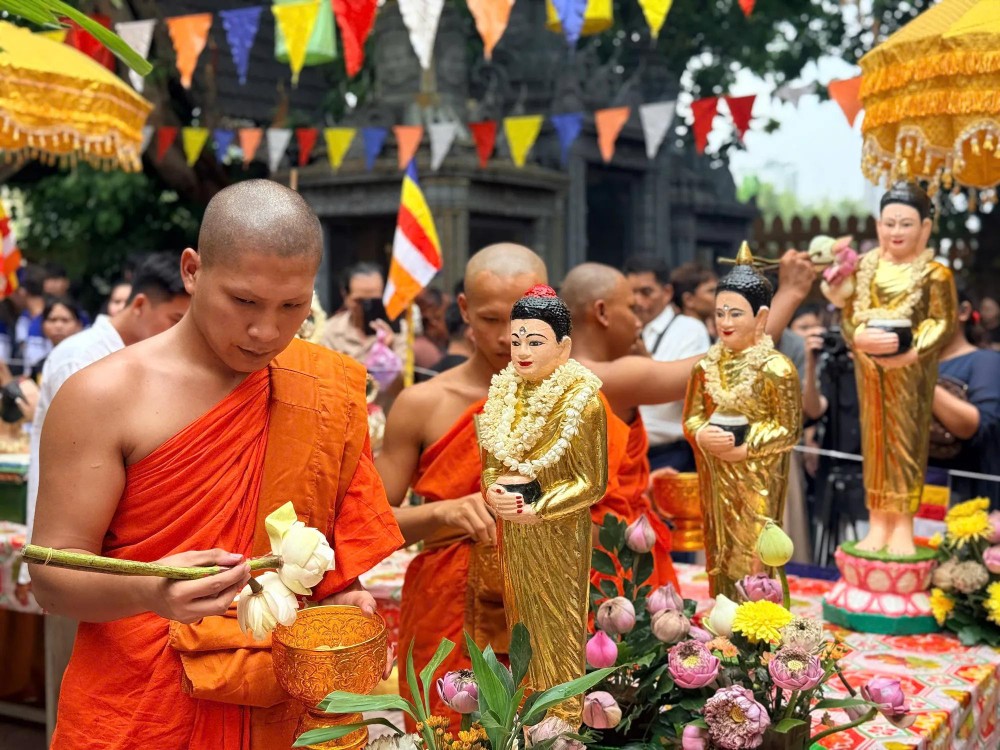
The actual operations of folk culture clubs clearly demonstrate the role of community gathering spaces. In An Dong Ward, the Mai Xanh Arts Club of the Hoa ethnic community has 24 members and maintains weekly activities. The Nhac Phong Chinese-language Traditional Opera Club in Binh Thoi Ward also operates regularly, helping preserve an art form closely tied to the community's cultural life.
In Binh Hoa Ward, a Khmer club chooses Sundays for its activities, creating favorable conditions for members who are busy making a living during the week to participate. Meanwhile, the activities of Cho Ro gong clubs in Bau Lam Commune are affected by the seasonal nature of local residents' work.
Survey results from the Ho Chi Minh City Department of Culture and Sports show that the city currently has 10 clubs and one folk culture activity group across 6 wards and communes, with 304 members, including 263 ethnic minority individuals. Eight clubs are eligible for consideration for support under proposals, yet there is currently no budget allocated to assist them.
These figures highlight the need to establish a stable support mechanism rather than letting preservation activities rely primarily on voluntary contributions from members.
A draft resolution submitted to the Ho Chi Minh City People's Council, drafted by the Department of Culture and Sports to stipulate policies for preserving and promoting the cultural identity of ethnic minorities, proposes providing VND30 million to newly established clubs with fewer than 20 members, and VND40 million to those with 20 or more members.
For existing active clubs, the proposed annual support levels are VND8 million and VND16 million, respectively. The conditions require having at least 10 members, of whom ethnic minorities account for at least 50 percent, and holding activities at least 12 times per year.
For traditional festivals and Tet holidays, the draft proposes support of VND100 million per ward, commune, or special zone per year, applicable to activities organized at communes that are maintained annually and have plans, budget estimates, and scripts approved by people's committees in communes.
According to statistics, the city currently hosts 15 traditional festivals and Tet celebrations of 6 ethnic groups annually across 49 wards, communes, and special zones. Notable among these are the Chol Chnam Thmay, Ok Om Bok, and Sene Dolta festivals of the Khmer people; Raya Aidil Adha, Puasa Bulan Ramadhan, and Maulid Nabi of the Cham Islam community; and SaYangBri and SaYangVa of the Cho Ro people.
Estimates indicate that the cost of organizing each festival ranges from VND50 million to VND250 million, largely relying on community contributions and public mobilization funding. Consequently, in disadvantaged areas, some activities have had to downscale, temporarily suspend operations, or accumulate funds over several years before they can be held.
Therefore, support policies should be calculated to match the number of festivals and specific characteristics of each locality, avoiding situations where areas with numerous activities do not receive enough funding to meet actual demand.
Transmission requires successors
In addition to supporting clubs and festivals, another approach outlined in the draft resolution implementing Government Decree No. 269/2026/ND-CP dated July 1, 2026 (Decree 269—stipulating mechanisms and policies to preserve and promote the traditional culture of ethnic minorities) involves supporting core cultural practitioners, successor cultural practitioners, and projects to restore, preserve, and promote traditional culture implemented by community teams and groups.
This policy group has a distinct scope and legal basis, separate from the aforementioned draft supporting clubs and festivals.
Based on survey results across 168 wards, communes, and special zones, the Ho Chi Minh City Department of Culture and Sports recorded an estimated demand for 143 core cultural practitioners and 181 successor cultural practitioners. The draft proposes monthly support levels of VND3.2 million per person and VND2.4 million per person, respectively.
The calculation basis references the per-session support rates in Decree 269, corresponding to VND400,000 for core practitioners and VND300,000 for successor practitioners, at a reference frequency of 8 sessions per month. This serves as a basis to quantify the monthly allowance, rather than a requirement for payment based on actual session attendance.
Notably, the draft also proposes maximum support of VND1 billion for each project restoring, preserving, and promoting traditional culture carried out by community teams and groups. Initial surveys recorded 17 proposed projects for the upcoming period, with budget requirements ranging from VND200 million to VND2.27 billion per project; total budget demand is approximately VND17.45 billion, alongside about VND13.4 billion from public mobilization and other legal sources.
These projects do not stop at organizing standalone performances or reenactments, but also encompass training and organizational capacity building; practice and teaching; promoting the role of cultural knowledge holders and successor forces; producing cultural products linked to community tourism and livelihoods; and promotion and trade facilitation.
This approach aims to empower communities to proactively identify their preservation needs, content, and products, rather than passively receiving support for isolated activities. For the policy to take effect in practice, it is necessary to further clarify mechanisms for identifying beneficiaries, appraisal methods, and outcome monitoring.
Regarding clubs, regulations on establishment by commune-level people's committees require appropriate guidance so that pre-existing cultural activity groups with substantive operations are not overlooked simply due to differences in their formal establishment structure. Regarding festivals, locality-based support levels need transparent allocation principles in cases where a ward or commune hosts multiple traditional festivals.
More importantly, preservation effectiveness cannot be measured solely by the number of clubs established, activity sessions held, or funds disbursed. What requires attention is whether knowledge holders continue to pass on their craft, whether young people participate in practice, and whether communities can sustain cultural activities after projects conclude. Only when residents are truly the central actors can policies create lasting vitality for heritage in the heart of the city.