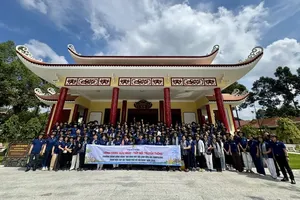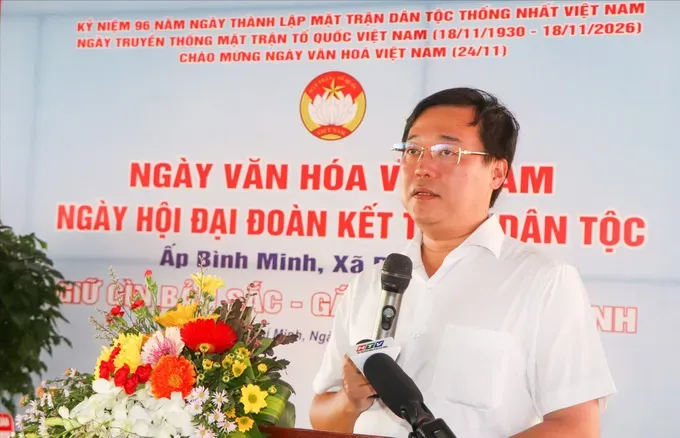
Held under the theme “Preserving Cultural Identity—Strengthening Community Bonds,” the event also marked activities in response to Vietnam Culture Day.
Also attending were Nguyen Tho Truyen, Deputy Head of the Ho Chi Minh City Party Committee's Commission for Information and Education; leaders of Binh Chau Commune; and a large number of local officials and residents.
Addressing the gathering, Chairman of the Ho Chi Minh City People's Committee Le Quoc Phong expressed his pleasure at the vibrant atmosphere and strong sense of solidarity among residents. This was the first time Binh Minh Hamlet had combined the National Great Unity Day with activities in response to Vietnam Culture Day.
With more than 700 households and a population of over 3,000, Binh Minh Hamlet has organized various practical patriotic emulation movements, maintained public security and social order, and provided timely support to people facing hardship.
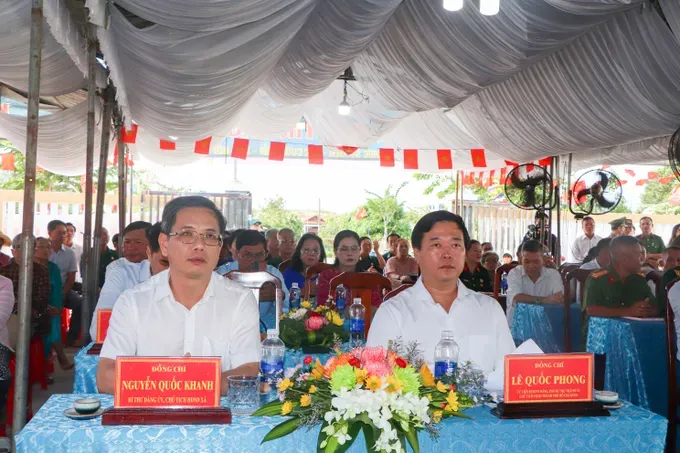
Mr. Le Quoc Phong said these achievements clearly demonstrated the dynamism of the grassroots Fatherland Front Working Committee, the attention and support of local Party committees and authorities, and, particularly, the wholehearted participation of the local population.
Providing an update on Ho Chi Minh City's development, he said the city had entered a new development phase following its merger with Binh Duong and Ba Ria-Vung Tau. The city's master plan through 2050, with a 100-year vision, has passed several important stages ahead of its official announcement, establishing clear development orientations and targets for each locality, including Binh Chau Commune.
Emphasizing the city's pivotal role as a national growth engine, he said the central government had called on Ho Chi Minh City to sustain annual economic growth of at least double digits over an extended period, initially through 2030, and fulfill its state budget revenue target of VND1 quadrillion (US$39 million) this year.
He stressed that achieving these ambitious goals would require the efforts and sense of responsibility of every citizen in every residential community.
The city chairman called on residents of Binh Minh Hamlet to continue promoting solidarity and mutual support in their daily lives and production activities, maintaining public security and social order, and fostering a civilized, compassionate, and dynamic community. These efforts, he said, would help build a model residential area and gradually pave the way for the development of socialist-oriented residential communities and communes and wards.
He affirmed that the city's leadership remained committed to promoting socio-economic development projects in the area, while encouraging residents to focus on production and business activities to improve their living standards and build increasingly prosperous and happy lives.
According to a report presented at the event, in 2026, 99.25 percent of households in Binh Minh Hamlet were recognized as “Cultural Families,” while the hamlet retained its title of “Cultural Hamlet.” Health insurance coverage among residents reached 95 percent.
The hamlet has effectively maintained its flower-lined roads and a 2,000-meter stretch of road adorned with national flags along Provincial Road 994. It has also stepped up digital transformation through the “Going Door to Door” campaign, which provides residents with guidance on online public services and digital skills.
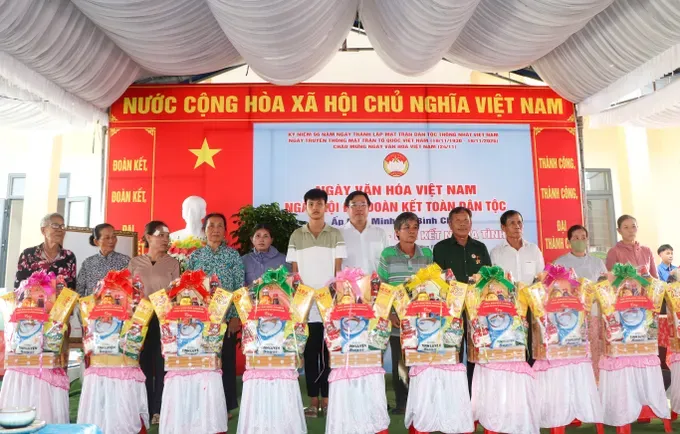
On this occasion, Chairman Le Quoc Phong presented trees to the residential community and handed over 10 gifts from the city to disadvantaged households in Binh Minh Hamlet.
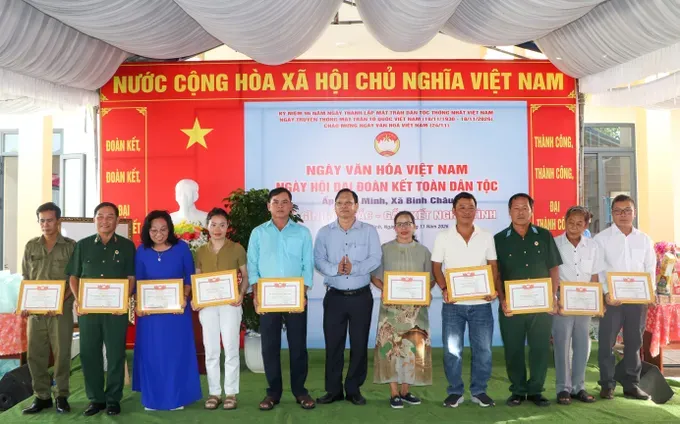
Binh Chau Commune leaders also presented a portrait of President Ho Chi Minh to the community, distributed social welfare gifts, and honored outstanding collectives, households, and individuals for their contributions to the 2026 patriotic emulation movement.