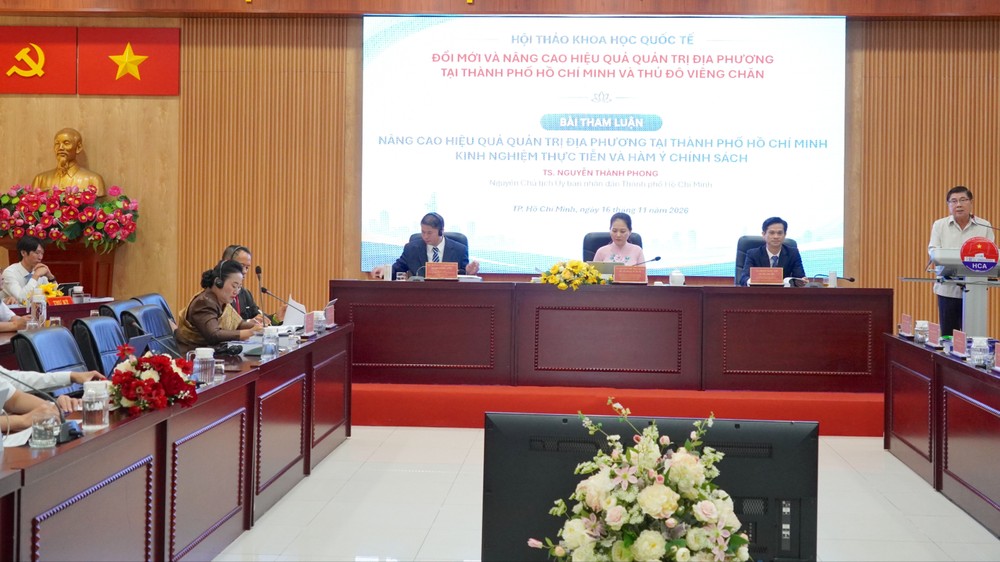
Ho Chi Minh City needs a modern local governance model suited to its expanded scale following the administrative merger, with priorities including institutional reform, greater decentralization, digital government, and stronger public participation, experts said at an international conference on November 16.
The conference, titled "Reforming and Improving the Effectiveness of Local Governance in Ho Chi Minh City and Vientiane," was jointly organized by the Ho Chi Minh City Cadre Academy and the Vientiane Capital Political and Administrative School.
In his opening remarks, Mr. Sonsavanh Manivong, Deputy Principal of the Vientiane Capital Political and Administrative School, said the event aimed to examine development challenges, exchange experiences, and propose solutions that could be applied in practice.
Presenting a paper at the conference, Dr. Nguyen Thanh Phong said local governance was fundamentally about the ability to adapt to the constantly changing demands of development. As cities expand, administrative challenges grow more complex, and resources become increasingly diverse, making governance quality a decisive factor in turning development potential into tangible results.
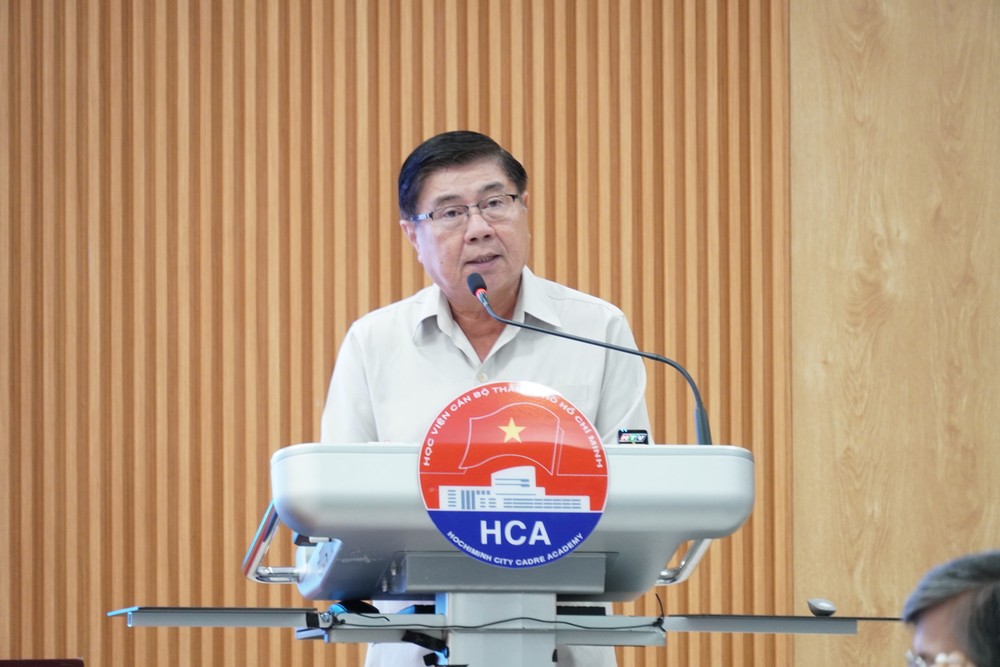
Dr. Nguyen Thanh Phong said Ho Chi Minh City's experience demonstrated that no governance model was perfect or universally applicable across all stages of development. Reform therefore required continuous learning from practical experience, a willingness to embrace change, and ongoing improvements to governance institutions.
In the digital era, as cities increasingly become engines of economic growth, competition among localities is also increasingly a contest of governance quality, he said.
Local governments that can mobilize society's collective expertise, allocate resources effectively, build public trust, and respond swiftly to changing circumstances will have a stronger foundation for long-term development.
Dr. Nguyen Thanh Phong emphasized that the ultimate measure of effective local governance was its ability to improve people's lives and expand development opportunities for future generations.
Sharing the call for governance reform, Mr. Pham Duc Hai, former Deputy Head of the Ho Chi Minh City Party Committee's Information and Education Commission, said the city needed a new governance framework reflecting its status as a megacity following the merger.
He said Ho Chi Minh City should leverage its position as a special-class municipality to pioneer new development models, institutional frameworks and modern governance approaches, making a greater contribution to the country's rapid and sustainable development.
Mr. Pham Duc Hai proposed establishing an open institutional framework to pilot flexible governance models and developing digital government that is transparent, efficient, and focused on enabling development.
He also called for decentralization and delegation of authority to go hand in hand with administrative procedure reform and integrated data systems.
In addition, he stressed the need for legal mechanisms allowing residents to provide feedback and oversee the operations of public agencies. Authorities should be required to respond to citizens' opinions and petitions promptly and seriously, he said.
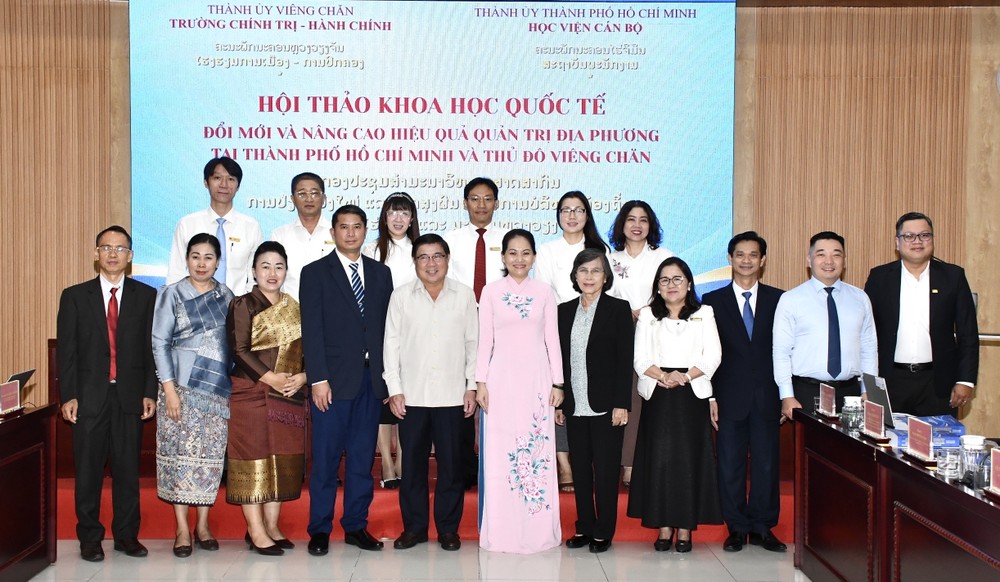
Participants also discussed institutional reform, appropriate decentralization, stronger administrative capacity, more efficient resource allocation, digital transformation, and greater public involvement in local governance.
In her closing remarks, Dr. Nguyen Thi Nhat Hang, Director of the Ho Chi Minh City Cadre Academy, said the organizers would consolidate the discussions into policy recommendations and select practical lessons to improve training and professional development programs for public officials.
The academy also plans to expand research cooperation and exchanges of experts and lecturers with its Vientiane counterpart, contributing to more effective local governance in both cities.