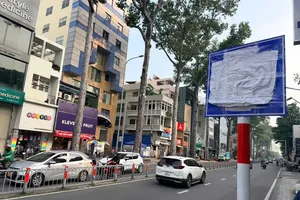
On December 8, the Ho Chi Minh City People’s Committee Office announced that Vice Chairman of the Ho Chi Minh City People’s Committee Bui Xuan Cuong had signed Decision No. 3055/QD-UBND approving the investment policy and the investor for the Ben Thanh – Can Gio railway project.
The project is expected to break ground on December 19.
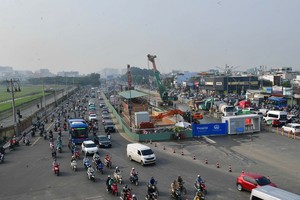
The 54-km long metro line will connect downtown Ho Chi Minh City with Can Gio Commune, with a designed maximum speed of 350 kilometers per hour.
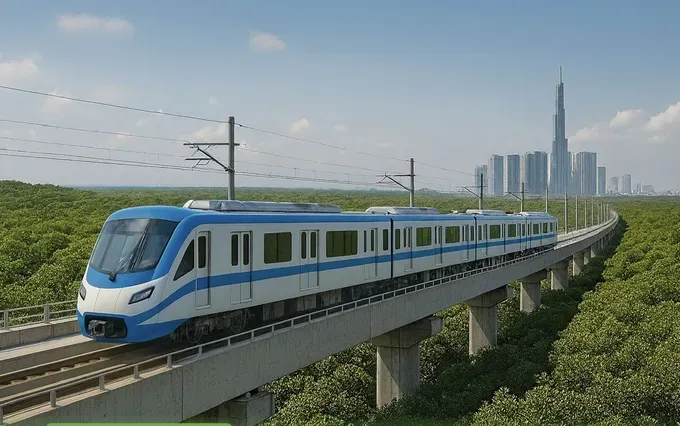
Phase 1 includes two stations of Ben Thanh and Can Gio, while phase 2 will add four more, comprising Tan Thuan, Tan My, Nha Be and Binh Khanh when needed. The project will also have a depot and an Operations Control Center (OCC) located in Can Gio Commune.
The project will require about 328 hectares of land, including 6.5 hectares of protected forest, to be compensated and replanted. It will also receive various investment incentives such as land-use fee exemptions, tax benefits, and access to state credit.
Land clearance is expected to start in the fourth quarter of 2025.
The project will be built and put into operation within 30 months from the date of land handover, aiming to begin service in 2028, excluding the four stations in Phase 2.
The Ho Chi Minh City People’s Committee required the investor to maintain financial capacity, comply with land, environmental and fire safety regulations, and adhere strictly to the schedule.
If the project falls behind schedule or fails to meet the requirements for converting forest land or rice land, it may be terminated in accordance with regulations.
According to the HCMC People’s Committee, the project is consistent with the city’s 2021–2030 master plan with a vision to 2050, as well as the adjusted general plan to 2040 with a vision to 2060. The metro line is expected to enhance the transportation network and drive socio-economic development in the Southern and Southeastern regions.







)