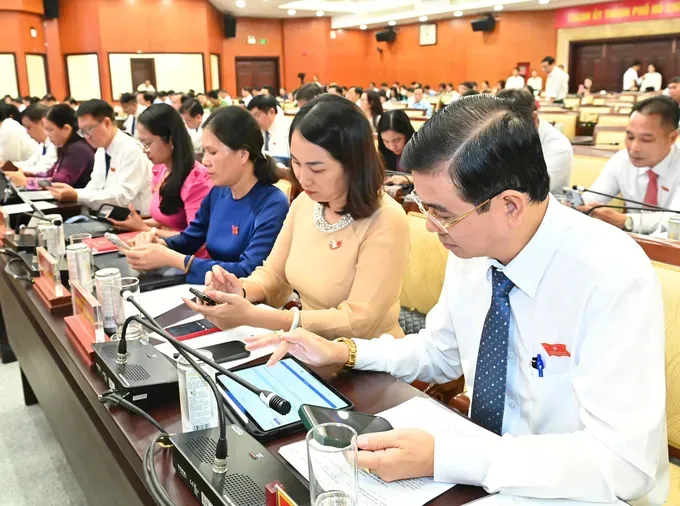
The statement was made at the 6th session of the 10th Ho Chi Minh City People's Council for the 2021-2026 term held on December 9.
Currently, the city’s healthcare network comprises 164 hospitals, 38 medical centers, 168 health stations, 296 satellite clinics, and more than 10,000 private clinics. Over recent years, this network has shouldered a substantial patient load, recording nearly 45.6 million medical visits in 2024 in Ho Chi Minh City alone, in addition to a significant influx of patients from neighboring provinces.
However, the Ho Chi Minh City People’s Committee has assessed that health stations remain the 'weakest link' in the system, hampered by a shortage of doctors, uneven staffing, and insufficient incentives, making it difficult to attract and retain young medical personnel. Many facilities have yet to fully assume their role as the 'gatekeepers' of primary healthcare.
Following administrative mergers, these shortcomings have become even more pronounced in rural, suburban, and island areas, while demand for healthcare services continues to rise rapidly.
Between 2022 and 2025, Ho Chi Minh City implemented special policies under two People’s Council resolutions, which helped increase the number of doctors at health stations to 617, including 153 retired doctors recruited under these initiatives. During the same period, 94 health stations were expanded to operate based on the family medicine model, and 213 stations were designated for health insurance-based examinations.
However, the special policies under the two resolutions are set to expire at the end of 2025 and have not yet been implemented across the entire city following the administrative mergers.
Accordingly, the City People’s Committee has proposed the adoption of a new resolution applicable citywide, retaining the policies that remain relevant while adjusting them to align with the new legal and organizational context.
Specifically, Ho Chi Minh City has proposed two main policy groups.
The first focuses on attracting older healthcare professionals. This includes retired or senior doctors, nurses, midwives, and physician assistants who remain in good health and hold valid medical licenses (excluding preventive medicine).
Under the plan, doctors would receive a monthly allowance of VND9 million per person, along with mandatory insurance contributions as required by law. Nurses, midwives, and physician assistants would receive VND7 million per month, plus corresponding insurance benefits. The city emphasizes that this approach leverages experienced human resources to help address staff shortages at the grassroots healthcare level in the current period.
The second policy group involves providing financial support for service, janitorial, and security staff at health stations and satellite clinics who do not receive salaries from the state budget or the payroll of public service units. The support is calculated based on the regional minimum wage for Zone I and includes mandatory contributions to social insurance, health insurance, and unemployment insurance. The measure aims to ensure that each station and satellite clinic has sufficient support and security personnel, allowing healthcare staff to focus on their professional duties.
The total estimated budget to implement these two policy groups is approximately VND150 billion (US$5.7 million) per year, funded by the city’s budget. In addition, the city has proposed a transitional provision to continue providing allowances for 274 doctors currently participating in the “general hospital associated with health station” practicum under the previous policy until the program is completed.
The Ho Chi Minh City People’s Committee has also submitted a proposal to adjust the investment policy for the High-Tech Treatment Center project at Children’s Hospital 2. The plan maintains the original scale of 350 beds and 16 operating rooms but adds a range of integrated technical systems and equipment, including operating room interiors, clean air systems, RO (Reverse Osmosis), UPS (Uninterruptible Power Supply), BMS (Building Management System), IT (Information Technology) infrastructure, and nurse call systems, raising the total investment from VND752 billion (US$28.6 million) to VND1,052 billion (US$40 million). The project timeline is extended to the end of 2026, and its classification is upgraded from Group B to Group A.
The adjustment aims to ensure that upon completion, the new building will be equipped with advanced technical systems, ready to support the hospital’s goal of becoming a leading pediatric surgical and organ transplant center in the Southern region.