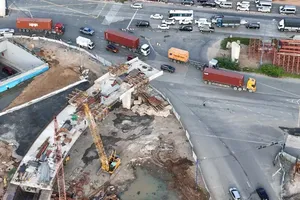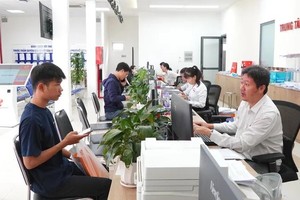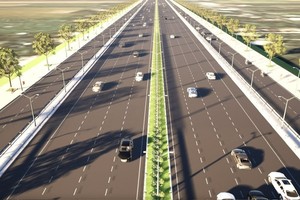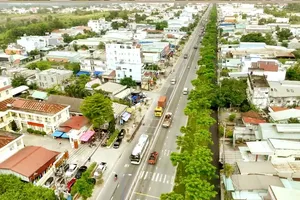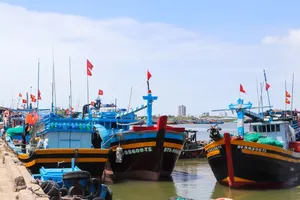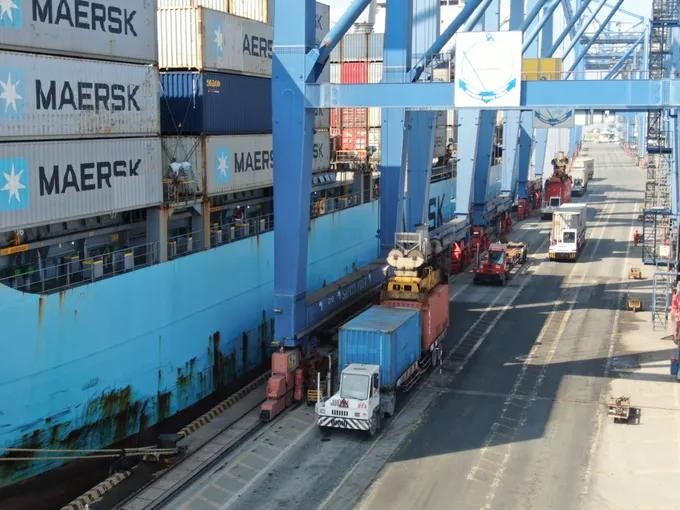
These enhanced mechanisms are expected to remove bottlenecks, allowing the city to leverage its seaport advantages, multi modal transport networks, and large urban scale to drive new growth momentum.
Businesses take initiative
Several major enterprises in Ho Chi Minh City have expressed readiness to embrace the free trade zone concept, viewing it as a major opportunity for operational restructuring.
Saigontourist Group which manages the Saigon–Can Gio and Vam Sat eco-tourism areas within the core of a world biosphere reserve is upgrading its services to international standards in preparation for new visitor flows once the free trade zone becomes operational. As a leading cruise service provider, Saigontourist expects that with the completion of the Can Gio International Transshipment Port and associated terminals, the number of cruise passengers will increase sharply, generating substantial revenue for the city.
Ho Chi Minh City has proposed four strategic free trade zones:
- Cai Mep Ha FTZ (3,764 ha): The largest zone, featuring three functional areas and eight subzones linked to deep-water ports and integrated logistics–industrial–urban–service hubs, along with green reserves and carbon credit zones.
- Can Gio FTZ (≈2,000 ha): Connected to the Can Gio International Transshipment Port and Ganh Rai Bay, envisioned as a destination for international yachts and premium eco-cultural tourism.
- Bau Bang FTZ (≈400 ha): Designed as a “rail-linked urban–industrial–logistics” hub based on Di An Station and interregional railway routes.
- An Binh FTZ (≈100 ha): Aligned with urban rail systems and logistics, directly connected to the An Binh–Song Than route.
Cai Mep Ha, when integrated with deep-water port operations, could evolve into a “Port–Service City” offering duty-free shopping, entertainment, international events, post-port tours, and large-scale MICE services. Vietravel has confirmed plans to launch niche products such as one-day free trade zone tours, cruise-and-shopping experiences, logistics–industrial tours for business travelers, and resort–conference packages within free trade zone areas. To make this possible, specific policies are needed to create interconnected experience ecosystems, vibrant nighttime economies, and tax incentives for cruise passengers.
According to data from the Ho Chi Minh City Department of Industry and Trade, total retail sales for the first 11 months of 2025 reached over VND902 trillion, up 15.3 percent year-on-year. The tourism sector is expected to welcome 8.5 million international and 45 million domestic visitors this year, generating around VND260 trillion in revenue, a 36 percent increase from last year. This strong market base provides the foundation for free trade zones to become new focal points in the city’s and nation’s development strategies.
Empowerment and transparent incentives as key to success
Ms. Tran Ha My, Chairwoman of the Vietnam Young Business Association in Europe (VYBE), highlighted Cai Mep Ha’s outstanding potential if positioned strategically. The core objective is to raise the share of direct port calls from 13 percent–15 percent to 50 percent–60 percent within 5–7 years. This development could nurture an ecosystem encompassing bonded warehouses, light assembly, packaging, logistics, and particularly supply-chain finance services. Once matured, this ecosystem would naturally attract concentrated trade flows, reducing domestic transport costs and enhancing export competitiveness.
She emphasized that a world-class free trade zone must go beyond bonded storage facilities to serve as a nexus linking ports, airports, finance, and industrial supply chains. Lessons from Dubai and Singapore demonstrate that the key drivers of success lie in superior governance, strong autonomy, and transparent, stable incentives.
Dubai’s JAFZA, for instance, integrates port management under a centralized authority, allows 100 percent foreign ownership, offers tax exemptions, and ensures streamlined procedures enabling roughly US$190 billion in annual trade and attracting over 11,000 businesses.
Ms. Tran Ha My asserted that to compete globally, Ho Chi Minh City must adopt similar mechanisms including land and budget autonomy within free trade zones, time-bound tax and fee incentives, and revenue-sharing schemes to attract major corporations and high-quality foreign direct investment.
Tourism expert Nguyen Minh Man: Connecting ports, airports with digital governance
International experience shows that free trade zones only truly maximize their strength when built as an integrated ecosystem of seaports, airports, logistics, finance, and value-added services, operating on a foundation of streamlined and transparent digital governance. The common thread among successful free trade zones is not their area or number of zones, but their capacity for connectivity and the speed of processing procedures.
Singapore is a typical example. This nation did not develop many free trade zones; instead, it focused on building a highly integrated model between PSA (the port authority), Changi Airport, and the logistics center network. The process from customs clearance, cargo inspection, investment licensing, to warehouse operations, is handled on a single-window electronic platform, which helps businesses save time, reduce costs, and increase predictability.