The real test, however, lies in whether this determination can be translated into concrete progress on each project and job site.
Flagship projects stuck for lack of land
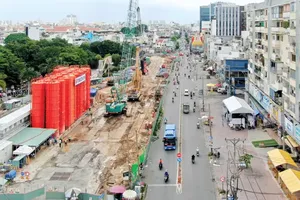
At the construction site of the An Phu Intersection—one of HCMC’s most important transport projects—work came to a standstill throughout November as contractors waited for land to be handed over. According to the Transportation Works Construction Investment Project Management Authority of HCMC (TCIP) (the Traffic Board), the slow clearance of a 22,000-square-meter plot on Luong Dinh Cua Street has delayed Package XL13, which includes building the N1.2 overpass ramp. Although three pier columns have been completed, construction cannot proceed without full site access.
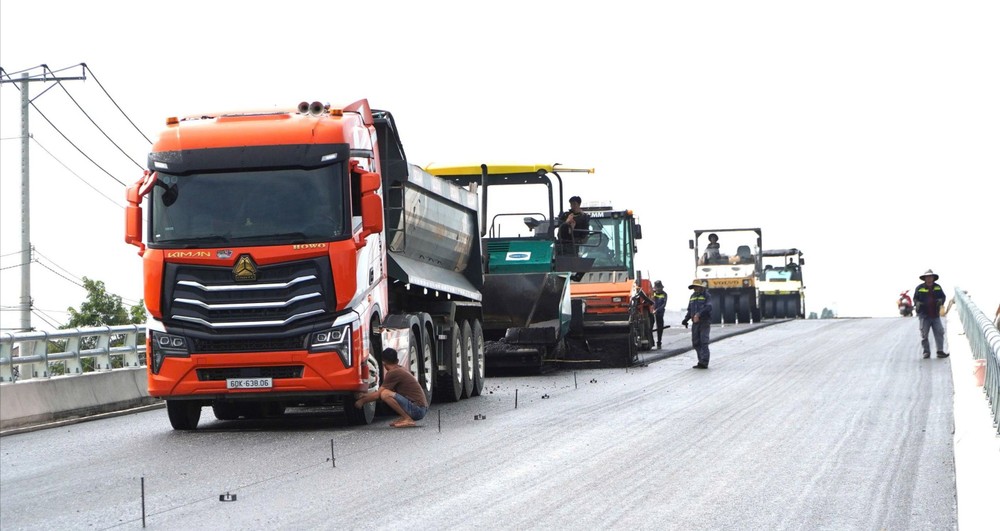
In 2025, the Traffic Board was allocated over VND17 trillion, yet as of the end of October, it had disbursed only around VND8.5 trillion. The My Thuy Intersection—originally scheduled for completion in the 2016–2021 period—has received only about 80 percent of its required land. The long-delayed expansion of Luong Dinh Cua Street has remained only partially built for years, with some sections completed on barely a third of the planned width. The upgrade of National Highway 50 has similarly stalled due to just four remaining households holding out.
The gridlock is not limited to transport. The HCMC Urban Infrastructure Construction Investment Projects Management Unit (the Infrastructure Board) is also struggling with land-related obstacles. In 2025, the board was assigned more than VND7.6 trillion across 111 projects, but by October it had disbursed just over VND3.8 trillion —barely 50 percent.
To meet its full-year target, the Infrastructure Board must receive land on schedule for a long list of projects, including: dredging and environmental rehabilitation of Xuyen Tam Canal; dredging the drainage axis of Xom Cui Canal; constructing the Tra Canal dyke from Cau Xang (Provincial Road 15) to An Ha Bridge (National Highway 22); upgrading Ben Muong Canal; and an urgent reinforcement of the irrigation system along the Saigon River’s right bank.
Regarding compensation, support, and resettlement funds, the Department of Agriculture and Environment reported that as of November 26, HCMC had disbursed more than VND25.1 trillion (83 percent). The former Ba Ria–Vung Tau administrative area had nearly VND6.7 trillion disbursed (42.75 percent), and the former Binh Duong area about VND12.5 trillion (49.66 percent).
Resolving bottlenecks on-site
Statistics from the HCMC Statistics Office show that as of November 25, the city had disbursed VND70.896 trillion —only 59.6 percent of the capital assigned by the Prime Minister. Even as the year-end approaches, progress remains sluggish: in the 20 days from November 4 to 25, only VND3.7 trillion was disbursed.
Mr. Nguyen Khac Hoang, Head of the HCMC Statistics Office, noted that the city must disburse more than VND50 trillion in the remaining two months of 2025 to meet its target. This is an “extremely challenging” task, requiring a disbursement rate of 24 percent per month.
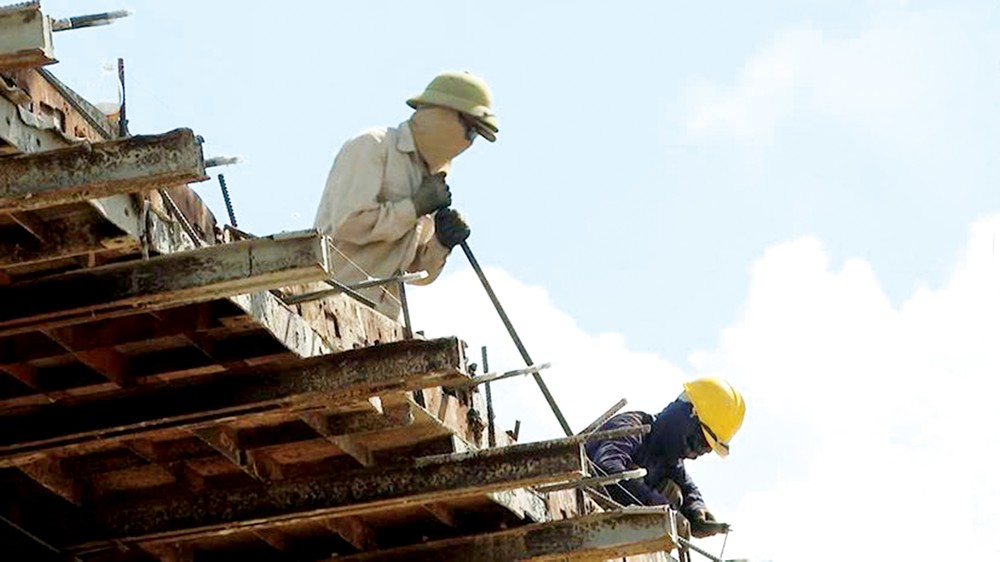
According to the city’s Finance Department, more than VND45 trillion of this year’s public investment capital is earmarked for compensation alone—representing 38.2 percent of total funds. To speed up this segment, the city has established specialized working groups focused on major projects. However, Deputy Chairman of the HCMC People's Committee Nguyen Van Dung recently acknowledged that despite numerous initiatives, the disbursement rate remains low.
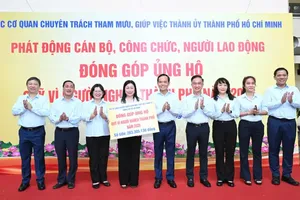
Emphasizing that public investment disbursement is a central political task, Deputy Chairman of the HCMC People's Committee Bui Xuan Cuong affirmed that the city is determined to fully activate three task forces led by vice chairpersons of the People’s Committee. These teams will intensify on-site inspections to “decide on site, resolve on site.” The city is also applying a “six-clear” mechanism for responsibilities and prohibiting delays arising from organizational restructuring.
The HCMC Department of Construction has been assigned to consolidate a list of 34 key projects operating around the clock, with dedicated “green lanes” for transporting construction materials and permission to enter restricted roads and time windows. Investors must mobilize additional manpower, increase work volume by 15–20 percent, and finalize payment dossiers within four days of acceptance. The city will reward units that perform well and strictly discipline those responsible for slow disbursement.
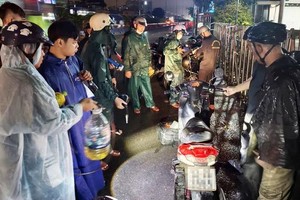
In Ba Ria–Vung Tau, many public investment projects are in a final sprint. At the Thuy Van Square expansion site, hundreds of workers have been laboring through the night. Mr. Doan Hai Linh, Director of the Vung Tau Construction Investment Management Board, said the more-than-VND1-trillion Thuy Van Boulevard upgrading project is in “maximum acceleration mode” to meet its deadline. Two packages have been inspected and accepted, while the last is expected to finish on December 30. Roughly ten satellite projects will be completed from late December 2025 to early January 2026.
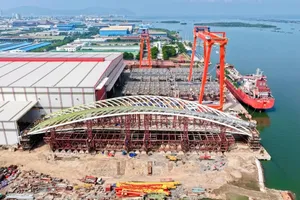
By November 2025, the 9.73-kilometer 991B Road project had reached 88 percent completion, while the Rach Tre Bridge component was at 60 percent. The 3.75-kilometer Long Son–Cai Mep route surpassed 75 percent. Other key works—such as the Bien Hoa–Vung Tau Expressway, Provincial Road 994, and Phuoc An Bridge—have all added workers and equipment to stay on schedule.
In Binh Duong, during a recent working session, Vice Chairman Bui Minh Thanh of the People’s Committee of HCMC emphasized that compensation and land clearance must be treated as the top priority. Local authorities must stay close to each area, coordinate closely with departments, and resolve bottlenecks to achieve 100 percent of the 2025 target.
He ordered wards and communes to appraise and approve compensation and resettlement documents within two working days. The Department of Agriculture and Environment, the Land Fund Development Center, and project management units must submit daily reports before 3 p.m., clearly detailing cumulative progress, pending tasks, and accountability for delays. Leaders will be held fully responsible for any failure to meet requirements.