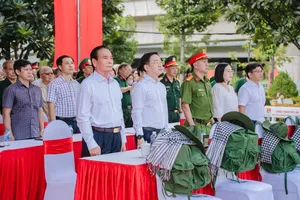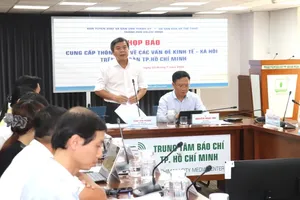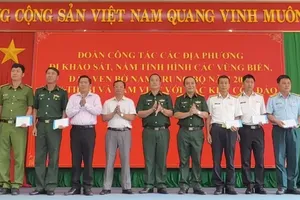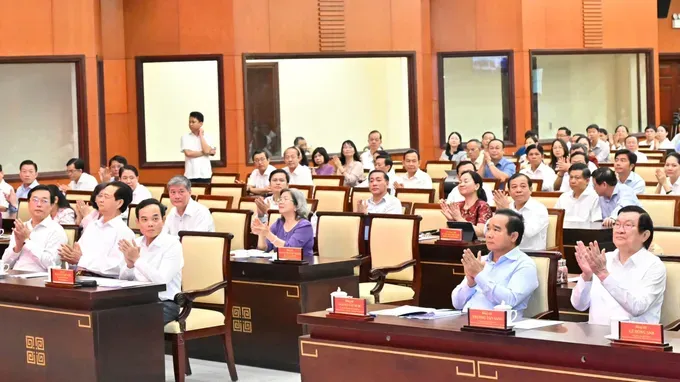
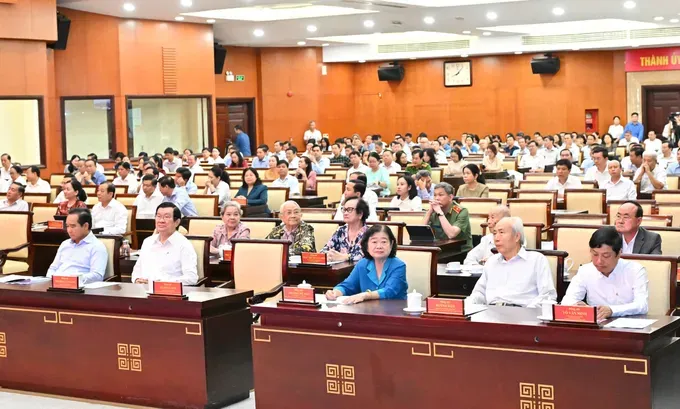
The conference was held in person at the city-level venue and connected online to 168 communes, wards, and special zones.
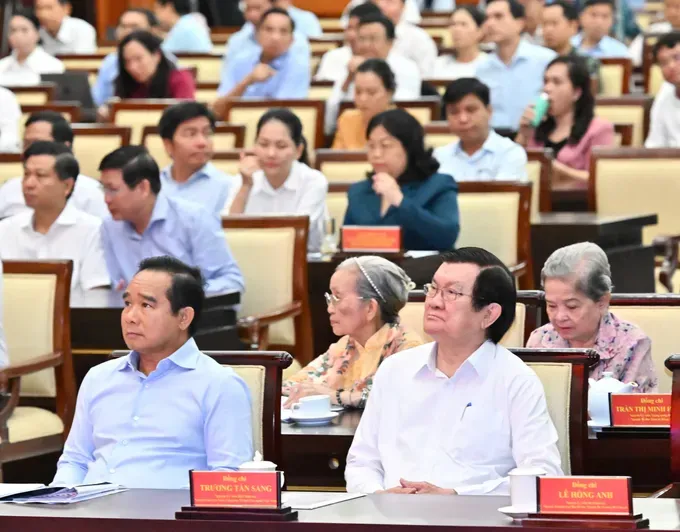
Attending the conference were former high-ranking retired officials in Ho Chi Minh City, including former State President Nguyen Minh Triet, attending at the Tay Nam Ward venue; former State President Truong Tan Sang; former Prime Minister Nguyen Tan Dung; former Vice State President Truong My Hoa; and former Chairman of the Central Committee of the Vietnam Fatherland Front, Huynh Dam.
Ho Chi Minh City leaders attending the conference included Secretary of the Ho Chi Minh City Party Committee Tran Luu Quang; Standing Deputy Secretary of the Ho Chi Minh City Party Committee Le Quoc Phong; Chairman of the Ho Chi Minh City People’s Committee Nguyen Van Duoc; Chairman of the Ho Chi Minh City People’s Council Vo Van Minh; Vice Secretary of the Party Committee and Chairman of the Vietnam Fatherland Front Committee of Ho Chi Minh City Nguyen Phuoc Loc; Vice Secretaries of the Ho Chi Minh City Party Committee Van Thi Bach Tuyet and Dang Minh Thong.
The Ho Chi Minh City Party Committee focused on thoroughly disseminating and implementing Resolution No. 09-NQ/TW of the Politburo on the building and development of Ho Chi Minh City in the new era; presenting the Ho Chi Minh City Party Committee’s Action Program for the implementation of Resolution No. 09-NQ/TW; and delivering the directive remarks and concluding address by the Secretary of the Ho Chi Minh City Party Committee.
Establishing a new development model
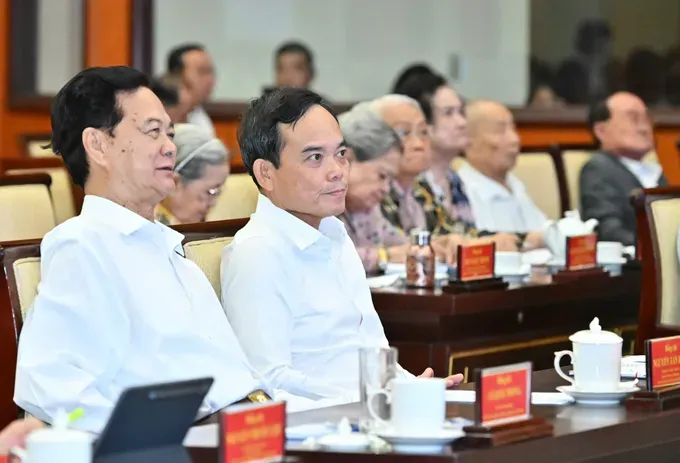
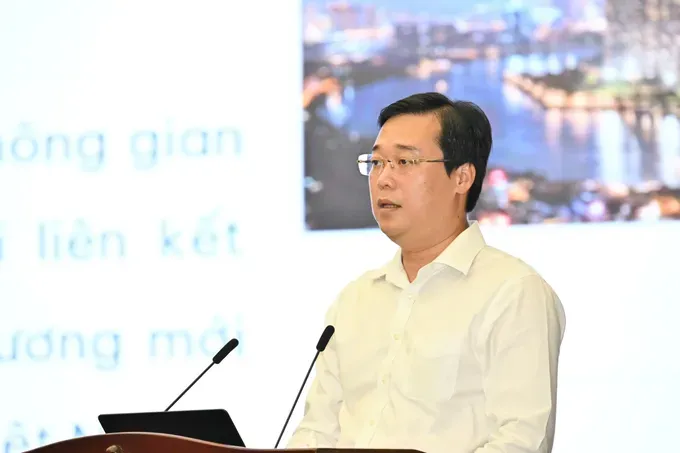
At the conference, Standing Vice Secretary of the Ho Chi Minh City Party Committee, Le Quoc Phong, presented Resolution No. 09-NQ/TW of the Politburo. According to the resolution, the Politburo identifies the building and development of Ho Chi Minh City in the new era as a particularly important political task for the entire Party, people, armed forces, and the whole political system, especially the city’s Party organization, government, and people, under the guiding principle "Ho Chi Minh City for the whole country, and the whole country for Ho Chi Minh City.”
The resolution emphasizes the need to further improve institutions and formulate synchronized, breakthrough, and outstanding policies while accelerating decentralization and delegation of authority to create favorable conditions for Ho Chi Minh City, as a special urban center, to become a symbol of Vietnam’s dynamic development in the 21st century. The city is envisioned as a place where national development aspirations, global competitiveness, and the spirit of innovation converge; a pioneer and model in institutional innovation, development quality, and governance standards; and a leading growth engine, innovation hub, and key gateway for national integration.
In addition, the resolution calls for the establishment of a new development model that mobilizes the combined strength of the entire political system and society; effectively harnesses the city’s potential, advantages, and strategic position; and enables Ho Chi Minh City to soon affirm its role as a major economic and financial center, a culturally rich and humane metropolis, and a leading hub for science, technology, and innovation in Southeast Asia and Asia, with strong global competitiveness.
The resolution also calls for building the Ho Chi Minh City Party Organization and political system into a united, exemplary, clean, and comprehensively strong body, distinguished by leadership capacity, innovation, administrative discipline, and combativeness, enabling it to fulfill the city’s development mission.
It emphasizes the importance of promoting the strength of the great national unity bloc across the city and upholding the people’s central role in all decisions concerning the city’s development. The people should be the first beneficiaries of the city’s sustainable development achievements, while public satisfaction, prosperity, and happiness must serve as the key indicators for assessing the effectiveness of leadership and governance.
Development goals for Ho Chi Minh City
- By 2030: Ho Chi Minh City is envisioned as a civilized, modern, dynamic, and innovative metropolis; a leading center for the economy, culture, society, science, technology, innovation, logistics, and international integration; a pioneer in the nation’s industrialization and modernization process; and a city with a prominent position in Southeast Asia.
- By 2045, the city aims to become a civilized, modern, dynamic, and innovative metropolis; a major Asian hub for the economy, culture, society, science, technology, and innovation; an attractive global destination; and a city distinguished by its rich cultural and social development, high quality of life, and deep international integration.
- By 2075 (toward the 100th anniversary of the Liberation of the South and National Reunification): Ho Chi Minh City is expected to become a global, smart, and modern city with comprehensive development on par with the world’s leading metropolitan areas, characterized by green and sustainable growth, a high quality of life, and strong resilience to climate change.
The resolution also sets out eight key tasks and solutions:
- Developing a new growth model based on science and technology, innovation, digital transformation, labor productivity, and competitiveness;
- Establishing breakthrough and exceptional institutional mechanisms and policies to support the city’s development in the new era;
- Formulating a long-term, stable development plan with strong climate-change adaptation capacity;
- Mobilizing, harnessing, and efficiently utilizing all available resources to promote the city’s rapid and sustainable development;
- Building Ho Chi Minh City into a civilized and modern special urban center, with a strong focus on improving the quality of life of its residents;
- Promoting the comprehensive development of culture and people, fostering a civilized, modern, compassionate, and dynamic city worthy of bearing the revered name of President Ho Chi Minh;
- Safeguarding national defense and security while enhancing the effectiveness of foreign affairs and international integration;
- Building a clean and strong Party Organization and political system for the city.
Five key messages in the action program for the implementation of Resolution No. 09-NQ/TW
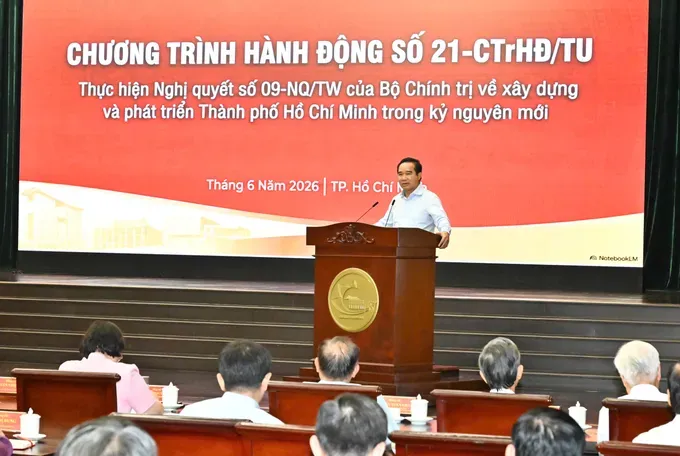
At the conference, Chairman of the Ho Chi Minh City People’s Committee, Nguyen Van Duoc, presented Action Program No. 21-CTrHD/TU of the Ho Chi Minh City Party Committee for the implementation of Resolution No. 09-NQ/TW of the Politburo.
According to him, the issuance of the Politburo’s resolution and the Ho Chi Minh City Party Committee’s action program reflects a very strong political commitment and special attention to the development prospects of both the country and Ho Chi Minh City in the new phase. It also demonstrates the sense of urgency and determination of the Politburo and the Standing Board of the Ho Chi Minh City Party Committee.
Immediately after the policy direction was issued, the Secretary of the Ho Chi Minh City Party Committee directed the assignment and preparation of the resolution and the action program, ensuring timely implementation, rigorous content development, and alignment with the city’s new development requirements.
Immediately after the Politburo issued Resolution No. 09-NQ/TW, the Ho Chi Minh City Party Committee promulgated Action Program No. 21-CTrHD/TU and simultaneously focused on drafting the Law on Special Urban Areas. The city also proactively prepared and issued legal normative documents within its authority, rather than passively waiting for resolutions or guiding circulars from central authorities.
This approach helps shorten the time required to complete the system of subordinate legislation, thereby creating a solid foundation for newly adopted mechanisms and policies to be implemented and translated into practice at an early stage.
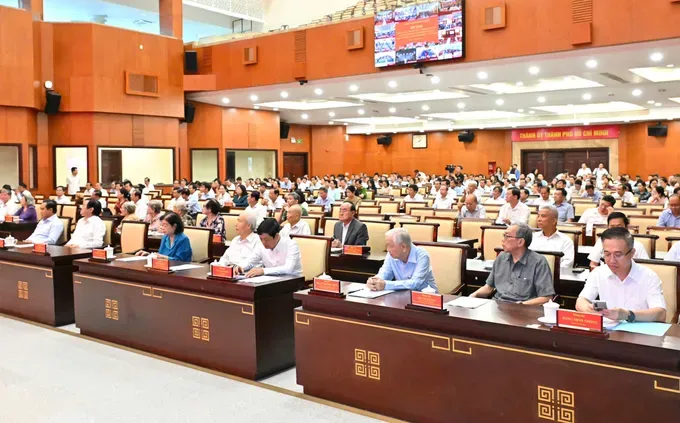
Regarding the implementation of the action program, the Chairman of the Ho Chi Minh City People’s Committee highlighted five key messages.
First, the resolution reflects the Government’s great aspiration to transform the nation’s future while also embodying the aspirations of the Ho Chi Minh City Party Organization and its people for a period of faster and more sustainable development. This places considerable pressure on the city’s political system, but it also presents a mission and a historic opportunity for Ho Chi Minh City to achieve breakthroughs in the years ahead.
The second message is the imperative to transform the growth model, shifting from reliance on “hard resources” to the development of “soft resources” based on knowledge, data, science, and technology. This transition is expected to create new and sustainable growth drivers, improve productivity and competitiveness, and help the city overcome the middle-income trap.
According to Chairman of the Ho Chi Minh City People’s Committee Nguyen Van Duoc, Ho Chi Minh City aims to establish at least two concentrated high-tech parks and between three and five innovation centers, with a particular focus on the areas of former Ho Chi Minh City and former Binh Duong Province.
The third message is that institutions must stay one step ahead to unlock development resources. He emphasized that building a system of breakthrough and exceptional institutional mechanisms for the city represents a particularly important new element of the resolution. The special mechanisms and policies implemented in recent years have created additional room for development, contributing to the city’s economic growth of 8.27 percent in the first quarter of 2026. Although this result fell short of the expected double-digit growth target, it clearly demonstrated the role of institutional reform as a powerful driver of growth. Together with the proposed Law on Special Urban Areas, these institutional innovations will provide a critical foundation for Ho Chi Minh City to realize its ambition of achieving sustained double-digit economic growth.
The fourth message is the development of strategic infrastructure to expand the city’s development space. According to him, this represents a crucial step toward overcoming the growth constraints that currently limit the city’s development potential. If institutions are regarded as the “soft driver” of growth, infrastructure serves as the “hard driver.” Without a strong technical and transport infrastructure foundation, the city will not be able to achieve sustained double-digit growth.
Ho Chi Minh City is therefore accelerating the development and upgrading of its infrastructure network, laying the groundwork for a breakthrough in the coming years. Priority is being given to the completion of urban railway lines, ring roads, and key transport connectivity projects.
The fifth message is the development of a comprehensive digital infrastructure system and shared data platforms. According to the Chairman of the Ho Chi Minh City People’s Committee, the city has attracted nearly US$2 billion in investment for this sector and is building shared databases serving both the city and the nation. As part of this effort, the central government has selected the former Ba Ria–Vung Tau area as the location for a major national data center, taking advantage of its favorable climate conditions and access to clean energy sources.
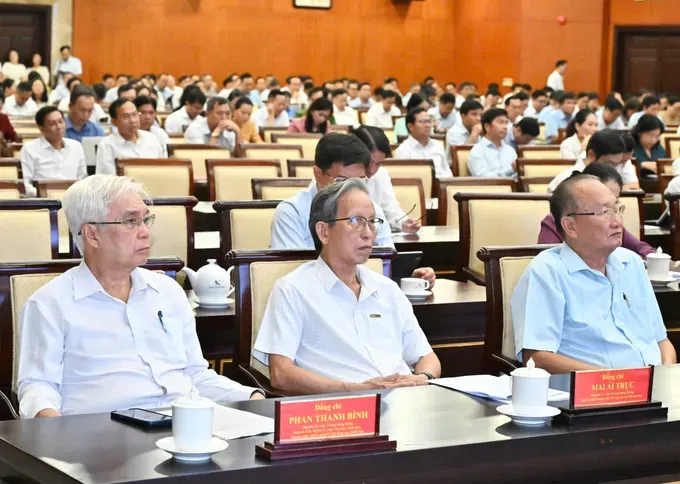
Additionally, the city is restructuring its development space under a multi-center urban model, promoting transit-oriented development (TOD), and making more effective use of underground space and riverfront areas.
Ho Chi Minh City is also working with reputable domestic and international partners to formulate a comprehensive master plan for the city’s future development. The plan is expected to be submitted for approval by October 31, 2026.
Drawing on its tradition of pioneering spirit, innovation, dynamism, creativity, compassion, and aspiration for progress, together with its tremendous strengths in human capital, science and technology, economic potential, and international integration, as well as the strong determination of the entire political system and the broad consensus of its people and business community, Ho Chi Minh City has every basis to continue making powerful breakthroughs. The city will maintain its role as the nation’s economic locomotive and strive to become one of Asia’s leading centers for economic development, finance, and innovation, living up to the trust and expectations of the Party, the State, and people nationwide, as well as those of the Party Organization and people of Ho Chi Minh City,” Chairman of the Ho Chi Minh City People’s Committee Nguyen Van Duoc affirmed.
Specific Development Targets
* 2026–2030
- Achieve an average GRDP growth rate of at least 10 percent per year;
- By 2030, GRDP per capita is expected to reach at least US$14,000;
- The digital economy is projected to account for around 40 percent of GRDP;
- Complete approximately 200 kilometers of urban railway lines;
- Achieve a Human Development Index (HDI) of approximately 0.9;
- Fundamentally address urban flooding, environmental pollution, traffic congestion, and drug-related issues.
* 2031–2035
- Maintain an average GRDP growth rate of at least 10 percent per year;
- By 2035, GRDP per capita is targeted to reach at least US$25,000;
- The digital economy is expected to contribute around 60 percent of GRDP;
- Continue maintaining an HDI of no less than 0.9.
* 2036–2045
- Sustain an average GRDP growth rate of at least 10 percent per year;
- By 2045, GRDP per capita is projected to reach at least US$75,000;
- Continue maintaining an HDI of no less than 0.9;
- Complete the urban railway network connectivity system;
- Achieve net-zero greenhouse gas emissions.
* 2046–2075
- Maintain an average GRDP growth rate of at least 6 percent per year;
- By 2075, GRDP per capita is expected to reach at least US$100,000;
- Indicators related to social equity, environmental protection, and the Human Development Index (HDI) are targeted to remain above 0.9.