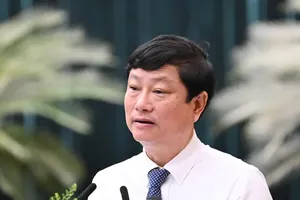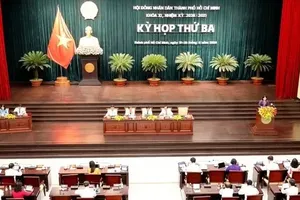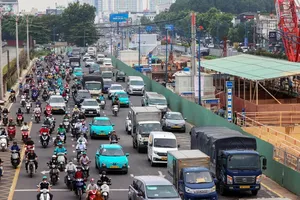
The targets were outlined in Decision No. 4617/QD-UBND, signed by Vice Chairman of the HCMC People's Committee Hoang Nguyen Dinh to implement a scheme strengthening public passenger transport while controlling private vehicle usage for the 2026–2030 period, municipal authorities announced on July 27.
The action plan details specific measures to develop a modern, eco-friendly public transport system while gradually restricting private motorized vehicles.
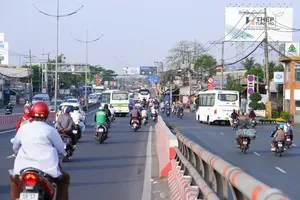
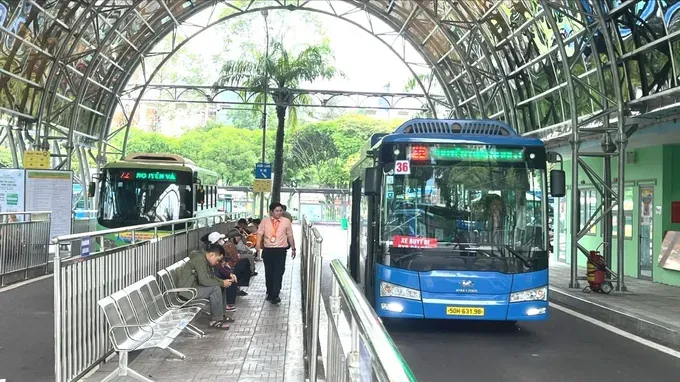
Under the plan, 100 percent of intra-provincial buses will run on electricity or green energy by 2027. All buses and taxis in the southern metropolis are expected to switch to electric or clean energy power by 2030.
Ho Chi Minh City plans to completely restructure its bus network following administrative unit reorganizations, expanding coverage to link with key regional destinations and urban transit hubs.
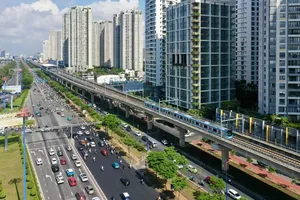
New bus routes will be launched to connect the southern economic hub with Long Thanh International Airport, upcoming metro lines, and neighboring areas including Binh Duong and Ba Ria-Vung Tau. The city also plans to introduce night bus services and roll out micro-transit or demand-responsive transport using small vehicles within residential communities.
To support the expansion, municipal authorities will invest in upgrading bus stations, interchange hubs, passenger shelters, and bus stops, alongside constructing five new bus terminals in accordance with master plans.
Additionally, park-and-ride facilities will be developed, allowing commuters to park their private vehicles and seamlessly transfer to public transit for the remainder of their journey.
Ho Chi Minh City plans to expand an integrated electronic ticketing system across its entire public transit network, utilizing artificial intelligence, big data, and digital modeling to streamline transport management while building a centralized shared database.
Regarding waterway transport, municipal authorities are studying investments in public passenger waterbus routes and inland waterway terminal infrastructure. These will be seamlessly integrated with bus and metro lines to build a comprehensive multimodal transit network.
As part of its green transition, the southern metropolis will finalize a plan to control vehicle emissions and establish Low Emission Zones (LEZ) in its downtown core, Can Gio, and Con Dao special zone. The city is also researching traffic management measures to restrict private vehicles on select corridors once the public transport system meets demand.
To support clean-energy adoption, Ho Chi Minh City will install EV charging stations and battery-swapping kiosks across bus terminals, parking lots, government offices, schools, hospitals, and industrial parks. Additionally, the city will expand its public bike-sharing network, explore dedicated bike lanes, and designate more pedestrian-only streets in the city center.
The action plan also aims to shift public commuting habits. Municipal authorities will encourage civil servants, public employees, and state workers to use public transportation at least twice a week, incorporating this standard into the annual performance and commendation evaluations for public agencies and departments.