HCMC creates momentum for breakthrough development
SGGPO
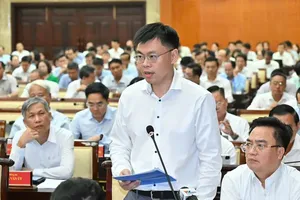
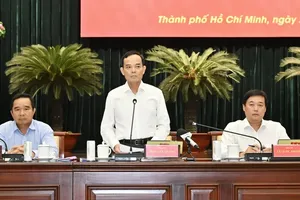
The third session of the 11th-term Ho Chi Minh City People’s Council was convened at a pivotal moment for the city.
Image generated by AI
Taking place one year after the launch of the two-tier local government model and in the lead-up to the 50th anniversary of Saigon-Gia Dinh officially being honored with the name of President Ho Chi Minh, the session laid the groundwork for a new phase of growth and transformation.
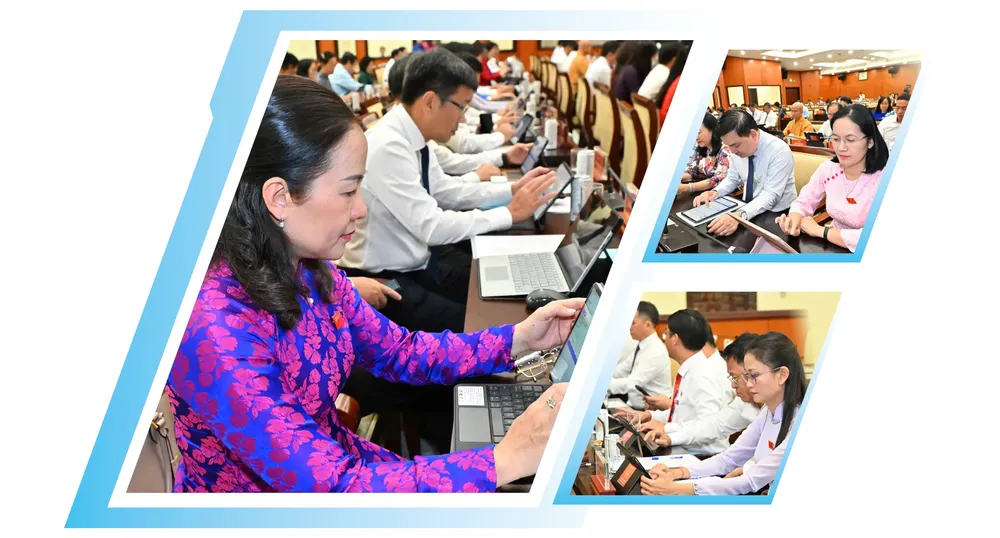
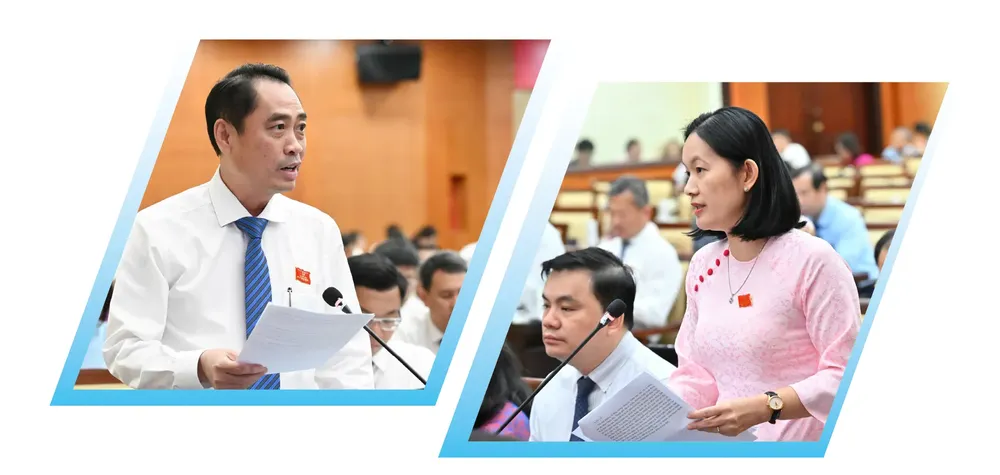
Delegates of the Ho Chi Minh City People’s Council vote to approve resolutions during the council’s third session on June 19. (Photo: SGGP/ Viet Dung)
A total of 56 resolutions were adopted, covering infrastructure development, urban renewal, social welfare, healthcare, education and public transportation. Together, these decisions form a comprehensive institutional framework designed to mobilize resources and accelerate the city’s development strategy for the 2026-2030 period.
One of the session’s key priorities was the approval of major infrastructure projects expected to reshape regional connectivity and urban development.
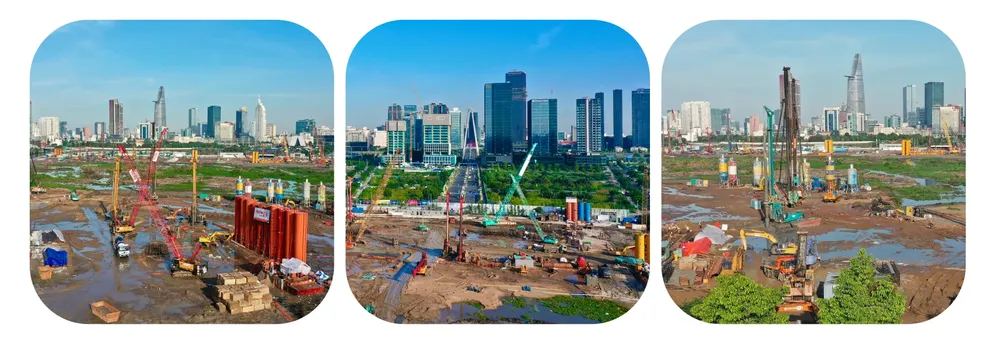
Construction is underway on the New Administrative Center and Central Square project in the Thu Thiem New Urban Area, An Khanh Ward, Ho Chi Minh City. The 33-hectare project, with an investment of nearly VND30 trillion (US$1.1 billion), broke ground on April 29, 2026. (Photo: SGGP/ Hoang Hung)
Among them is the Can Gio–Vung Tau sea bridge project, which, once completed, is expected to reduce travel time between Can Gio and Vung Tau from 90-120 minutes to just 15-20 minutes. The project carries an estimated investment of nearly VND93.16 trillion (US$3.5 billion).
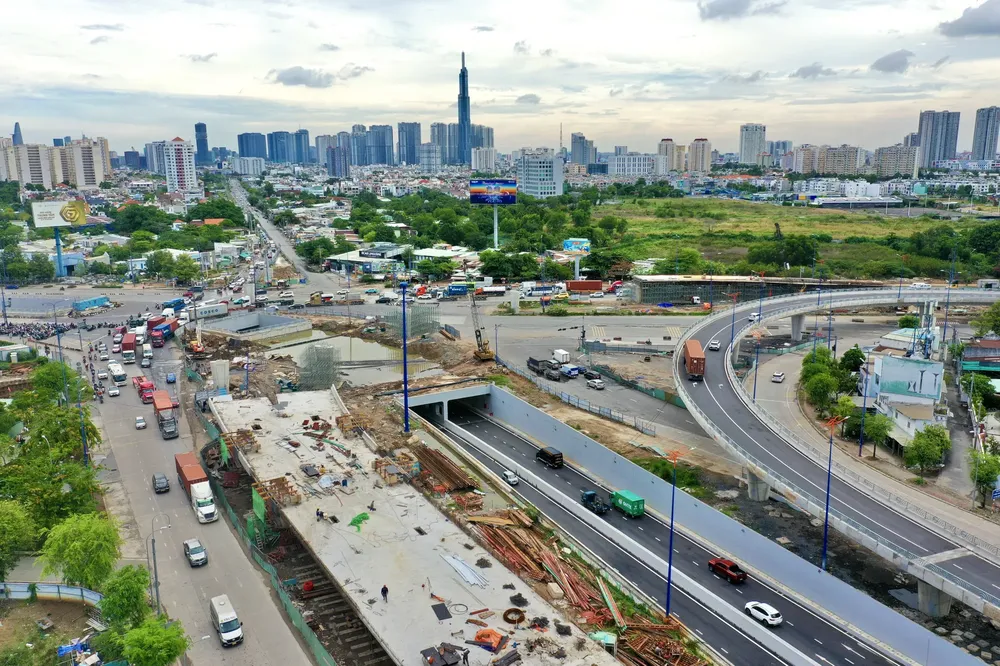
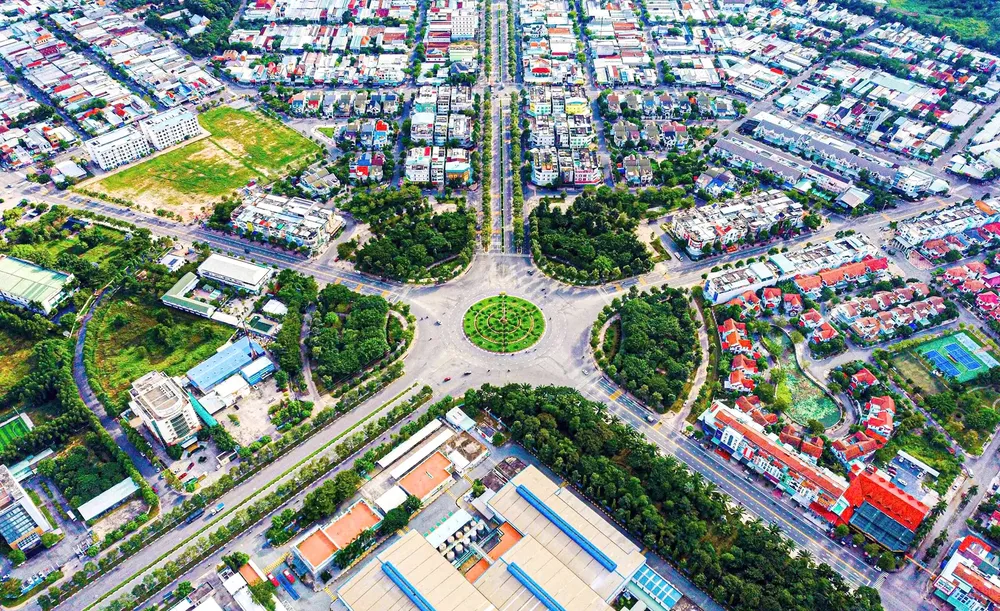
An Phu Roundabout in Binh Trung Ward, Ho Chi Minh City (Photo: SGGP/ Hoang Hung)
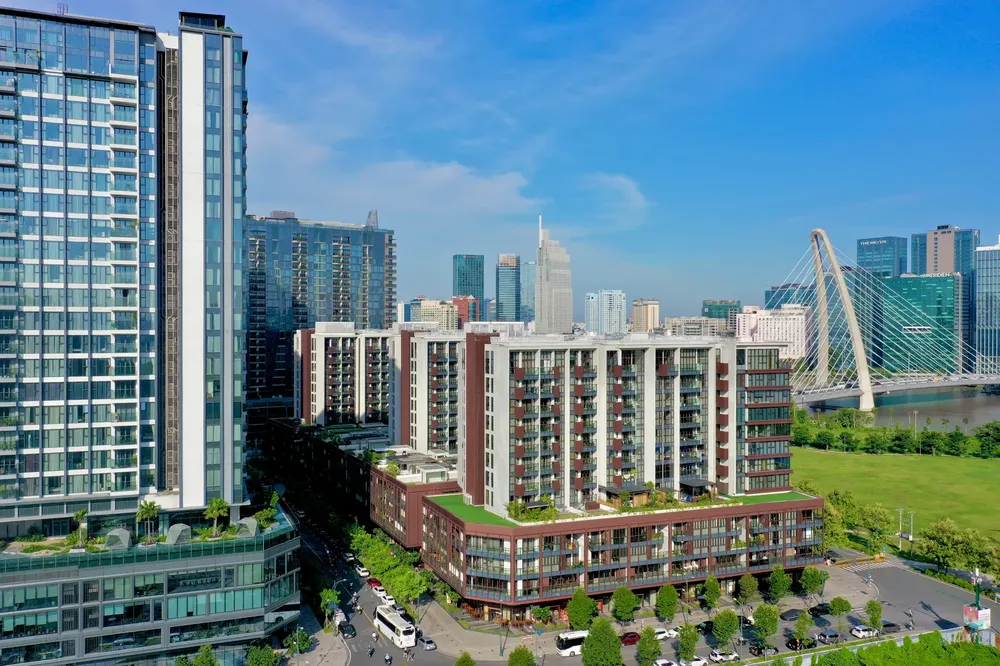
Modern transport infrastructure and urban spaces are taking shape in the Thu Thiem Financial Center area, An Khanh Ward, Ho Chi Minh City. (Photo: SGGP/ Hoang Hung)
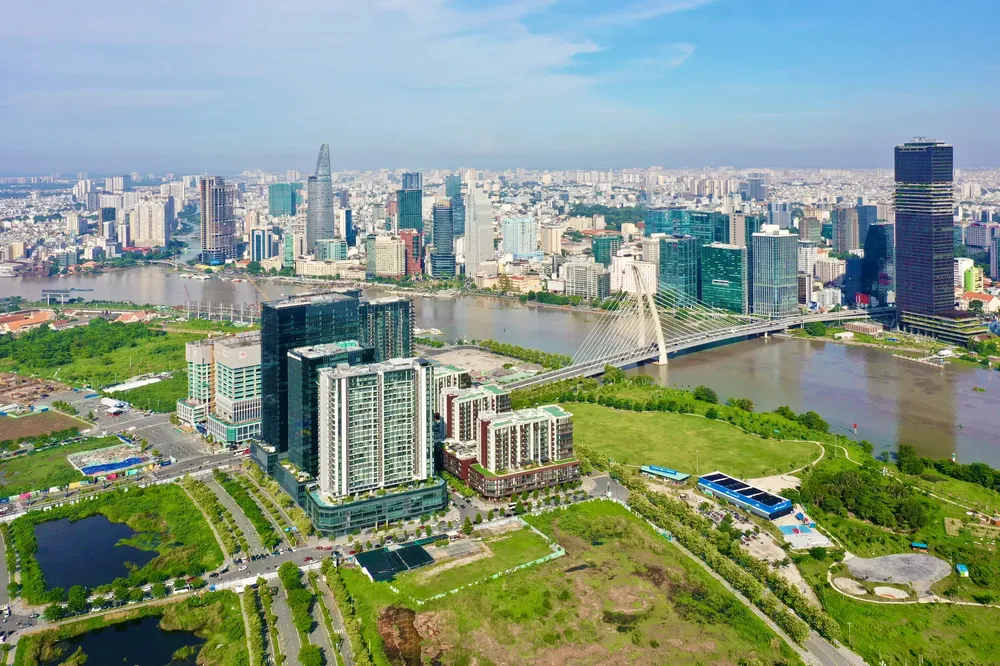
The core area of the Thu Thiem Financial Center, located across the Saigon River from downtown Ho Chi Minh City, is envisioned as a future international financial hub. (Photo: SGGP/ Hoang Hung)
The People’s Council also approved adjustments to the investment policy for the Can Gio Bridge project, focusing on financial arrangements, land resources and state budget funding. The bridge is expected to strengthen regional links and improve connectivity with major infrastructure projects, including Ring Road 3, Ring Road 4, Long Thanh International Airport and the Ben Luc–Long Thanh Expressway.
Another major project is the Ho Tram–Long Thanh International Airport Urban Expressway, which will stretch more than 42 kilometers with six traffic lanes and a total investment exceeding VND46.9 trillion (US$1.8 billion).
In urban renewal, the council approved the Ma Lang and Cho Ga–Gao urban redevelopment project, scheduled to begin implementation in 2026. The project aims to improve living conditions through resettlement programs, upgraded technical and social infrastructure and the revitalization of central urban areas.
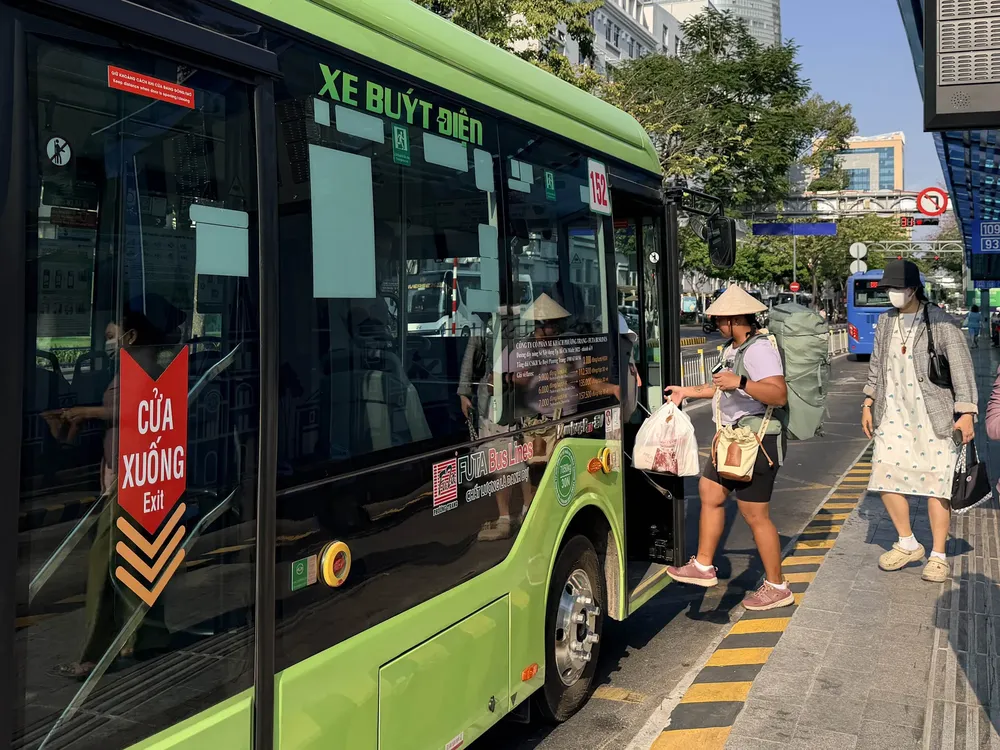
Passengers travel on an electric bus in Ho Chi Minh City. (Photo: SGGP/ Hoang Hung)
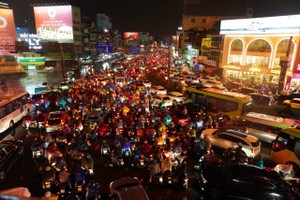
The session also adopted a policy providing a 100-percent subsidy for bus fares from July 1 through the end of 2026. The measure is expected to reduce commuting costs for residents, encourage public transport use, ease traffic congestion and contribute to emissions reduction.
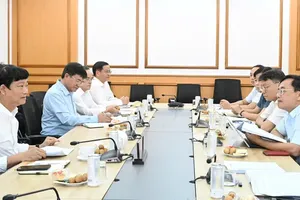
Delegates discuss key issues during the third session of the 11th-term Ho Chi Minh City People’s Council on June 19. (Photo: SGGP/ Hoang Hung)
During the first six months of 2026, the Standing Committee of the Ho Chi Minh City People’s Council organized three sessions and issued 107 resolutions. These focused on urgent and strategic issues within the council’s authority, including adjustments to major investment projects, public investment programs, urban planning orientations and mechanisms for the efficient use of land resources to support development.
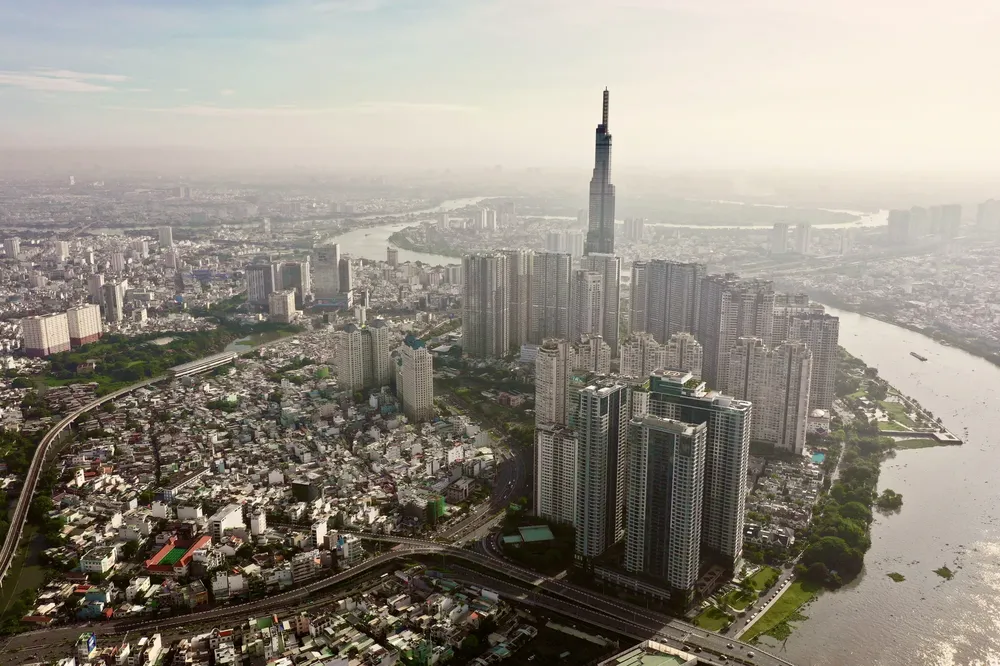
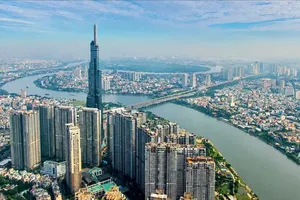
Vinhomes Central Park and the Landmark 81 tower in Thanh My Tay Ward contribute to the city’s modern skyline along the Saigon River corridor. (Photo: SGGP/ Hoang Hung)
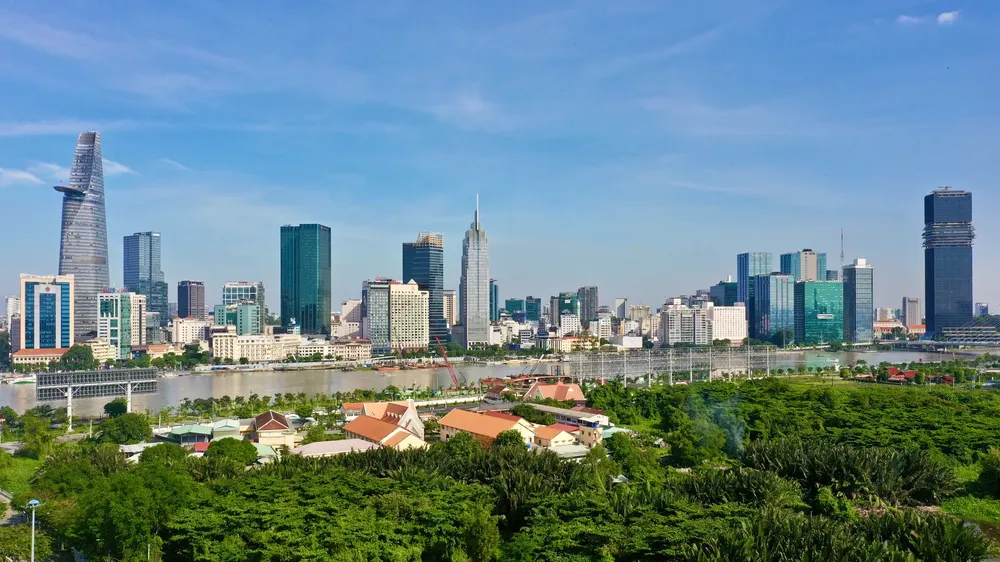
View of downtown Ho Chi Minh City from the Thu Thiem New Urban Area, featuring modern office, commercial and financial towers lining the western bank of the Saigon River. (Photo: SGGP/ Hoang Hung)
In addition to infrastructure and economic development, the council approved numerous social welfare policies covering healthcare, education, public transportation and support for disadvantaged groups. Key measures include the free bus fare program, policies for part-time local officials, gifts for revolutionary contributors and policy beneficiaries on the occasion of the city’s 50th naming anniversary, and the construction of new A3 and A4 buildings at the Rehabilitation and Occupational Diseases Treatment Hospital.
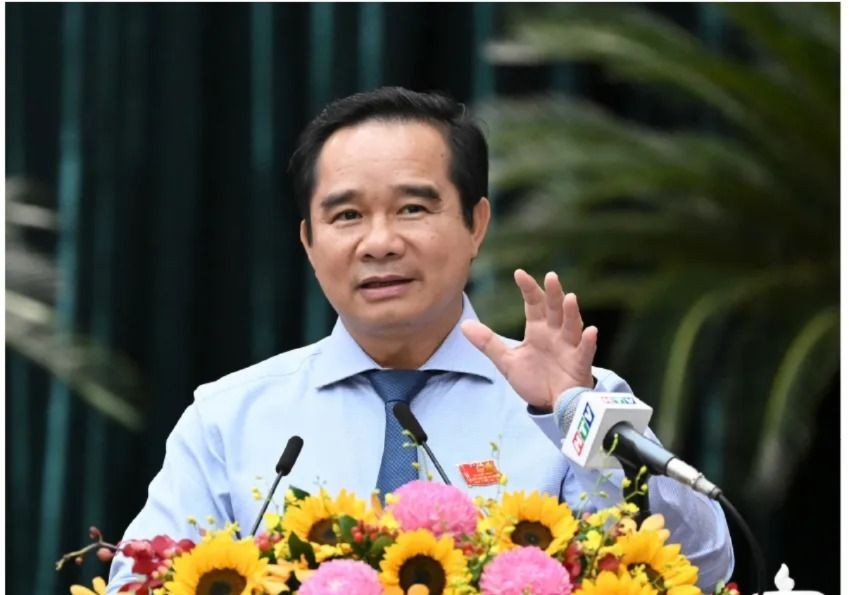
Reviewing Ho Chi Minh City’s socio-economic performance in the first six months of 2026, Chairman of the Ho Chi Minh City People’s Committee Nguyen Van Duoc noted that the city is entering a new stage of development, with significant opportunities arising from special policy mechanisms. At the same time, however, it faces considerable challenges and pressures.
The responsibility is to turn these challenges into drivers of growth, harness the institutional potential created by National Assembly Resolutions 98 and 260, as well as the Politburo’s Resolution 09, and prepare for the forthcoming Special Urban Areas Law. The goal is to deliver concrete, practical results that improve the quality of life for residents.
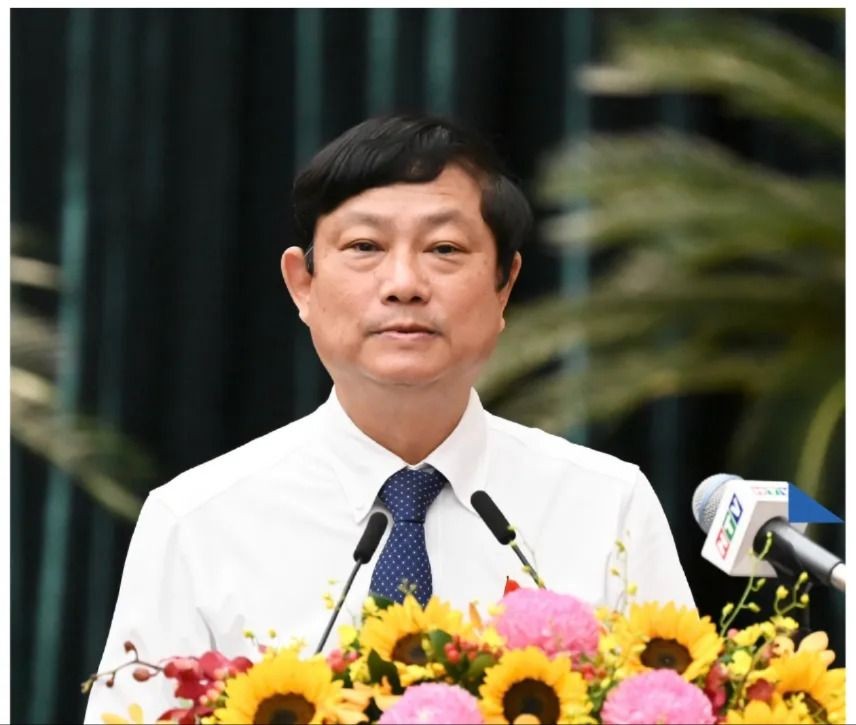
In his closing remarks at the third session, Chairman of the Ho Chi Minh City People’s Council Vo Van Minh stated that delegates had unanimously approved 56 important resolutions covering a wide range of sectors. These resolutions are expected to have a direct impact on the effectiveness of state governance, the investment and business environment, and the quality of life of city residents.
In particular, the People’s Council reviewed and approved the medium-term public investment plan for the 2026–2030 period, along with a number of key infrastructure projects.
The Chairperson of the Ho Chi Minh City People’s Council called on the city government, departments, agencies and local administrations to urgently develop implementation plans, clearly define responsibilities and timelines, and ensure that the approved resolutions are carried out effectively and on schedule.
The council’s standing body, specialized committees and delegates will continue strengthening oversight to promptly identify challenges and propose solutions, ensuring that all resolutions achieve their intended objectives and deliver tangible benefits to residents.
The People’s Council also emphasized closer cooperation with Sai Gon Giai Phong (SGGP) Newspaper in innovating communication methods so that public policies can be more effectively disseminated and quickly translated into practical results for the community.
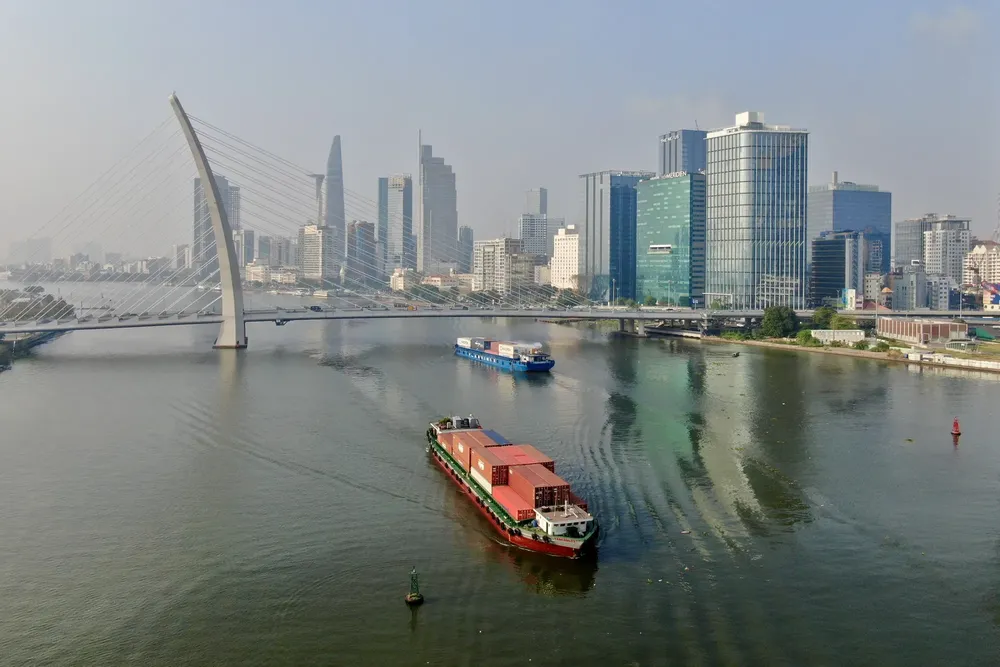
Sunrise over the Saigon River near Ba Son Bridge and downtown Ho Chi Minh City. (Photo: SGGP/ Hoang Hung)
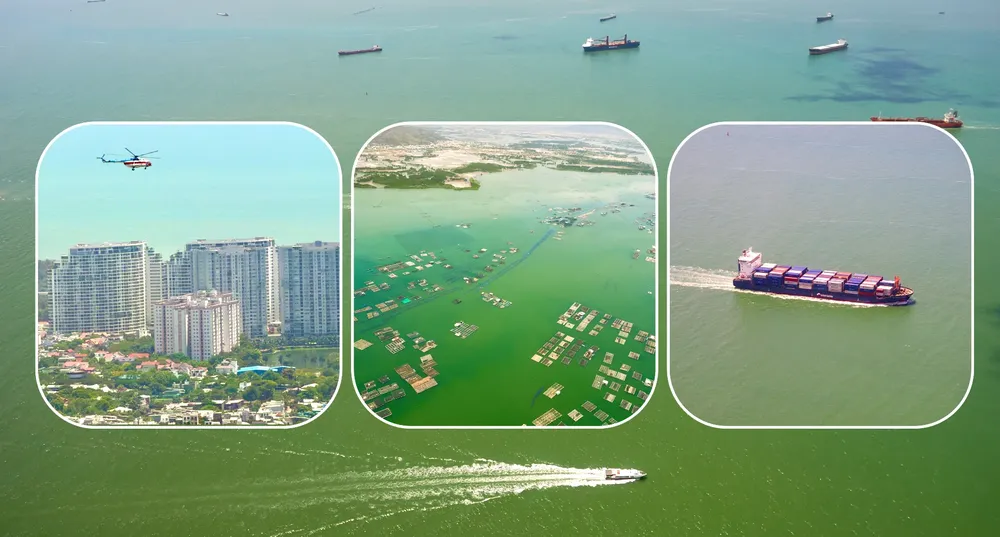
An aerial view of Vung Tau (Photo: SGGP/ Hoang Hung)
Ben Cat is home to numerous industrial parks, attracting experts and workers seeking long-term employment and residence opportunities. (Photo: SGGP/ Trung Dong)