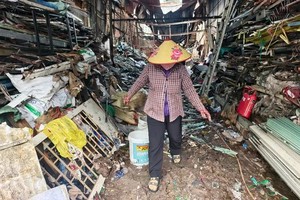
The initiative aims to elevate public living standards, reconstruct urban spaces, and lay a sustainable foundation for the city’s future growth.
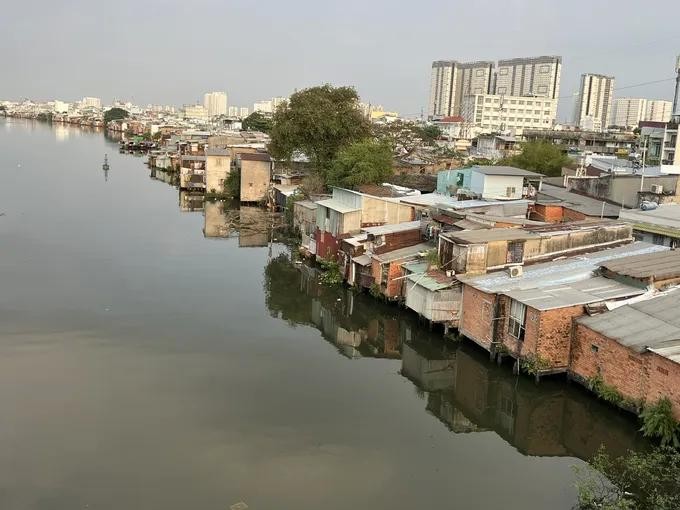
Under the municipal master plan for urban renewal and the relocation of shantytowns along local waterways for the 2025–2030 period, the city has demonstrated immense political resolve.
Statistics show that HCMC still has approximately 39,600 informal and waterfront stilt houses along its canals that require relocation, demanding a massive projected investment of over VND230 trillion (nearly US$9 billion).
The municipal government has prioritized major waterways, including the Doi and Te canals, as well as the Ong Lon, Xuyen Tam, and Van Thanh canals. These areas have been plagued for decades by severely degraded housing, deficient infrastructure, and critical environmental pollution.
Decades of urban planning experience indicate that canal rehabilitation extends far beyond merely relocating residents. It is a profound process of restructuring ecosystems and restoring the water-centric identity that defines Ho Chi Minh City. The makeshift waterfront settlements not only pose severe fire and landslide hazards but also lead to direct wastewater discharge into canals and rivers, causing water pollution, severe urban flooding, and public health crises.
The success of past projects such as the Nhieu Loc - Thi Nghe, Tan Hoa - Lo Gom, and Ben Nghe - Tau Hu canals demonstrates the tangible benefits of these interventions. Once-notorious "black waterways" have been transformed into airy, clean, and green public spaces. These projects have successfully driven up real estate values, stimulated commercial services, and reshaped the city's skyline. Most importantly, they have transitioned residents into safer, more civilized neighborhoods with a vastly improved quality of life.
In this current phase, the city has actively overhauled its administrative approach to accelerate project timelines. Authorities are concurrently processing investment procedures, drafting feasibility studies, and selecting contractors to dismantle long-standing bureaucratic bottlenecks. In particular, the mechanism to attract strategic investors under National Assembly Resolution No. 260/2025/QH15 is expected to heavily mobilize private capital for large-scale infrastructure projects, significantly easing the burden on the state budget.
Nevertheless, the most formidable challenges remain compensation, resettlement, and securing public consensus. Urban renewal can only be deemed truly successful when relocated residents transition to a better or at least more stable living environment. Consequently, the city's strategic pivot toward flexible resettlement housing funds, with an emphasis on expanding social housing rather than scattered investments, marks a highly practical step forward.
Survey data indicates that the majority of affected residents prefer market-rate cash compensation so they can proactively secure their own new accommodations. This trend reflects a growing demand for autonomy among the public in stabilizing their lives post-relocation. By effectively addressing the interconnected issues of livelihoods, housing, and supporting social infrastructure, this canal cleanup program can foster widespread public consensus and mitigate prolonged legal disputes.
Canal rehabilitation is no longer being treated as a collection of standalone infrastructure projects, but as a central pillar of Ho Chi Minh City’s long-term urban development strategy. The effort extends beyond environmental remediation, encompassing the restructuring of urban living spaces, the restoration of degraded ecosystems, and the improvement of living conditions for tens of thousands of residents.
As the program moves forward, residents are calling for decisive, transparent, and well-coordinated implementation to accelerate the revival of polluted waterways and help create a greener, cleaner, and more resilient city.




)