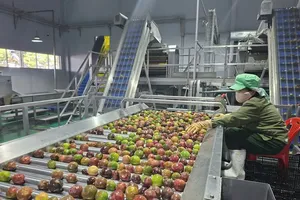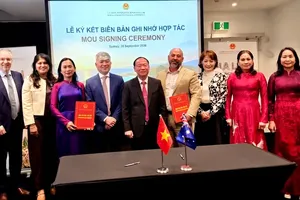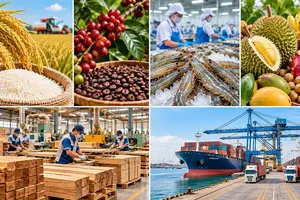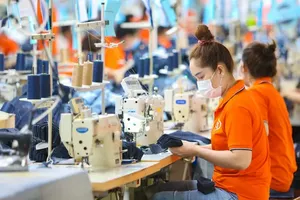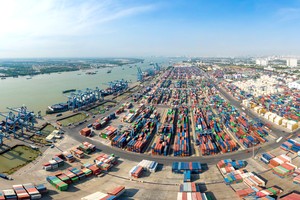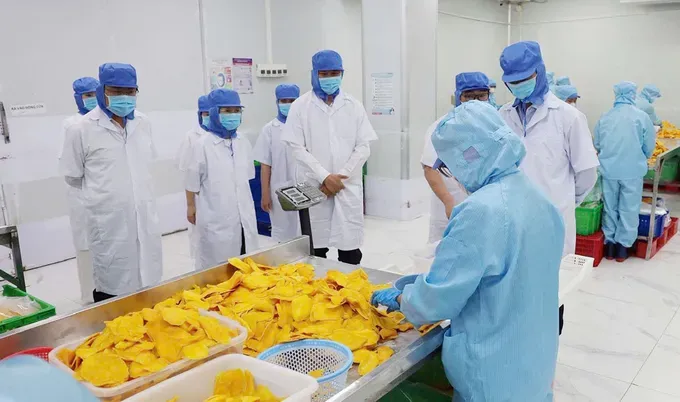
Vietnam is among the world’s top 20 exporting economies and has deeply integrated into global supply chains. However, in the food sector, the highest value-added segments are still not controlled by domestic enterprises. This reality creates an urgent need to reposition businesses—from merely “participating in the chain” to “mastering the chain.”
Vietnam’s food industry struggles to capture high-value segments
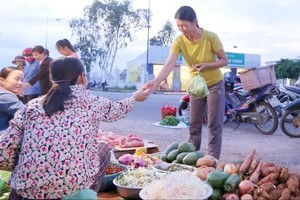
The global food market is currently valued at around US$10 trillion annually and is considered one of the most stable and high-growth industries. However, the value chain structure shows a highly uneven distribution of profits. Specifically, raw materials account for the lowest share (about 5 percent –10 percent of value), followed by processing (10 percent –20 percent ) and logistics (10 percent –15 percent), while distribution and retail can account for as much as 50 percent –70 percent.
According to Dinh The Hien, Director of the Institute of Informatics and Applied Economics Research, the core value of the food industry lies not in production but in the ability to control markets, brands, and distribution systems. This is the bottleneck that keeps Vietnamese enterprises despite deep participation and strong potential which is largely confined to low value-added stages.
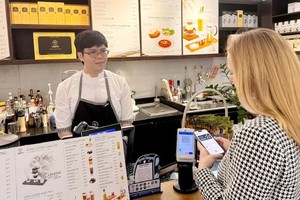
This reality is evident across product categories. For coffee, raw materials are priced at only about US$2.5–US$3 per kg, but after processing, branding, and retailing, prices can rise to US$40–US$60 per kg, or even higher in developed markets.
Similarly, shrimp priced at US$6–US$7 per kg at the raw stage can reach US$35–US$40 per kg as branded retail products. Passion fruit, which sells for under US$1 per kg as raw material, can increase to US$25–US$35 per kg after final processing.
Meanwhile, across Vietnam’s food industry, only a few large-scale enterprises such as Vinamilk and Masan Group stand out, while most others remain relatively small. The largest share of value-added continues to lie in the final stages of the chain, controlled by companies that own brands and market access.
Vietnam’s food industry urged to move up the value chain
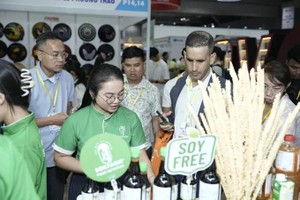
Experts and business leaders stress that Vietnam must shift from exporting raw products to investing in deep processing, brand building, and green transformation, positioning enterprises to capture higher value and compete more effectively in global markets.
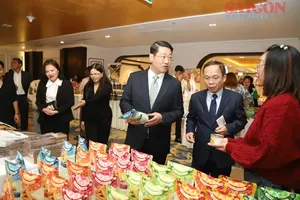
Chairman Phan Minh Thong of Phuc Sinh Group, which focuses on the advanced processing of agricultural goods, emphasized that if Vietnam persists in exporting unprocessed products, it will face challenges in making significant advancements. Companies must transition towards structured production, invest in advanced processing techniques, adhere to quality standards, and engage in product development to enhance value and establish brands. The growth of large-scale enterprises, potentially achieving billion-dollar valuations, demands a blend of contemporary business strategies and a consistent policy framework.
Sharing this view, Director Dinh The Hien emphasized that businesses must transition from a production mindset to a value chain mindset, moving from outsourcing to branded product development. Three key stages including deep processing, brand building, and participation in international distribution systems are critical to increasing value. If this shift is implemented effectively, the value-added of the food sector could increase three to five times in the coming years.
Beyond products, trust is becoming a fundamental competitive factor. Experts note that in the global context, cost advantage is no longer decisive; credibility is. When businesses build trust through quality, transparency, and responsibility, product value increases, opening opportunities for deeper integration into global value chains. At the same time, green transformation is becoming a mandatory requirement.
Vice Chairman Dinh Hong Ky of the Ho Chi Minh City Business Association pointed out that major markets are tightening standards on environmental protection, emissions, and traceability. Failure to comply could result in lost orders. However, if approached correctly, green transformation is not only a way to reduce long-term costs but also an opportunity to improve production efficiency and enhance product value.
From a business standpoint, numerous companies emphasize the importance of stable, transparent, and predictable policies to facilitate long-term investments, especially in deep processing and technology. The Government ought to implement incentives for green finance, assist in technology transfer, and enhance trade promotion to lower barriers, particularly for small and medium-sized enterprises. These initiatives can act as a "catalyst" to bolster Vietnam’s food industry, enabling it to compete with large global corporations and promote sustainable agricultural development.