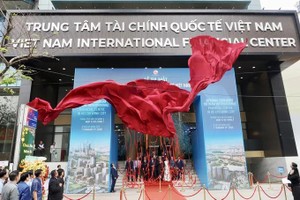
According to Assoc Prof Dr Nguyen Huu Huan, Vice Chairman of the Executive Agency of the Vietnam International Financial Center in HCMC (VIFC-HCMC), international capital is transitioning away from traditional financial segments and toward large-scale, globally integrated, and high-value-added sectors such as aviation, maritime logistics, fintech (financial technology), and green finance.
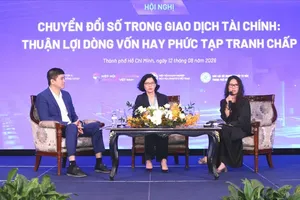
Anticipating this trend, HCMC will “orchestrate capital flows,” placing a strong emphasis on operational mechanisms and project absorption capacity. Currently, VIFC-HCMC serves as a direct conduit for global capital, boasting approximately US$19.1 billion in commitments and a target of converting $10 billion into tangible capital this year. To transform commitments into actual cash flows, it’s imperative not only to open additional capital channels but also to elevate the capacity to absorb and convert these flows into substantive growth.
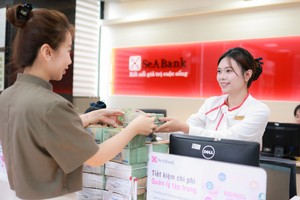
Concurrently with VIFC-HCMC, HCMC has introduced a venture capital fund operating on a “seed capital” mechanism. Director Lam Dinh Thang of the HCMC Department of Science and Technology stated that the municipal budget is projected to contribute about 40 percent to leverage 60 percent in private capital.
Not only does this mechanism generate supplementary financial resources, but it also acts as “signal capital,” drawing investors into the innovation ecosystem. Simultaneously, the fund helps bridge the “funding gap” for early-stage tech startups, a phase fraught with high risk but decisive for the potential emergence of large-scale technology enterprises.
The efficacy of this “seed capital” mechanism has been previously validated by HCMC Finance and Investment State-Owned Company (HFIC), where VND1 of the state budget can leverage VND9.35 of social capital.
Deputy General Director Nguyen Quang Thanh of HFIC noted that to date, HFIC has mobilized over VND31.6 trillion ($1.2 billion) from domestic and foreign sources. It has participated in financing more than 500 projects with a total committed loan value of approximately VND28 trillion ($1.06 billion), out of a total investment exceeding VND42 trillion ($1.6 billion).
HFIC is currently a partner of numerous international financial institutions, including the World Bank, the Asian Development Bank (ADB), the French Development Agency (AFD), and the German Reconstruction Bank (KfW). Furthermore, it’s evaluated by the Ministry of Finance as one of the most operationally efficient local development investment funds in Vietnam.
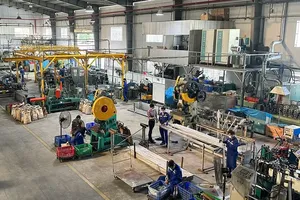
Diversifying new capital sources is merely a prerequisite. For capital flows to genuinely become a growth driver, the core imperative is to direct funds into priority sectors and cultivate the ability to retain long-term capital. This necessitates HCMC to possess a definitive project portfolio, coupled with a transparent and stable investment attraction mechanism.
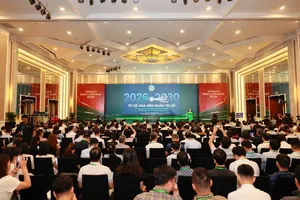
Regarding this issue, Acting Director Tran Phu Lu of the HCMC Investment and Trade Promotion Center (ITPC) stated that the investment attraction project portfolio for the 2026-2030 period of the municipal People’s Committee has explicitly identified priority sectors. These include high technology, innovation, the digital economy, the green economy, the circular economy, logistics, finance, healthcare, and education.
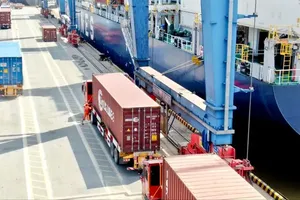
Notably, the cluster of seaport and logistics projects reflects a capital demand directly aligned with regional connectivity advantages, which not only bolsters infrastructure but also stimulates the need for trade finance, transport insurance, and high-value logistics services.
In the high-tech sector, data center projects modeled after Green Data Centers in the Saigon Hi-tech Park are creating precise destinations for technological and long-term capital, effectively facilitating cloud computing, artificial intelligence (AI), and smart urban governance.
Additionally, prioritizing research, training, and incubation projects in biotechnology, semiconductor microchips, and high-tech services indicates that the city is shifting its investment attraction strategy from merely expanding production to actively cultivating technological capacity. When capital flows into R&D (research and development), data, and core technologies, the value retained within the domestic economy is substantially higher, subsequently enabling HCMC to integrate more profoundly into global value chains.
“This portfolio isn’t simply a list of projects calling for investment; it functions as a ‘capital map,’ assisting investors in identifying opportunities and aiding the Government in designing appropriate policies,” Acting Director Tran Phu Lu emphasized.
As commented by Dr Can Van Luc, Chief Economist of BIDV and a member of the Prime Minister’s Economic Advisory Council, HCMC is transitioning its paradigm from “attracting capital” to “orchestrating capital flows.” Consequently, this will transform committed capital into tangible capital, project portfolios into invested projects, and catalyst capital into social capital flows.
When these pivotal links are seamlessly connected, they’ll forge a new competitive advantage for the city. Naturally, capital flows will only maximize their efficacy when inextricably linked with institutional reform, a transparent environment, and the capacity for rapid execution.