Amid continuing turbulence in the global economy, maintaining macroeconomic stability has become an urgent priority. It is not only a “shield” protecting the economy from external shocks, but also the foundation for achieving high, sustainable growth and elevating the country’s position in a new stage of development.
The global economy in 2026 has entered one of its most uncertain periods in recent years. Geopolitical tensions in the Middle East have driven energy prices higher, global inflation has yet to fully subside, and many major central banks continue to maintain tight monetary policies to contain price pressures.
The US Federal Reserve (FED), the European Central Bank (ECB) and the Bank of England (BOE) have all adopted cautious approaches amid concerns that inflation could return.
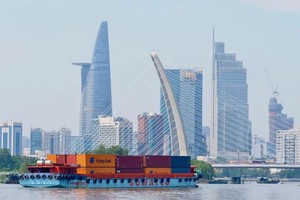
Against this backdrop, Vietnam — one of the world’s most open economies — has been directly affected by external volatility. Rising oil prices have pushed up transportation, production and raw material costs, while exchange rate pressures and higher global interest rates have influenced domestic financial markets. Slowing global trade could also weigh on exports and investment flows.
Yet amid these mounting pressures, Vietnam’s economic management strategy has revealed a notable feature. Rather than choosing between growth and stability, the country is pursuing the goal of high growth built on a foundation of macroeconomic stability.
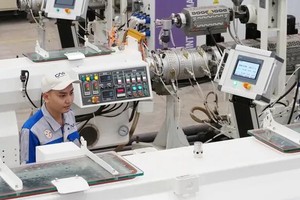
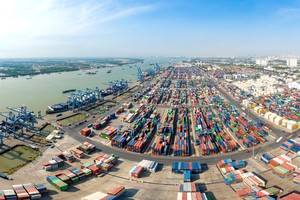
During the first four months of 2026, the economy recorded several positive indicators: industrial production rose by more than 9 percent, retail sales of goods and services increased by over 11 percent, while total import-export turnover climbed more than 24 percent. Realized foreign direct investment (FDI) reached its highest level in five years. These figures suggest the economy has maintained significant momentum despite continued uncertainty in the global environment.

However, inflationary pressure is becoming increasingly visible. The average consumer price index (CPI) in the first four months of 2026 rose by 3.99 percent, driven mainly by higher energy prices and input costs. This has narrowed the room for further monetary easing and underscored the urgent need to preserve the “shield” of macroeconomic stability.
In reality, no economy can sustain high long-term growth if inflation spirals out of control, exchange rates become unstable, or fiscal and monetary balances deteriorate. Macroeconomic stability is therefore not merely a short-term objective, but a prerequisite for safeguarding market confidence and sustaining long-term growth momentum.
Creating momentum for development ambitions
At the current stage, macroeconomic stability carries a broader meaning — not only as a defensive tool against volatility, but also as the foundation for a higher-quality growth model. This also means that the “shield” of macroeconomic stability should no longer be measured solely by CPI or exchange rates, but also by institutional quality, labor productivity and the economy’s resilience to global shocks.
One of the biggest challenges today is how to transform macroeconomic stability into genuine investment and growth momentum. After one year of implementing Resolution No. 68-NQ/TW on private-sector development, the business environment has shown many positive changes. Yet behind this encouraging picture lies a paradox: private capital flows have yet to make a real breakthrough. The number of businesses exiting the market remains high, while many companies are adopting defensive strategies rather than expanding investment. This suggests that administrative reform alone is not enough.
The primary obstacle resides in the quality of institutions and the level of market confidence. Companies are likely to invest vigorously only when they perceive a stable, transparent, and predictable policy framework. Consequently, in the near future, macroeconomic stability must be intricately connected to the creation of new "growth spaces" for the private sector.
Significant national infrastructure initiatives, logistics frameworks, digital transformation, and the green economy serve not only as catalysts for development but also as avenues capable of harnessing and stimulating social capital flows.
The principle of "utilizing public investment to stimulate private investment" requires more decisive implementation, particularly in sectors that can produce substantial spillover effects.
However, it is crucial for Vietnam to establish a reliable institutional environment where businesses feel confident in making long-term investments instead of resorting to short-term assets.
With a population of more than 100 million people, a rapidly expanding middle class, an increasingly important role in global supply chains and new growth drivers from digital transformation and the green economy, the country possesses all the conditions needed to enter a stronger phase of development.
The goal of achieving double-digit growth and joining the ranks of the world’s leading economies is ambitious but entirely achievable if Vietnam can fully capitalize on its current advantages. To go further, however, the essential prerequisite remains maintaining a solid foundation of macroeconomic stability.