Mechanical engineering companies in Ho Chi Minh City are increasingly breaking into major international markets and integrating into global supply chains, reinforcing the sector’s role as a key driver of the city’s industrial growth.
Mechanical firms pivot beyond oil and gas to global markets
Three 150-ton cranes, each with a lifting capacity of 50 tons and a total contract value of millions of US dollars, have been completed at the Dong Xuyen Industrial Park port, awaiting shipment to Norway for the firm NOV. This is just one of many products from the Southern Petroleum Construction Joint Stock Company (Alpha ECG).
Chairman Dang Quang Duc of Alpha ECG noted that while the company previously focused on the domestic oil and gas sector, it has recently expanded into equipment for power plants, wind energy, maritime cranes, and pressure vessels. Currently, 90 percent of Alpha ECG’s products are exported to markets including the US, Germany, Australia, Norway, South Korea, Japan, and China, effectively ending its dependence on the oil and gas industry.
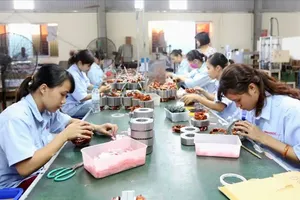
Similarly, Minh Viet Engineering and Construction JSC has transitioned from a small shipyard into a major industrial and energy equipment manufacturer. Operating six factories spanning nearly 95,000 square meters with over 750 employees, the firm supplies markets in Europe and the Americas. For 2026, Minh Viet aims for an output of 15,000–20,000 tons. Its new facility in An Ngai Industrial Cluster is currently operating at 100 percent capacity to fulfill orders booked through the end of 2026.
Vu Van Dao, Vice Chairman of the Vietnam Association of Mechanical Industry (VAMI) in charge of the Ba Ria-Vung Tau region, observed that while the mechanical industry in eastern HCMC originated from oil and gas, businesses are successfully pivoting to diverse sectors to attract foreign partners.
HCMC accelerates investment to cement role as national mechanical hub
HCMC is recognized as a major national mechanical hub, featuring prominent names like Dai Dung Metallic Manufacture Construction Trade Company, which supplied steel structures for the 2022 World Cup stadiums in Qatar, and Duy Khanh Engineering for precision mechanics.
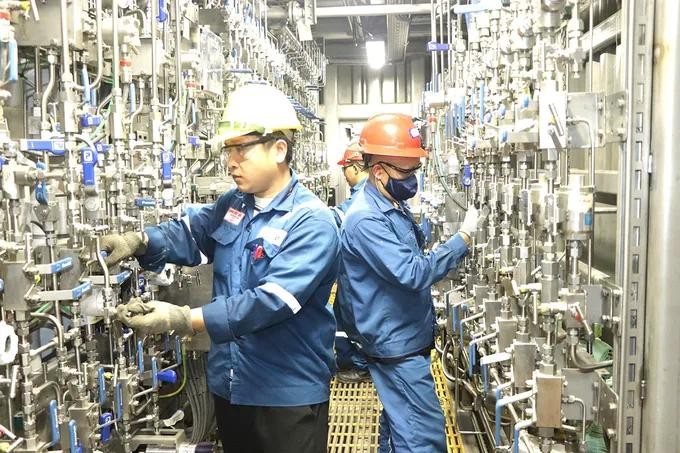
Industry leaders emphasize that decisive investment is key. Nguyen Van Duc, General Director of Siba Group, shared that their high-tech mechanical factory in HCMC now operates 24/7 to meet domestic and international demand, targeting an annual revenue of VND1 trillion.
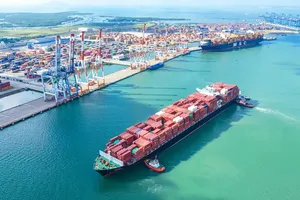
The city’s development is bolstered by a robust seaport and logistics ecosystem. Notably, at the end of last September, HCMC approved a 1/2,000 scale plan for a 780-hectare specialized mechanical industrial park in Binh Co and Tan Uyen wards, expected to serve as a vital link in the production chain.
Huynh Kieu Son, Standing Vice Chairman of the HCMC Association of Mechanical – Electrical Enterprises (HAMEE), highlighted a growing trend of "order sharing" among members. This internal linkage allows businesses to collaborate on large-scale projects, reducing individual investment pressure while enhancing speed and competitiveness.
According to HCMC Statistics, the city's Industrial Production Index (IPI) rose by 11.2 percent in the first four months of the year, with the mechanical sector alone growing by 13 percent, reaffirming its pivotal role in the city's industrial structure.