To encourage the shift towards renewable energy consumption, the Ministry of Industry and Trade has issued a new electricity hour schedule, with peak hours from 5:30 p.m. to 10:30 p.m., eliminating the midday peak hour.
According to this new regulation, peak hours apply from Monday to Saturday, between 5:30 p.m. and 10:30 p.m. Sundays do not have peak hours. Compared to previous practice, peak hours are extended to 10:30 p.m..
Normal hours from Monday to Saturday consist of two periods: from 6:00 a.m. to 5:30 p.m. and from 10:30 p.m. to midnight, totaling 13 hours each day. On Sundays, normal hours apply continuously from 6:00 a.m. to midnight.
Off-peak hours are defined from 12:00 a.m. to 6:00 a.m. for all days of the week, corresponding to 6 hours each day.
According to electricity experts, adjusting the peak hours to extend until 10:30 p.m. could increase electricity costs for manufacturing and business customers who use a lot of electricity in the evening. This would encourage shifting consumption to off-peak hours to reduce pressure on the system.
Under the time-of-use (TOU) electricity pricing mechanism regulated by the Ministry of Industry and Trade, electricity consumed during peak hours is charged at the highest rate.
Time-of-use (TOU) electricity pricing applies to manufacturing and commercial customers, as well as large electricity users with hourly meters. Electricity is billed across three periods such as peak, normal and off-peak, under regulations set by the Ministry of Industry and Trade.
Residential customers are subject to a tiered pricing system, with rates increasing progressively based on consumption levels (kWh), regardless of the time of day.
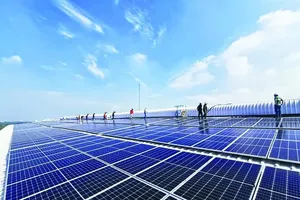
Economic experts suggest that the goal is to shift the load away from the evening, the time when the system is under the greatest pressure (increased residential demand, high load). During the day, especially at noon, the system is usually easier to balance due to the addition of solar power and a more dispersed load.
According to Nguyen The Huu, Deputy Director of the Electricity Department under the Ministry of Industry and Trade, the peak hour electricity pricing structure will impact production loads currently using three-tiered meters, meaning hourly electricity pricing, by encouraging the shift of electricity demand, especially in certain industries such as steel, cement, and food processing, from peak to off-peak hours. This will help balance the load curve and reduce pressure on the power system, particularly during peak hours.
To adapt, businesses can maintain their total production hours but adjust their machinery operating schedules to avoid the evening peak hours. Some industries may shift some production to daytime or after 10:30 p.m. to reduce electricity costs.