While this approach signals a shift toward tackling crime in the digital environment, it has also sparked debate over its rationale and practical enforceability.
Higher follower counts, harsher penalties
As counterfeit trading increasingly migrates online—particularly through livestreaming and social media—the draft Penal Code, for the first time, incorporates “follower counts” as a factor in determining criminal liability. The drafting body uses the concept of “reach,” referring to the number of users who can potentially view or interact with sales content.
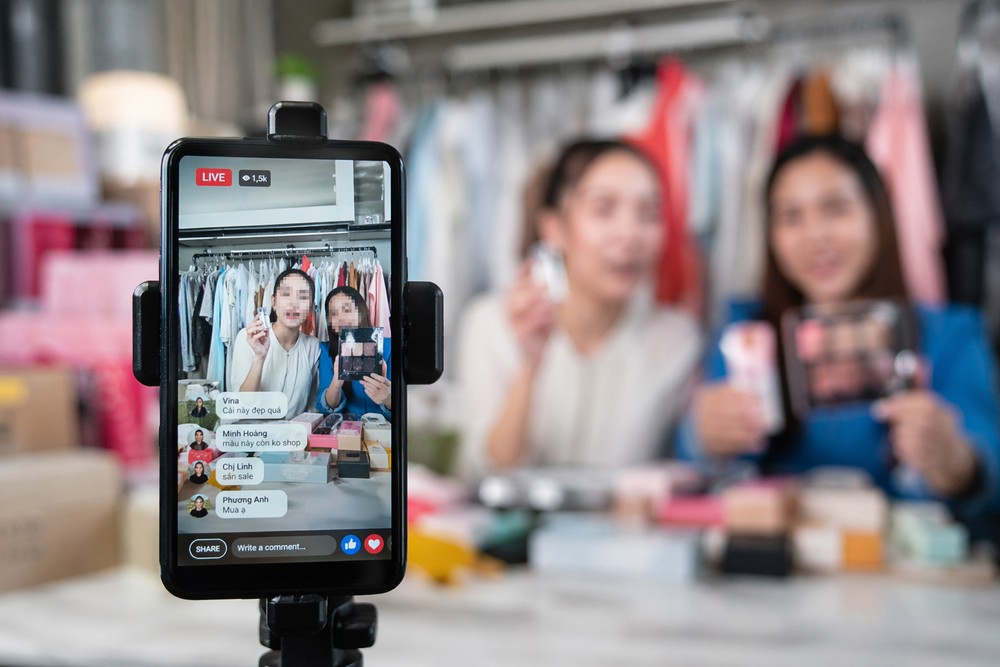
Under Article 192 on the production and trading of counterfeit goods, violations conducted via e-commerce platforms with between 500 and under 2,500 followers would fall under the basic penalty bracket, carrying fines ranging from VND200 million to VND2 billion or imprisonment from one to five years. If the number rises to between 2,500 and under 12,500 followers, offenders could face prison terms of five to ten years. Where platforms have 12,500 followers or more, penalties may escalate to 10–15 years in prison.
Similarly, under Article 195, which addresses counterfeit animal feed, fertilizers, and veterinary drugs, violations conducted on platforms with between 25,000 and under 125,000 followers could result in prison terms of 15–20 years. Meanwhile, Article 193, covering counterfeit food and food additives, does not specify detailed follower thresholds but still stipulates prison terms of five to ten years if the offense is committed via platforms with at least 500 users reached.
Concerns over actual harm and enforceability
Recent cases involving celebrities, influencers, and online personalities found to have promoted false claims, sold goods of unclear origin, or facilitated the distribution of substandard products have been subject to legal sanctions. Against this backdrop, considering follower counts as an indicator of market reach, dissemination capacity, and potential harm has some justification. However, the proposal raises several concerns.
Lawyer Tran Dai Lam of the Hanoi Bar Association argues that using follower counts as a basis for determining criminal liability fails to accurately reflect the nature and severity of the offense. Follower metrics indicate interaction levels or potential reach in the digital space, but do not directly capture the essence of crimes involving counterfeit production and trade—such as the volume of counterfeit goods sold, the number of actual transactions, illicit profits gained, consumer damage, or the real-world consequences incurred.
Moreover, a large follower base does not necessarily translate into substantial sales of counterfeit goods. Conversely, accounts with relatively small followings may still distribute counterfeit products at scale through closed groups, affiliate networks, intermediaries, paid livestreams, or off-platform distribution channels. According to Lawyer Tran Dai Lam, a proper assessment of the scale and severity of counterfeit-related offenses in the digital sphere should prioritize criteria directly tied to the nature of the criminal conduct.
Lawyer Nguyen Huu Ngoc of the HCMC Bar Association echoes this view, emphasizing that the principles of criminal classification and sentencing must be grounded in the degree of social harm caused by the offense. An account with millions of followers but low sales volume could face harsher penalties than a large-scale seller with fewer followers, a discrepancy that runs counter to the principle of individualized criminal responsibility.
The “follower” criterion also poses significant challenges in terms of verification. Follower counts can be artificially inflated through fake accounts, paid boosting services, or algorithmic manipulation. The buying and selling of high-follower accounts is also relatively common. In criminal proceedings, establishing the timing of the offense is essential for applying legal provisions. Yet follower counts fluctuate constantly—by the hour or even by the minute—making them an unstable metric for determining penalty thresholds.
Without standardized data systems or independent verification mechanisms, reliance on such a variable indicator could lead to inconsistent or subjective application of the law.
The Ministry of Public Security began soliciting public feedback on the draft policy dossier for the revised Penal Code, in response to pressing demands from real-world developments, on April 17. The consultation period runs through May 7. The draft is expected to be submitted to the National Assembly for discussion at its third session and for approval at the fourth session of the 16th National Assembly.