The Ministry of Finance held a workshop on April 20 in Hanoi to disseminate Government Decree No. 119/2026/ND-CP, which amends and supplements several provisions of Decree No. 242/2025/ND-CP on the management and use of ODA and concessional foreign loans.
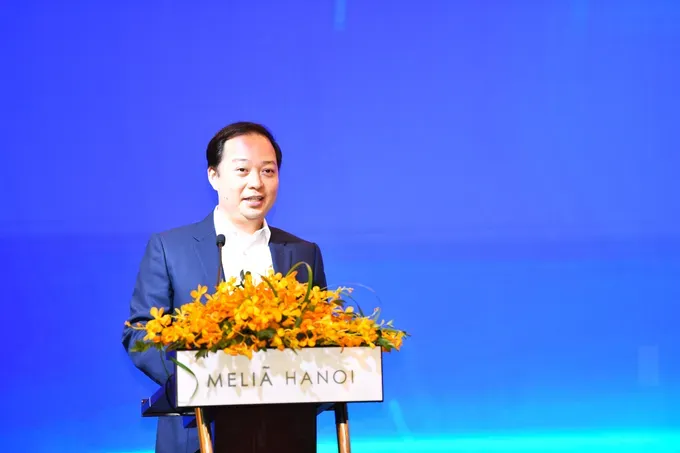
Speaking at the event, Mr. Nguyen Quoc Phuong, Head of the Department of Debt Management and External Finance under the Ministry of Finance, said that the new decree represents an important step in institutionalizing policies to improve governance, promote decentralization with accountability, and enhance public debt management efficiency.
The revised regulations address key bottlenecks in practice, including lengthy and overlapping procedures in international negotiations, delays in appraisal and approval of loan proposals, and limited autonomy and accountability at local levels.
The amendments aim to shorten processing time by clearly defining responsibilities, expanding decentralization in line with capacity, and ensuring consistency with related laws, including the Law on Public Debt Management, the Law on Treaties, and the State Budget Law, effective from January 1, 2026.

According to the Ministry of Finance, the 2026–2030 period will be critical for Vietnam’s socio-economic development strategy, targeting rapid and sustainable growth, structural economic restructuring, and higher resilience. Demand for ODA and concessional loans is expected to remain high, particularly in infrastructure, digital transformation, innovation, climate change adaptation, green growth, human resource development and social welfare.
Based on assessments of the 2021–2025 period and future projections, total ODA and concessional loans in 2026–2030 are expected to reach about US$38.2 billion. However, effective disbursement remains a major challenge, requiring close coordination among relevant agencies and proactive implementation.
To support this, the Government’s Decision No. 441/QD-TTg dated March 16, 2026, sets out a clear roadmap for attracting, managing, and using ODA and concessional loans, aligning external funding with national development priorities.

The Ministry of Finance has identified five key groups of tasks and solutions, including improving institutions and policies, strengthening cooperation with development partners, enhancing project preparation and implementation, reforming financial mechanisms and risk management, and maximizing non-financial benefits such as technology transfer, knowledge sharing and institutional capacity building.