Speaking at the Ministry of Agriculture and Environment's regular press briefing on June 17, Mr. Mai Van Khiem, Director of the National Center for Hydro-Meteorological Forecasting, said the 2026-2027 El Nino event is likely to intensify and could significantly reduce rainfall in many parts of the country, directly affecting agricultural production.
According to Mr. Mai Van Khiem, the North Central Coast and Central Coastal regions are expected to experience the earliest impacts as rainfall during this year's wet season is forecast to decline. The situation underscores the need to reassess summer-autumn crop plans and implement proactive water management measures to minimize potential losses.
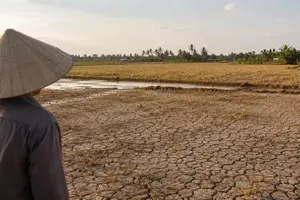
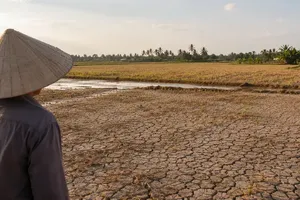
In the Central Highlands and the Mekong Delta, drought, water shortages, and saltwater intrusion are expected to become more severe in late 2026 and early 2027. These regions are among Vietnam's most important agricultural hubs, with many crops heavily dependent on stable water supplies.
Mr. Mai Van Khiem noted that the rainy season in the Central Highlands could end earlier than usual, posing challenges for perennial industrial crops, particularly coffee. He stressed the importance of early water storage preparations to ensure sufficient irrigation during the dry season.
Drawing lessons from the 2019-2020 El Nino episode, Mr. Mai Van Khiem said early warnings enabled local authorities in the Mekong Delta to adjust cropping calendars, shorten growing cycles, and bring forward the third rice crop, significantly reducing damage. Similar adaptation measures should be studied and applied in the coming months, he added.
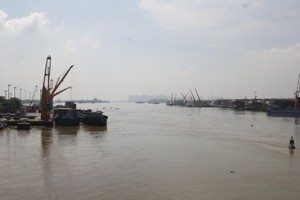
The forecaster emphasized that El Nino's effects extend beyond Vietnam, affecting countries throughout the Mekong River basin. Several neighboring nations have already begun implementing water-storage strategies, making it essential for Vietnam to assess factors that could influence water flows into the Mekong Delta.
The Ministry of Agriculture and Environment is currently directing agencies to evaluate the phenomenon's potential impacts and formulate response measures well in advance.
At the same briefing, Ms. Dang Thanh Mai, Deputy Director General of the Vietnam Meteorology and Hydrology Administration under the ministry, confirmed that El Nino has officially formed over the central equatorial Pacific Ocean. Current forecasts indicate that the phenomenon will persist from June 2026, strengthen during the second half of the year, and likely continue into early 2027.

The probability of an exceptionally strong El Nino event has now risen to 60-65 percent, approaching the intensity of the powerful 2015-2016 El Nino, one of the strongest episodes recorded in recent decades.

)