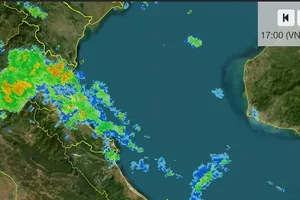
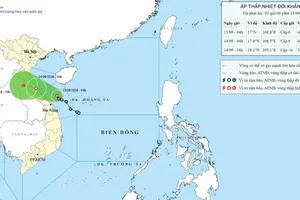
According to an alert issued by the National Center for Hydro-Meteorological Forecasting on the afternoon of August 3, the Northern region and provinces from Thanh Hoa to Ha Tinh will see moderate to heavy rainfall, with localized downpours, from the afternoon of August 4 through August 6. Accumulated rainfall over the three-day period is expected to average between 100 mm and 200 mm, with some areas exceeding 300 mm. The heaviest rains are predicted to fall during the late afternoon, night, and morning hours.
Provinces and cities at high risk of heavy downpours include Quang Ninh, Hai Phong, Ninh Binh, Phu Tho, Son La, Dien Bien, Lai Chau, Tuyên Quang, Thanh Hoa, and Nghe An.
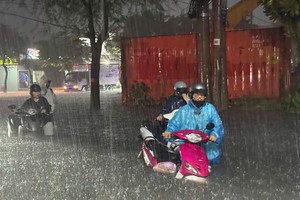
Prior to this, from the evening of August 3 to the morning of August 4, the Northern region alongside Thanh Hoa and Nghe An provinces continued to experience thunderstorms and localized heavy rain, with precipitation generally ranging between 10 mm and 35 mm, and isolated spots exceeding 100 mm.
Faced with the threat of severe weather from August 4 to 6, the National Civil Defense Steering Committee dispatched an official document on the afternoon of August 3 to the People's Committees of 18 northern and north-central provinces and cities, urging them to implement proactive measures to minimize potential casualties and damage.
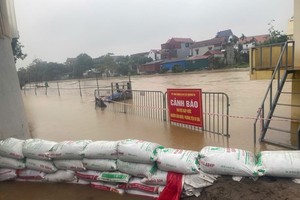
The committee directed local authorities to closely monitor weather developments and promptly notify primary-level administrations and residents. Localities were instructed to review low-lying areas, riverbanks, and regions prone to flash floods and landslides, preparing to evacuate residents to safety if necessary.
Localities’ authorities are also required to deploy personnel to monitor and control key traffic points, including submerged causeways, deeply flooded areas, swift-current zones, and high-risk landslide sites—strictly prohibiting vehicles and pedestrians from crossing unsafe routes. Local administrations must mobilize forces, equipment, and materials to resolve traffic disruptions and combat urban and industrial park flooding.
Furthermore, the steering committee requested safety inspections at underground mineral mines, ongoing construction sites, and irrigation and hydroelectric reservoirs, particularly small and vulnerable dams. On-duty personnel must be stationed around the clock to regulate reservoir water levels and handle emerging emergencies promptly.
)



)