Sea surface temperatures rise to 2 degrees Celsius
 "A canal in Tran Van Thoi area, Ca Mau Province, dries up amid severe drought. (Photo: SGGP)")
The Department of Meteorology and Hydrology under the Ministry of Agriculture and Environment said at noon on September 19 that the 2026-2027 El Niño event is continuing to strengthen.
By the second week of September, the sea surface temperature anomaly in the NINO3.4 region—located along the equatorial central and eastern Pacific—had risen to about 2 degrees Celsius, reaching the threshold for very strong intensity.
According to the National Center for Hydro-Meteorological Forecasting, El Niño is classified as strong when the sea surface temperature anomaly ranges from 1.5 to below 2 degrees Celsius. At around 2 degrees Celsius, the phenomenon reaches the very strong intensity threshold.
Forecast models currently indicate that El Niño is almost certain to remain very strong from October through December 2026 and could reach peak intensity during this period. From January to March 2027, the phenomenon is also likely to remain very strong, with the possibility that it could persist into the first half of summer 2027.
Warning of drought, water shortages, and saltwater intrusion
The Department of Meteorology and Hydrology warned that El Niño could increase the risk of high temperatures, heatwaves, dry conditions, and water shortages, particularly during the dry season. Changes in atmospheric circulation could also alter rainfall patterns and affect the activity of storms and tropical depressions.
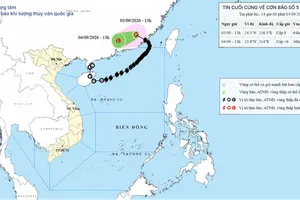
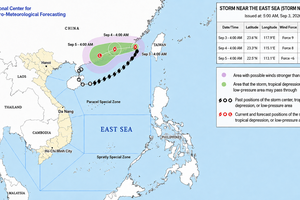
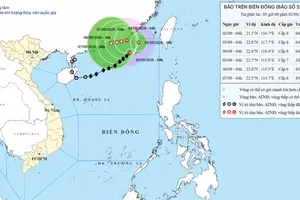
From now through the end of 2026, the number of storms and tropical depressions in the East Sea and those affecting mainland Vietnam is likely to be below the long-term average.
“However, fewer storms do not mean there will be no severe storms. Likewise, below-average widespread rainfall does not mean extreme rainfall events will not occur,” the department said.
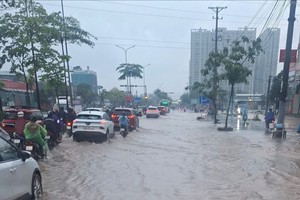
During strong El Niño years, episodes of very heavy rain, floods, flash floods, landslides, and storms with complex developments may still occur due to the combined influence of regional-scale weather patterns and short-term atmospheric conditions.
According to the department, heatwaves could occur early across Vietnam in early 2027. During the summer months of 2027, heatwaves are likely to be intense, with more hot days than the long-term average and more than in 2026. Temperatures could potentially exceed historical records.
Although extreme rainfall and storms may still occur, overall rainfall from now through the end of 2026 is expected to be below average across most of the country. The shortfall is forecast to be most pronounced in the South-Central coastal region, the Central Highlands, and southern Vietnam, where rainfall could be 20-40 percent below average.
The rainy season in these areas is also likely to end earlier than usual.








)