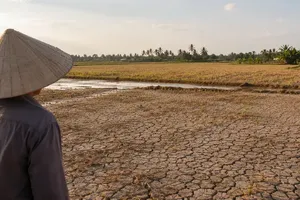
The Central Highlands and the Mekong Delta are Vietnam’s major agricultural hubs, home to large-scale orchards that produce key export crops, including coffee, pepper, durian, pomelo, and mango. However, persistent heatwaves and prolonged dry conditions in recent weeks have heightened the risk of water shortages, adversely affecting both production and local livelihoods.
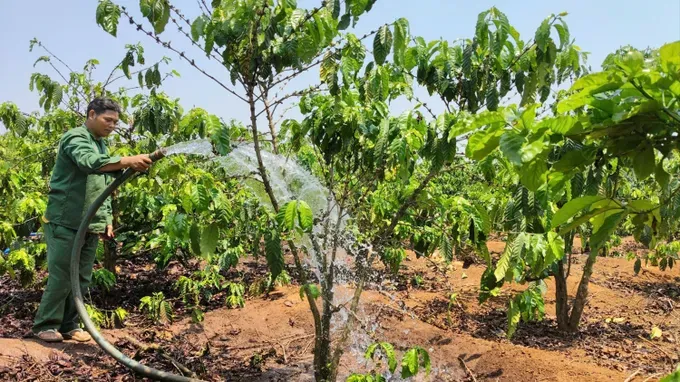
At present, coffee farms in Breng 3 Hamlet, Ia Hrung Commune, Gia Lai Province, are experiencing severe dryness, with parched soil and drooping leaves prompting farmers to scramble for irrigation water.
Kpuih Kret, who tends a 0.4-hectare coffee farm, said intense heat this year has caused many branches to dry up. Concerned about water shortages, his family has been irrigating day and night to keep their crops alive.
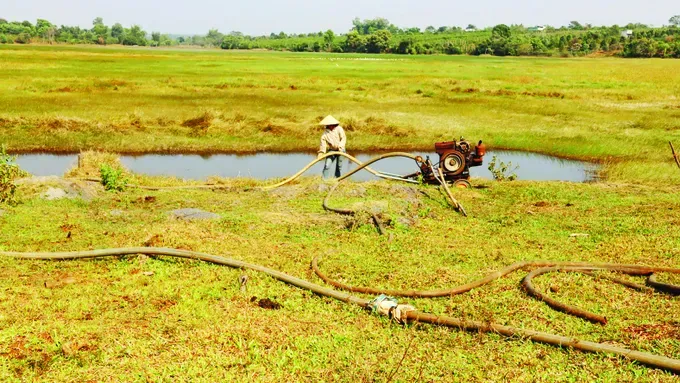
Neighboring Dak Lak Province is grappling with intense heat that has left crops parched and deteriorating. At Buon Sut M’Dung reservoir in Quang Phu Commune, shrinking water levels have laid bare muddy banks, while rows of pumps draw out what little water remains. The continuous sound of machinery from early morning to late afternoon highlights the urgency of farmers’ efforts.
Due to water shortages, 1.2 hectares of coffee intercropped with pepper owned by Mr. Nguyen Thanh Binh in Quang Phu Commune are gradually deteriorating, with leaves curling up. In key durian-growing areas such as Krong Pak and Ea Yieng, drought conditions are also weakening trees.
As durian trees reach their critical flowering period, farmers are racing against time, drawing water from ponds and wells from early morning to evening to support plant development.
Chairman of the Quang Phu Commune People’s Committee Nguyen Cong Van noted that prolonged heat combined with high irrigation demand has sharply reduced water levels in local reservoirs. If the heat persists, large areas of coffee and pepper plantations could face severe water shortages, leading to reduced yields or even total crop failure. Local authorities have proactively implemented drought response plans and water regulation measures to ensure irrigation supply.
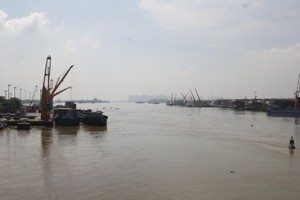
Meanwhile, in the Mekong Delta, Dong Thap Province, home to more than 134,000 hectares of fruit orchards, faces increasing salinity intrusion, which is encroaching deeper inland and directly affecting both daily life and agricultural production. The province is currently experiencing peak dry-season conditions coupled with extreme heat, negatively impacting fruit growth, yield and quality.
According to the Dong Thap Province’s Hydrometeorological Station, salinity intrusion is expected to remain complicated and may persist until mid-May. Similar conditions are affecting other Mekong Delta provinces, where drought and salinity are reducing yields of fruit crops such as durian, pomelo, mango and jackfruit.
In response, the Dong Thap Provincial Department of Agriculture and Environment has coordinated with relevant agencies and local authorities to conduct inspections in key areas and implement timely response measures. Authorities are closely monitoring salinity levels in major rivers, providing updated schedules for irrigation system operations, and upgrading sluice gates to prevent saltwater intrusion.
Dr. Phan Viet Ha, Deputy Director of the Western Highlands Agriculture and Forestry Science Institute (WASI), emphasized that this period marks the peak severity of the dry season. Prolonged heatwaves directly affect the growth of key crops such as coffee and pepper.
During the current flowering stage of durian, severe weather poses a threat to fruit-setting success. Farmers are recommended to manage irrigation wisely, save water for later use, and prioritize efficient irrigation systems.



)