The Ministry of Agriculture and Environment (MoAE) has launched the 2026 National Week for Disaster Prevention and Control. According to forecasts from specialized agencies, from June 2026 through the end of the year and into early 2027, under the impact of El Nino - the abnormal warming of surface seawater - natural disasters could become increasingly severe as climate change grows more extreme.

Around this issue, SGGP Newspaper spoke with Deputy Minister of Agriculture and Environment Nguyen Hoang Hiep about response priorities and solutions.
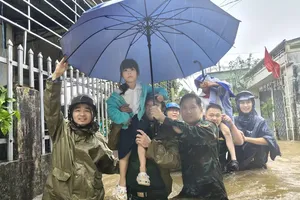
According to Deputy Minister Nguyen Hoang Hiep, natural disasters are becoming increasingly extreme, with many events already exceeding previous forecasts. The warning follows a devastating 2025 season, which saw a record 21 typhoons and tropical depressions hit the country, leaving 484 people dead or missing and causing over VND104 trillion (US$4.1 billion) in economic losses.
Vietnam recorded 21 storms and tropical depressions in 2025, the highest number ever documented, along with multiple major floods surpassing historical levels across large river systems.
Meteorological and hydrological agencies forecast that from June through the end of 2026 and into early 2027, under the influence of El Nino, the country could face prolonged heatwaves and water shortages caused by drought, while still remaining vulnerable to extreme storms and flooding.
Faced with this reality, Vietnam can no longer focus solely on disaster response but must shift toward proactive risk management and learning to live safely with natural disasters, Deputy Minister Nguyen Hoang Hiep said.
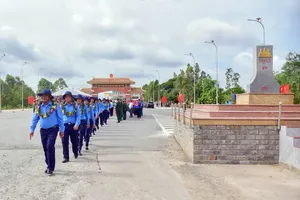
The MoAE recently launched the 2026 National Week for Disaster Prevention and Control under the theme Cong dong chung tay phong chong thien tai (Communities joining hands in disaster prevention and control). Through this message, the ministry seeks to emphasize that people must remain at the center of disaster prevention, response, and recovery efforts.
The deputy minister said that as disasters become more extreme, the role of local communities is increasingly critical. When each citizen is aware and takes collective action, stronger and more resilient communities can be formed. Many prevention and response measures can only be effective with active community participation.
At the same time, climate-resilient livelihoods must be developed to reduce risks for local populations. The ministry also aims to accelerate the application of digital technologies in forecasting and early warning systems to improve disaster preparedness and response capacity.
Mr. Nguyen Hoang Hiep said the MoAE will continue advising the Government to direct ministries, sectors, and local authorities to implement several key priorities in the coming period. First, disaster risks must become a key input in the development of local, regional, and national master plans.
Development planning and infrastructure projects, he said, must follow a “living with nature” approach that ensures sustainability, minimizes risks, and avoids future regrets. Even national planning frameworks will need adjustment to reflect the increasingly extreme disaster environment.
According to the deputy minister, many existing standards and technical regulations must be reviewed and revised to align with the new levels of disaster intensity. In many cases, standards will need to be raised.
The ministry will also focus on improving forecasting and warning capacity, which he described as a critical and sometimes decisive factor in disaster prevention and response efforts.
Another priority is strengthening disaster-resilient infrastructure investment. In areas frequently affected by landslides, flash floods, and mud floods, authorities must relocate residents to safer locations while clearly identifying evacuation points where people can shelter during heavy rains and flooding.
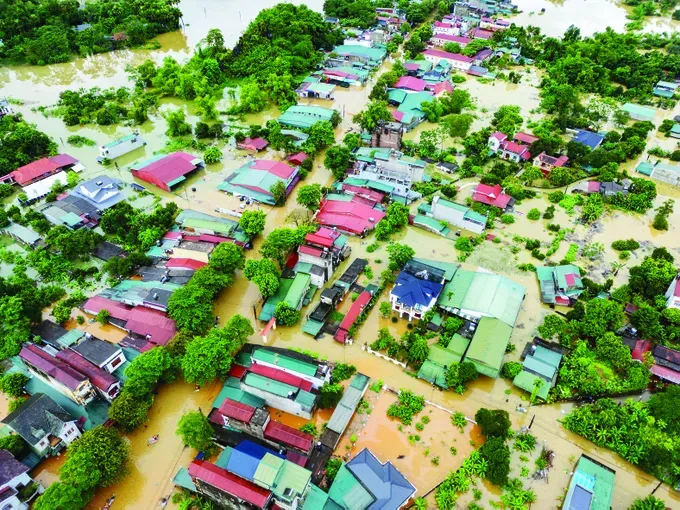
For regions that are regularly cut off during disasters, infrastructure investments must be designed to withstand extreme conditions and minimize isolation when disasters strike.
The Agriculture and Environment Deputy Minister also noted that Vietnam’s fundamental research on natural disasters remains limited, despite its importance as a foundation for planning tools, policymaking, and effective response solutions. As a result, greater investment in scientific research for disaster prevention and control is urgently needed.
He stressed that scientific research in irrigation, dyke management, and disaster prevention must shift away from formality and become more practical, directly addressing challenges in governance and operational management.
Vietnam, he said, needs to focus on major bottlenecks such as improving forecasting and early warning capabilities, building synchronized databases, and accelerating digital transformation to support more effective decision-making and management in the future.